FIGHTING FEBRUARY BLUES There are seasonal issues that can make February an especially difficult month for everyone. The holiday rush and start of the new term are over, the daylight hours are shorter, and midterms are looming large. Work may pile up as students fall increasingly behind. They may no longer have the positive input or feedback that good parents may have provided when they were younger. Seasonal Affective Disorder is fairly common. Symptoms of seasonal affective disorder tend to begin in the teen to early adult years and affect 5-10% of the population. Symptoms may include: increased feelings of stress or anxiety, oversleeping, lowered mood, more irritability, appetite changes, changes in school performance. If students are away at college or if adults work in […]
Organizing Tips for the Dyslexic Academic [PREMIUM]
A request came through from one of our Premium subscribers. What strategies are helpful for the dyslexic academic or working professional who needs to organize and synthesize from large quantities of information? The first step is SIMPLIFY. Argument Mapping As Dyslexic PhD Dr. Emma Jeffries says in her video below, looking for the key points in an argument helps her map the essence of what a journal article or paper is presenting. When she has a big text or paper that she has to read, she uses key questions to focus her reading. Sometimes a mentor or professor can also focus your reading on key topics or questions. Emma describes how she sketches notes that help get the gist of data that she is analyzing. […]
The Remediated Student – WHAT TO EXPECT [PREMIUM]
For the overwhelming majority of dyslexics, early intervention helps with the decoding step of reading. Usually 2-3 months of intervention is enough to see a measurable difference, and at least in our experience, 1-3 years to bring most children from failing their grade to being able to keep up in diverse subjects at grade-level with appropriate accommodations and sometimes modifications in place. What Should a Teacher Expect with a Remediated Student? Remediated students can vary a great deal depending on whether they are gifted, dysgraphic, dyspraxic, dyscalculic, have attention or working memory difficulties, or English as a Second Language. In general, though, students who have successfully been remediated are able to decode text on grade-level, but may still have slow and inaccurate reading, difficulty reading aloud, […]
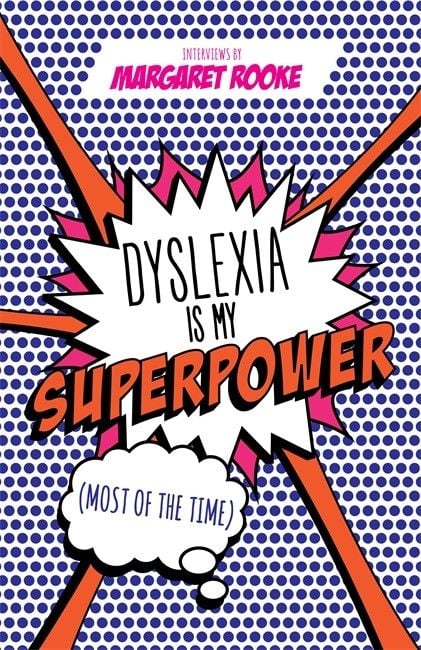
Dyslexia is My SUPERPOWER
Margaret Rooke has a new book that interviews over 100 young people 8-18 years old about their dyslexia. Not only is the book filled with many messages from the heart, it also shares practical tips that will help many feel like they're not alone. You may recognize...
Michael Shainblum – World Photographer and Videographer [Premium]
We recently had a chance to catch up with Michael Shainblum, an extraordinary videographer and photographer who found a wonderful outlet for his creativity and expression. Michael first discovered photography in a summer class he took in middle school. He rediscovered it again in the summer before high school when he got a digital camera and found he could take thousands of pictures in his backyard, looking for patterns in plants or macro pictures of bugs. Michael first started earning work as a professional photographer at the age of 16. We thought it was particularly touching that he had trouble getting other typical high school jobs because he wasn’t good at interviewing. Nowadays, Michael likes playing with time and motion, but still looks for interesting […]
POSITIVE Dyslexia: A New Dyslexic Nobel Prize Winner
"During my youth, I was quite asocial. I had a lot of difficulty with the world. Every ten years, I found, it got a little better. Now things are going quite well." - Jacques Dubochet There's no better reminder that awareness needs to include the positive side of...
Dyslexia at College: THE CHALLENGE OF WRITING [Premium]
As dyslexic college students are entering 2- and 4- year colleges in increasing numbers, questions arise as to the impact of dyslexia-related challenges on essay writing. The National Longitudinal Transition Study-2 had found that although a majority of LD students in high school requested accommodations (91%), only 17% requested accommodations in college. A problem with this situation is that the net result is that written work (especially timed written work) will typically substantially underestimate a student’s fund of knowledge and understanding. A recent study at Oxford Brookes University showed that college students with dyslexia matched their non-dyslexic peers in terms of word diversity, ideas, organization, sentence structure, and even grammar. The tasks in which they scored lower than their peers were so-called “low-level transcription skills” […]
Moving to learn: The UPSIDE to Fidgeting [Premium]
Researchers from Florida presented visually dramatic evidence of the difference in ADHD student hyperactivity dependng on the task at hand. 52 boys ages 8 to 12 were studied. 32 had ADHD and 30 served as controls. 44% of ADHD students had been prescribed stimulant medication, and these students had medicines held for at least 24 hours prior to the study. What you can see in the video is the dramatic difference in hyperactivity depending on whether the student was watching a mathematics instructional video or the pod racer scene from Star Wars. Perhaps not completely surprisingly, both ADHD and neurotypical boys showed better attention for the Star Wars video than the math instruction. Remember that ADHD is distinct from dyslexia and boys in general are […]
How to Respond to Negative Self-talk
From Imperfect Families: Empathize: Put yourself in their shoes and try to understand what they may be feeling. “That writing assignment’s pretty challenging, eh?” Rewrite the script: Instead of “Writing is hard. I’m stupid,” your child could say, “I’m working hard on...
Positive Strategies for College [PREMIUM]
In a recent research study (abstract only) of dyslexic students at college, the following strategies were mentioned: 1. Go to Lecture and Just Listen. It was common for students to be unable to listen and note-take at the same. Face-to-face lectures were preferred to recorded lectures because audio quality was sometimes bad, and some students need to see the teacher’s face and his or her gestures to fully comprehend what was being said. Request a Note-Taker Early. One student said at times a note-taker had to be requested several weeks in advance (!). Record Notes with the One Note or Audionote App. 2. Prepare for Lecture. For classes where teachers make Powerpoints available before lecture, download and print so notes can be written on them […]
Dyslexia-FRIENDLY Foreign language Instruction [PREMIUM]
Because dyslexia has significant challenges that make foreign language learning difficult (e.g. impaired phonemic awareness, limitations on auditory verbal working memory, weak rule-based memory and syntax, etc.), many students request and are granted foreign language waivers. That being said, there are many students who can do well at foreign language learning, and alternative classrooms should be considered in order to help more students achieve proficiency in a second language. From Dr. Jonathan Arries: “Studies suggest that students with LDs may experience difficulties with the following tasks: 1) imitation and differentiation of vowel sounds 2) orthography 3) vocabulary acquisition 4) comprehension and memory of spoken instructions 5)reading comprehension passages 6) comprehension of written instructions 7) application of grammar rules taught inductively….Javoarsky, Sparks, and Ganschow indicate some […]
[PREMIUM] DYSLEXIA AND MATH: Error Analysis
Some 60% of dyslexic students have problems with math (10% excel at math). Reasons for math difficulties include math facts retrieval, difficulty remembering formula and multi-stepped procedures, sequencing issues, symbol confusion, and difficulty with the language of math. These problems, in addition to timed tests and impossible-to-complete homework assignments, contribute to math anxiety and frustration. In a collaborative study from the University of Houstin, University of Texas, and Vanderbilt University (Raghubar et al., 2009), researchers looked at the different categories of math mistakes in 3rd and 4th grade children with or without math and reading disabilities. On the following page, look at the 4 types of math errors that they examined. Studies of this type are valuable because they also identify which types of errors are […]