This is a simple app game from Germany that provides practice with splitting long words that can help students read and spell.
![An App for Reading and Spelling Long Words: GRAFARI [Premium]](https://www.dyslexicadvantage.org/wp-content/uploads/2025/07/APP-400x250.png)
![The Why of Spelling [Premium]](https://www.dyslexicadvantage.org/wp-content/uploads/2025/03/why-of-spelling-3-400x250.png)
![Strategies for Spelling [Premium]](https://www.dyslexicadvantage.org/wp-content/uploads/2025/03/Strategies-for-Spelling-D-400x250.png)
![Common Irregular Words [Premium]](https://www.dyslexicadvantage.org/wp-content/uploads/2024/05/Common-Irregular-words-da-400x250.png)
There are many common irregular words in the English language – and although some teachers and curricula may choose to postpone learning those tricky words until later, it is good, whether you’re a parent, tutor, or teacher, to have an approach to teach students how to distinguish similar words rather than simply saying that the spellings are “exceptions.” Some students are very logical – and may learn better if they are taught exceptions whenever these situations arise. Here is an example of a tutor who uses picture associations – doodles and colors and boxes to make the different meanings and spellings of “wood” and “would” distinct: The book series Words Their Way is one popular and fairly inexpensive approach to spelling that […]
![Auto-Correct in Foreign Languages: Installing Additional Keyboards [Premium]](https://www.dyslexicadvantage.org/wp-content/uploads/2022/04/Installing-new-keyboard-400x250.jpg)
This morning, I was interviewing a dyslexic physician, Andrew Newman (we’ll share his full story in another issue) and he happened to mention when he was working through Duolingo foreign language learning app that a pop-up occurred and asked him whether he might want to install a foreign language keyboard to help with spelling in Italian. He had been racing through all the auditory and spoken parts of lessons, but was continually penalized for spelling in the written parts and not able to advance. Installing the Italian keyboard, auto-corrected his spelling and grammar in Italian, so now he’s able keep on learning without his dyslexia getting in the way. Over the years, we often found ourselves writing for or talking to schools to provide appropriate […]
![Dyslexia and Dysgraphia: What Does Writing Look Like? [Premium]](https://www.dyslexicadvantage.org/wp-content/uploads/2021/10/Dyslexia-and-Dysgraphia-4-400x250.png)
What does the writing look like in students with dyslexia and dysgraphia? IMPAIRED AUTOMATICITY, CAPITAL LETTER INTRUSIONS, and SPELLING ERRORS Students who struggle with handwriting automaticity show irregular shapes and sizes of letters. For example, look at the letter ‘e’ in the spelling test at right. They are very different from one another, showing that the student has not ‘automated’ writing of the letter ‘e’. The more variable the letters are, the more arduous to write anything by hand. Working memory is easily overloaded, and students may be exhausted after writing a few words. The spelling test also shows capital letter intrusions (capital ‘D’), likely to avoid confusing lower case ‘d’ with ‘b’, irregular spacing, and phonological as well as sight word errors. When […]
"It’s fascinating how much we judge others on their ability to spell – when in reality most of the time this has little effect on our ability to do our work effectively. If you get an email that no one else will see apart from you and the recipient, does it matter...
This issue features our largest Premium TECH Guide ever at 54 pages! Become a Premium subscriber at just $5 per month. Individual issues can also be purchased through Dyslexic Advantage apps in iTunes or Google Play. Dyslexic Advantage Premium Apps review includes the best dyslexia apps for iOS and Android in the areas of basic reading, phonological awareness and spelling, reading fluency, free and low cost resources for audiobooks and ebooks, ways to listen including podcasts, read to me books, scanning pens, best apps for writing, note-taking, scanning, and spelling for adult users, best apps for organization and productivity, math, and social and emotional health. Bookmark Please login to bookmark ClosePlease login to access.

Great question. The degree of accommodations and or modifications should be individualized. SPELLCHECK Severely dyslexic students may need to dictate written work or keyboard work using spelling check. One favorite teacher of ours told us that she had a breakthrough...
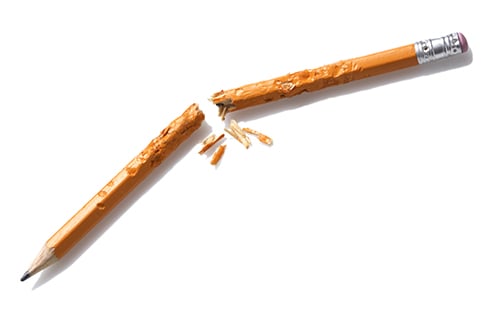
From this book from Nancy Mather and colleagues, a 5th grader was shown a word from her adapted spelling list, then asked to write it from memory. Needless to say, the exercise was quite frustrating for the student. From the authors: "Her teacher next showed Nalan the...
![Dyslexia at College: THE CHALLENGE OF WRITING [Premium]](https://www.dyslexicadvantage.org/wp-content/uploads/2018/01/Screen-Shot-2019-08-30-at-8.43.51-PM.jpg)
As dyslexic college students are entering 2- and 4- year colleges in increasing numbers, questions arise as to the impact of dyslexia-related challenges on essay writing. The National Longitudinal Transition Study-2 had found that although a majority of LD students in high school requested accommodations (91%), only 17% requested accommodations in college. A problem with this situation is that the net result is that written work (especially timed written work) will typically substantially underestimate a student’s fund of knowledge and understanding. A recent study at Oxford Brookes University showed that college students with dyslexia matched their non-dyslexic peers in terms of word diversity, ideas, organization, sentence structure, and even grammar. The tasks in which they scored lower than their peers were so-called “low-level transcription skills” […]
![STRATEGIES FOR THE MOST COMMON SPELLING MISTAKES: THE SCHWA [Premium]](https://www.dyslexicadvantage.org/wp-content/uploads/2017/02/Screen-Shot-2019-09-03-at-2.08.42-PM.jpg)
Once you learn how to recognize the ‘schwa’, you’ll start recognizing them everywhere! In linguistics, the schwa sound is represented by an upside-down ‘e’ and the mouth position is a lot like the ‘uh’ sound in ‘butter’. It contributes to lots of misspellings in dyslexic students (and actually non-dyslexic students too) so recognizing the patterns can significantly improve all-round spelling performance. STRATEGY 1: EXAGGERATE / MISPRONOUNCE THE SCHWA One surprisingly easy strategy is to exaggerate and deliberately mispronounce a word in order to remember the correct spelling. For instance, the-thee reminds you that the schwa is spelled with an ‘e’. Look at the following 3 objects: monitor, computer, and calendar. To remember -or, -er, and -ar, a student can pronounce monitor as mon-i-TOR, exaggerating the […]