What Reading Speed Has to Do With Leadership: Nothing
Many leaders succeed because of their dyslexia, not in spite of it. President Trump stirred up a hornet’s nest when he suggested that Governor...


Storytelling as a Dyslexic Strength
Storytelling is not simply a language skill. It is a form of reasoning. Recognizing these strengths helps shift how we think about writing instruction and creative expression.

Rethinking Auditory-Only Phonemic Awareness Training for Reading in the Early Grades Does Not Work
A new study reported on in Education Week found that a widely-used phonemic awareness program (the oral-only Heggerty curriculum) did not improve gains in word reading or oral reading fluency, although it did significantly improve phonemic awareness skills.

Free Back To School Reading Apps
Some of the most common free apps that dyslexic students use for school.

Beyond Behavior: Attention, Working Memory, or Something Else?
The problem with trying to diagnose with behavioral checklists is that behavior can result from many different sources. If you have a 3rd grader...

Math Difficulties Common with Dyslexia
Although the pace of research into dyslexia beyond reading proceeds very slowly, there is some welcome recent research into some of the...
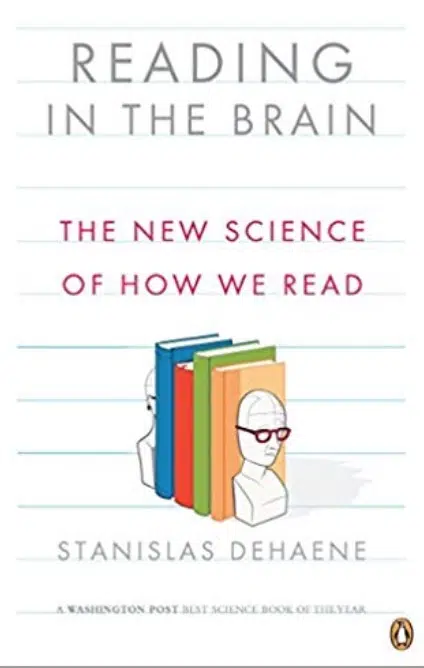
SCIENCE: THE BALANCING ACT OF LITERACY
Dr. Stanislaus Dehaene is a French researcher who has authored Reading and the Brain. He and his research team conducted some interesting investigations into Portuguese and Brazilian adults who they classified into 3 groups: unschooled adults (referred to as...

Precis Writing … or when less is more
“English A was ‘a disaster and French was like medieval torture. To sit down with a blank piece of paper and write was the most traumatic thing that had ever faced me in life. I had ideas in my head, but I could not get the stuff down. It was a crushing time.” – Charles Schwab “It will be particularly helpful if they give themselves practice in precis writing, paraphrasing, and note-taking. If one has to write a precis one is forced not only to think out carefully what are the key ideas in a particular passage but also to express them concisely, accurately, and clearly. Paraphrasing makes similar demands and also forces one to consider the style of the original and to be critical […]
![[PREMIUM] Step-By-Step Beginning Reading Program](https://www.dyslexicadvantage.org/wp-content/uploads/2017/08/Screen-Shot-2019-09-01-at-8.50.02-AM.jpg.webp)
[PREMIUM] Step-By-Step Beginning Reading Program
Q: I’m a homeschooling mom of 3. There is dyslexia in our family. I’d like to be able to start an inexpensive no-frills reading program with my oldest child who is 9. Are there programs that work that don’t require extensive training? A: Yes. There are effective and inexpensive programs that a parent can work through with a child without a lot of additional training. Premium Subscribers, you must be logged into your Premium account to read the answer below. Any questions? email us here. When many people first hear the words Orton-Gillingham or even multisensory structure language intervention, it seems like a lot of big words that mean specialized training, but there are many programs designed for parents or other partners to teach dyslexic […]
![MATH: When Words Get In the Way [Premium]](https://www.dyslexicadvantage.org/wp-content/uploads/2017/08/talking-pixabay.png.webp)
MATH: When Words Get In the Way [Premium]
For dyslexic students, the language of math can confuse and obscure. Teachers, tutors, and parents should be aware that language could be interfering with math performance and not mathematics itself. From Dyslexia and Mathematics: Here is an example of a dyslexic student’s sharing of how she becomes confused by what a teacher is saying. The capital letters indicate words that required her to stop and think. Teacher: “We are going to TAKE 25 FROM 61. WRITE DOWN 61 first (I sometimes wrote the first figure I heard before the second one). WRITE DOWN 25 UNDERNEATH it. Put the 2 UNDER the 6 and the 5 UNDER the 1. Draw a line UNDERNEATH. Start at the bottom on the RIGHT. Take 5 AWAY FROM 1. […]
![Dyslexia: The Twenty-Something Years [PREMIUM]](https://www.dyslexicadvantage.org/wp-content/uploads/2017/07/Screen-Shot-2019-09-01-at-8.40.01-AM.jpg.webp)
Dyslexia: The Twenty-Something Years [PREMIUM]
“These are the years when it will be easiest to start the lives we want. And no matter what we do, the twenties are an inflection point- the great reorganization – a time when the experiences we have disproportionately influence the adult lives we will lead.” – Meg Jay, author of The Defining Decade “Life for emerging adults is vastly different today than it was for their counterparts even a generation ago. Young people are waiting longer to marry, to have children, and to choose a career direction. As a result, they enjoy more freedom, opportunities, and personal growth than ever before. But the transition to adulthood is also more complex, disjointed, and confusing. ” – Christian Smith, lead author of Lost in Transition Many ‘experts’ have […]
![Dyslexic Entrepreneur’s Advice for the Road [Premium]](https://www.dyslexicadvantage.org/wp-content/uploads/2017/07/Screen-Shot-2019-09-01-at-8.30.50-AM.jpg.webp)
Dyslexic Entrepreneur’s Advice for the Road [Premium]
Great advice from Stephen Key at Additude. For many adult dyslexics, running your own business is the best way to build on strengths and create a positive working environment. Stephen offers the following helpful advice for those at the beginning their journey. “1. I prepare for every situation. My learning disability has caused me to fear the unknown. Feeling prepared soothes my nerves. Before I attend a meeting, I make sure to have an agenda. I like knowing what is expected of me. Because I don’t like being caught off guard, I am constantly studying up — on all sorts of topics. Much to my wife’s amusement, I even studied up on the first book we read for our neighborhood book club. When I’m traveling, […]

50 States – Audio Driver Training Manuals – Department of Motor Vehicles
Check out the links below to audio versions of state drivers manuals OR pdf files of the manuals that can be read with our web-enabled text to speech program ReciteMe. ALSO, if the manual is available to read online, you can try read it in a Google Chrome browser. A...

Children’s Book Author Roald Dahl – Dear Lexdyslic Reader
“What I mean and what I say is two different things," the BFG announced rather grandly.” - Roahl Dahl Thanks fellow dyslexic author Jackie French for her lovely tribute to Roald Dahl (author of BFG, Charlie and the Chocolate Factory, Matilda, James and the...
![Bridging the Gap: Help for Dyslexic Professionals in Higher Education Marshall [Premium]](https://www.dyslexicadvantage.org/wp-content/uploads/2017/06/Screen-Shot-2017-06-12-at-12.26.03-PM-750x312-1.png.webp)
Bridging the Gap: Help for Dyslexic Professionals in Higher Education Marshall [Premium]
It’s not uncommon for dyslexic students performing at the highest levels to thrive in higher education, but then be surprised by obstacles either in the workplace or in professional licensing exams – when they encounter something they haven’t ever had to do before. Dyslexics tend to excel at acting and making decisions in real-life problem-solving situations, but may have trouble with board exams or steps in their careers where they are supposed to function as ‘scut monkeys’ with heavy reading, writing, and database-reading demands. It’s helpful to know that the situation is not uncommon because if it happens to you or someone who you care about, it seems like a huge personal crisis. Some people will have to repeat a year or be put on […]
![Surviving IEP Season [Premium]](https://www.dyslexicadvantage.org/wp-content/uploads/2017/05/Screen-Shot-2017-05-30-at-9.53.04-AM.png.webp)
Surviving IEP Season [Premium]
IEP season usually runs from late March through early June, and it’s a time when parents and teachers meet with the IEP team to assess the past year’s progress and also plan for changes that should take place for the upcoming year. Be aware, too, that we have a new Supreme Court decision that is holding school districts accountable. Here is an important excerpt from the Endrew F. vs. Douglas County School District decision: “The IEP must aim to enable the child to make progress. After all, the essential function of an IEP is to set out a plan for pursuing academic and functional advancement… When all is said and done, a student offered an educational program providing ‘merely more than de minimis’ [trivial or […]
![Dyslexia and Foreign Language Learning [Premium]](https://www.dyslexicadvantage.org/wp-content/uploads/2017/05/hello-foreign-language-pixabay.png.webp)
Dyslexia and Foreign Language Learning [Premium]
“…reading, writing, listening and speaking skills in foreign languages are all significantly affected by weaknesses in linguistic coding skills even when the native language has been been well-mastered…” – Elike Schneider and Margaret Crombie in Dyslexia and Foreign Language Learning Because of the significant challenges that dyslexic individuals face with the matching sounds and letters of language (phonology / orthography), working memory, retrieval, sequencing, and rote memorization, it should not be surprising that foreign language is a significant challenge facing bilingual students and college-bound dyslexics facing 2 years of foreign language classes to enter higher education. For moderate to severe dyslexics, foreign language waivers are usually granted; however, for all those in-between, there are strategies that build on dyslexic strengths in visual and multisensory […]
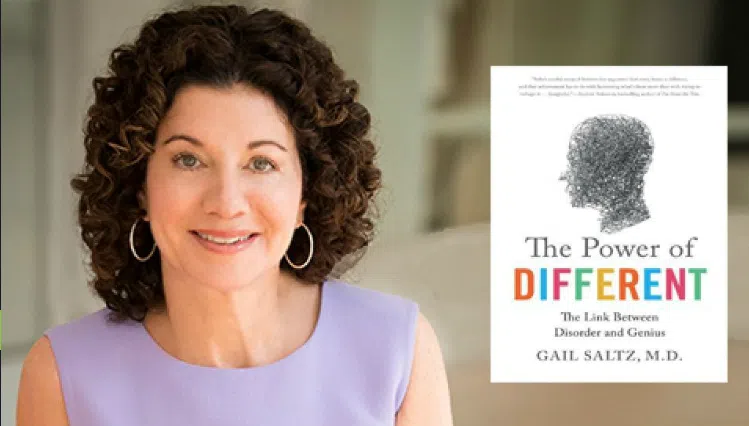
The Power of Different – Exclusive Interview
Dr. Gail Saltz has a hit book on her hands, and it's called The Power of Different. In addition to being a professor of psychiatry at Columbia University, she grew up with a brother who'd win a Nobel Prize. Gail was kind enough to talk to her about what she learned...

What’s the Most Stressful Time for Dyslexic Students?
ANSWER: Grades 3-5 in Elementary School. If we know this, are we doing everything we can to help students emotionally and socially in these grades? There are many pressures that converge on the 3-5th grade (see The 3rd Grade Wall), and developmentally, it is a...

GREAT Supreme Court Decision – Schools Must Provide More Support for Students with Disabilities
A GREAT Supreme Court Unanimous (8-0) was handed down that states that public schools must provide more than ‘de minimus’ or the bare minimum to benefit students with disabilities. The fact that some school systems (in this case, Douglas County) were fighting the case all the way to the Supreme Court tells you that there is a need to ensure that students are receiving an education that provides “appropriately ambitious progress.” The decision is very relevant to students with dyslexia because by definition, their intelligence is in the average or above average range. The case that was decided today was Endrew vs. Douglas County which involved a student with autism and attention deficit disorders whose parents removed him from public school in the fifth grade. He made […]

Tips for Engaging with Books – From an Anonymous Adult
This article is aimed at anyone who… is dyslexic, or thinks they might be wishes to help dyslexic adults to engage with books is interested in ways to engage with books What are these tips? 7 things that help me to engage with any book; 3 things that...
![Let Them Listen – Audiobooks and Dyslexia [Premium]](https://www.dyslexicadvantage.org/wp-content/uploads/2017/02/reading-audiobooks-our-shutterstock-scaled.jpg.webp)
Let Them Listen – Audiobooks and Dyslexia [Premium]
Let Them Listen! “The objective of the present research study was to understand what benefits the use of audiobooks (both school-books and books of various genres, recorded on digital media) could bring to preadolescents and adolescents with developmental dyslexia. Two groups, each consisting of 20 adolescents, were compared. The experimental group used the audiobooks, while the control group continued to use normal books. After 5 months of experimental training, the experimental group showed a significant improvement in reading accuracy, with reduced unease and emotional–behavioural disorders, as well as an improvement in school performance and a greater motivation and involvement in school activities.” – Milani et al., Dyslexia (journal) It’s surprising how often we continue to hear that dyslexic students are denied the use of audiobooks […]
![WHAT YOU CAN LEARN FROM A CHILD’S WRITING [Premium]](https://www.dyslexicadvantage.org/wp-content/uploads/2017/02/Screen-Shot-2019-09-03-at-2.11.37-PM.jpg.webp)
WHAT YOU CAN LEARN FROM A CHILD’S WRITING [Premium]
There are many skills that are required to write by hand. Besides having an idea and being able to organize it into words, there’s remembering the motor, kinesthetic, and visual sequences of letters and words and being able to discern similar and dissimilar sounds (auditory processing, phonemic awareness). No wonder it’s hard to write! What do you see in the following writing? Mix of capitals and lower case letters, irregular spacing, sight word error (plaid instead of played), phonemic error (chr instead of tr), elision / dropped sound or attention / working memory mistake (chis instead of chips). This student would benefit from working with an alphabet strip of lower and upper case letters in view as well as a spelling or writing […]
![STRATEGIES FOR THE MOST COMMON SPELLING MISTAKES: THE SCHWA [Premium]](https://www.dyslexicadvantage.org/wp-content/uploads/2017/02/Screen-Shot-2019-09-03-at-2.08.42-PM.jpg.webp)
STRATEGIES FOR THE MOST COMMON SPELLING MISTAKES: THE SCHWA [Premium]
Once you learn how to recognize the ‘schwa’, you’ll start recognizing them everywhere! In linguistics, the schwa sound is represented by an upside-down ‘e’ and the mouth position is a lot like the ‘uh’ sound in ‘butter’. It contributes to lots of misspellings in dyslexic students (and actually non-dyslexic students too) so recognizing the patterns can significantly improve all-round spelling performance. STRATEGY 1: EXAGGERATE / MISPRONOUNCE THE SCHWA One surprisingly easy strategy is to exaggerate and deliberately mispronounce a word in order to remember the correct spelling. For instance, the-thee reminds you that the schwa is spelled with an ‘e’. Look at the following 3 objects: monitor, computer, and calendar. To remember -or, -er, and -ar, a student can pronounce monitor as mon-i-TOR, exaggerating the […]

A CHAT WITH MATH AND VISUALIZATION EXPERT JENNIFER PLOSZ
Today, I had a great conversation with Jennifer Plosz, a math teacher currently at the University of Calgary School of Education who is also a talented visualization expert and is dyslexic. She had recently been in touch with Dr. Manuel Casanova, the neuropathologist...
![DROPPING OUT BECAUSE OF FOREIGN LANGUAGE [Premium]](https://www.dyslexicadvantage.org/wp-content/uploads/2017/02/r1-18.png.webp)
DROPPING OUT BECAUSE OF FOREIGN LANGUAGE [Premium]
At Harvard University in the 1970s, a clinical psychologist made a startling discovery. Intending to study the emotional problems that caused students at one of the world’s elite universities to drop out of school to drop out, he found out instead that the most common reason students dropped out of their degree programs was that they were unable to satisfy Harvard’s foreign language requirement. “Dinklage described three groups of students who were otherwise, bright, gifted, and highly motivated, but who remained unsuccessful in the foreign language classroom. He reported that these students were not helped by merely improving study habits or by adjusting to postsecondary demands.” The 1st group of students demonstrated problems in written language that were most apparent in “the student’s reading […]
Free and premium posts. To subscribe to Premium: CLICK HERE
WATCH NOW

OSPI STEM Course – STEM for Diverse Learners
Dyslexia and Gifted: Course for Psychologists

Dyslexia for Teachers Course