A dyslexic woman and successful tech entrepreneur was interviewed and asked what helped her overcome ‘the odds.’ Here’s what she said: “Affirmations…I literally told myself the naysayers were wrong about me. I told myself exactly what I needed to hear, every single day, to move my life forward.” Here are some of the affirmations on her list – what are yours? 1. “The biggest and most complex obstacle I will ever have to overcome is my mind. If I can overcome that, I can overcome anything.” 2. “I cannot control exactly what happens in life, but I can control how I respond to it all. In my response is my greatest power.” 3. “I have to accept whatever comes my way, and the only important […]
SCIENCE: THE BALANCING ACT OF LITERACY
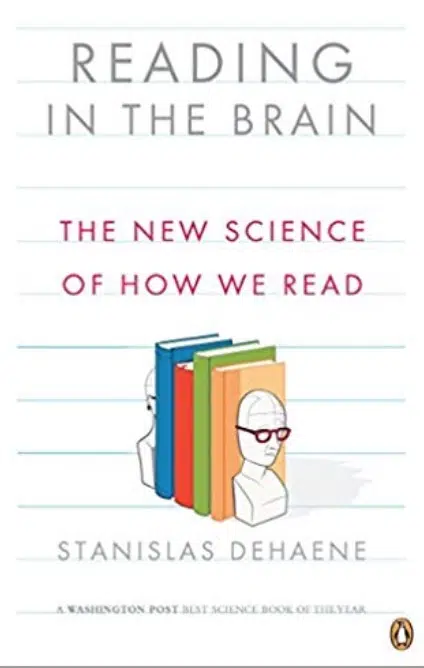
Dr. Stanislaus Dehaene is a French researcher who has authored Reading and the Brain. He and his research team conducted some interesting investigations into Portuguese and Brazilian adults who they classified into 3 groups: unschooled adults (referred to as...
Precis Writing … or when less is more
“English A was ‘a disaster and French was like medieval torture. To sit down with a blank piece of paper and write was the most traumatic thing that had ever faced me in life. I had ideas in my head, but I could not get the stuff down. It was a crushing time.” – Charles Schwab “It will be particularly helpful if they give themselves practice in precis writing, paraphrasing, and note-taking. If one has to write a precis one is forced not only to think out carefully what are the key ideas in a particular passage but also to express them concisely, accurately, and clearly. Paraphrasing makes similar demands and also forces one to consider the style of the original and to be critical […]
MATH: When Words Get In the Way [Premium]
For dyslexic students, the language of math can confuse and obscure. Teachers, tutors, and parents should be aware that language could be interfering with math performance and not mathematics itself. From Dyslexia and Mathematics: Here is an example of a dyslexic student’s sharing of how she becomes confused by what a teacher is saying. The capital letters indicate words that required her to stop and think. Teacher: “We are going to TAKE 25 FROM 61. WRITE DOWN 61 first (I sometimes wrote the first figure I heard before the second one). WRITE DOWN 25 UNDERNEATH it. Put the 2 UNDER the 6 and the 5 UNDER the 1. Draw a line UNDERNEATH. Start at the bottom on the RIGHT. Take 5 AWAY FROM 1. […]
Dyslexia: The Twenty-Something Years [PREMIUM]
“These are the years when it will be easiest to start the lives we want. And no matter what we do, the twenties are an inflection point- the great reorganization – a time when the experiences we have disproportionately influence the adult lives we will lead.” – Meg Jay, author of The Defining Decade “Life for emerging adults is vastly different today than it was for their counterparts even a generation ago. Young people are waiting longer to marry, to have children, and to choose a career direction. As a result, they enjoy more freedom, opportunities, and personal growth than ever before. But the transition to adulthood is also more complex, disjointed, and confusing. ” – Christian Smith, lead author of Lost in Transition Many ‘experts’ have […]
Tips for Engaging with Books – From an Anonymous Adult
This article is aimed at anyone who… is dyslexic, or thinks they might be wishes to help dyslexic adults to engage with books is interested in ways to engage with books What are these tips? 7 things that help me to engage with any book; 3 things that...
STRATEGIES FOR THE MOST COMMON SPELLING MISTAKES: THE SCHWA [Premium]
Once you learn how to recognize the ‘schwa’, you’ll start recognizing them everywhere! In linguistics, the schwa sound is represented by an upside-down ‘e’ and the mouth position is a lot like the ‘uh’ sound in ‘butter’. It contributes to lots of misspellings in dyslexic students (and actually non-dyslexic students too) so recognizing the patterns can significantly improve all-round spelling performance. STRATEGY 1: EXAGGERATE / MISPRONOUNCE THE SCHWA One surprisingly easy strategy is to exaggerate and deliberately mispronounce a word in order to remember the correct spelling. For instance, the-thee reminds you that the schwa is spelled with an ‘e’. Look at the following 3 objects: monitor, computer, and calendar. To remember -or, -er, and -ar, a student can pronounce monitor as mon-i-TOR, exaggerating the […]
DROPPING OUT BECAUSE OF FOREIGN LANGUAGE [Premium]
At Harvard University in the 1970s, a clinical psychologist made a startling discovery. Intending to study the emotional problems that caused students at one of the world’s elite universities to drop out of school to drop out, he found out instead that the most common reason students dropped out of their degree programs was that they were unable to satisfy Harvard’s foreign language requirement. “Dinklage described three groups of students who were otherwise, bright, gifted, and highly motivated, but who remained unsuccessful in the foreign language classroom. He reported that these students were not helped by merely improving study habits or by adjusting to postsecondary demands.” The 1st group of students demonstrated problems in written language that were most apparent in “the student’s reading […]
Latest Research: Repetition As a Poor Way to Teach Dyslexics [Premium]
In groundbreaking research, researchers at MIT or the Massachusetts Institute of Technology reported that dyslexic children and adults have “a diminished ability to acclimate to a repeated input in their paper titled “Dysfunction of Rapid Neural Adaption in Dyslexia.” Like many research papers, dyslexia is seen through a negative lens (‘dysfunction’) and the take-home points through university press releases, similarly so, however the findings are interesting ones and fit with an evolving picture of dyslexia as a learning difference (rather than disease or disability) that extends beyond reading and has ramifications for many aspects of education. “It’s a difference in the brain that’s not about reading per se, but it’s a difference in perceptual learning that’s pretty broad,” says John Gabrieli, who is the study’s […]
[PREMIUM] Latest Research: Dyslexia, Sequential Memory, and Seeing the Big Picture
“My mind doesn’t work like a train track. It’s more like a web page with lots of hyperlinks.” – dyslexic honors college student. It’s refreshing to see that more researchers take an interest on dyslexia beyond reading. In this recent paper from Belgium and Missouri, the challenges of remembering sequential information for dyslexics and non-dyslexics was reviewed. Both working memory and sequencing were examined. Working memory is a type of short-term memory necessary for keeping information ‘in mind.’ Sequencing is remembering the order that things are said. It’s activities such as this that that can make something like following classroom instructions or remembering computer passwords easy or hard. Several interesting observations were made from their review of the research literature: – Dyslexic children and adults tend […]
Surviving Parent Teacher Conferences [Premium]
Parent-Teaching Conferences can be stressful for both parents and teachers. Keep your eye on the big picture, think strategically, and work toward a positive year for your student in the classroom. Often the amount of time you have with the teacher is quite short because of the total number of students involved. As a result, plan on showing up to see how the beginning of the year is progressing and focus on finding solutions if your students is lagging behind or having difficulties. If you’ve purchase Dyslexia, Dysgraphia, or Dyscalculia Teacher cards, now is a good time to use them. Quick Tips for Parent Teacher Conferences If Your Student is Dyslexic: Make a Positive First Impression – This may be the first time your meeting this teacher and she […]
Dyslexic Advantage Premium – Issue 11 Organizing Creativity [Premium]
Premium Issue 11 October 29, 2016 Organizing Creativity, Stealth Dyslexia, Dyslexia and Self Image, Memorizing for School, What Worked for 2E Gifted Dyslexics, Art Therapy for Dysgraphia, Hands-On Math for Fractions, More Interactive Reading Strategies, Mastering Foreign Languages and More This issue has memory strategies that seem to be helpful for a majority of dyslexic folk – whether it’s history facts, science vocabulary, or foreign languages. Subscriptions support Dyslexic Advantage. [/wcm_restrict] Bookmark Please login to bookmark ClosePlease login to access.