Last October was Dyslexia Awareness Month, so many media channels opened their pages and platforms to dyslexia stories. Unfortunately, the one story that really became viral was one that was carried by outlets such Newsweek, The Telegraph, and Mental Floss, media outlets who should know better or at least consult with scientific, clinical, or educational experts in the field of dyslexia. The problem with this misinformation is that it competed with legitimate information about dyslexia and worse, adds to the false narrative that dyslexia is simply “a problem with the eyes.” As it turned out, these ‘fake news’ articles were all linked to a scientist who does not work in the field of dyslexia, but instead has proposed how […]

Positive Math: Developing a Growth Mindset
Stanford professor Jo Boaler talks about the ‘good’ and ‘bad’ ways that math is taught. Flexible mathematical thinking and problem solving are good skills that many dyslexic students can do well at, but all too often, mathematics is taught with an over-emphasis on rote memorization, speed drills, and performance of repetitive procedures, which can be a weakness for students. Boaler and her students made the following motivational video to encourage students to think about math learning with a positive ‘growth’ mindset. Here is one example of how flexible algebraic thinking can be introduced using visual puzzles: MORE VISUAL MATH ACTIVITIES Jo’s How to Learn Math online course is free HERE. A Spanish version is also available. A new course from Jo / Stanford is $99 […]
Strategic Thinking and Dyslexia Education [Premium]
There are many accomplished dyslexics who have told us that one of their greatest strengths in their current career is strategic thinking, but is there any evidence that strategy is a strength that is present in the school years, and if so, can it be better used to help students tackle the many academic hurdles that they face? Unfortunately, there has been relatively little attention studying the potential of strategy in the curriculum of dyslexic students, but there is some and in those studies, the findings are interesting. For instance, in a study of LD students attending 4 Southern California universities, researchers sought to understand how students with significant difficulties in phonological awareness and word attack were able to do just as well as non-LD […]
Executive Function: DE-STRESS [PREMIUM]
Dyslexic children who are struggling in school will be under tremendous stress and have varying levels of anxiety and depression. Stress is well known to affect executive functions and children experiencing stress can look as if they have ADHD. – Destress the Learning Environment. Are expectations well matched to the student’s current ability? Is the workload appropriate? Are accommodations needed? – Is your student being heard and understood? Is your student able to express herself and her feelings? Putting thoughts and feelings into words can have a positive distancing and organizing effect for people under stress. Can your child problem-solve setbacks and disappointments? If not, she may need some help scaffolding her challenges and coming up with a plan. Is there a positive working relationship […]
How to Teach Dyslexic Students Geography [PREMIUM]
Many people may not know that a dyslexic scientist (Dr. Wally Broeker) led the first research team characterizing the Great Ocean Conveyor Belt – a massive cycling that takes place in the world’s oceans that circulates the sun’s heat around the globe and also has profound effects on marine animal migration and climate. Although the subject of Geography should be a natural fit for many dyslexic students with its high demands on MIND strengths (material, interconnected, narrative, and dynamic reasoning), it can also be taught in rote fashion (memorize map names and features) that can lead many students to struggle. In at least one study, dyslexic students being taught geography learned significantly better than their non-dyslexic counterparts if they were taught using multimedia (text, graphics, and sound). Multimedia was […]
This Secondary School Developed a Comprehensive Plan to Help All DYSLEXIC Students
Here's one remarkable school decided to go 'all in' to help a dyslexic high school student who seemed to be slipping away. Matthew was a rising 10th grader at a non-selective high school. The majority of students at the school were described as being of low...
Dyslexic Master Montessori Teacher ALISON AWES [Premium]
I recently had a chance to talk with Master Montessori Teacher Alison Awes who is based at the Montessori Training Center of Minnesota. Alison is dyslexic herself and she has written about how Montessori instruction can support dyslexic students. Alison is also trained in Orton-Gillingham Level1. Like the Orton-Gillingham method, the Montessori approach was created by a physician working with special education students. I knew about Montessori because both our children attended Montessori preschools and we liked many aspects of the educational approach, including self-directed learning, multi-age classrooms, and well-designed hands-on materials. I was interested in hearing about Alison’s experiences because she attended a Montessori school herself until the age of 12 and then transitioned to a traditional middle school. She only discovered that she […]
Positive Affirmations [Premium]
A dyslexic woman and successful tech entrepreneur was interviewed and asked what helped her overcome ‘the odds.’ Here’s what she said: “Affirmations…I literally told myself the naysayers were wrong about me. I told myself exactly what I needed to hear, every single day, to move my life forward.” Here are some of the affirmations on her list – what are yours? 1. “The biggest and most complex obstacle I will ever have to overcome is my mind. If I can overcome that, I can overcome anything.” 2. “I cannot control exactly what happens in life, but I can control how I respond to it all. In my response is my greatest power.” 3. “I have to accept whatever comes my way, and the only important […]
SCIENCE: THE BALANCING ACT OF LITERACY
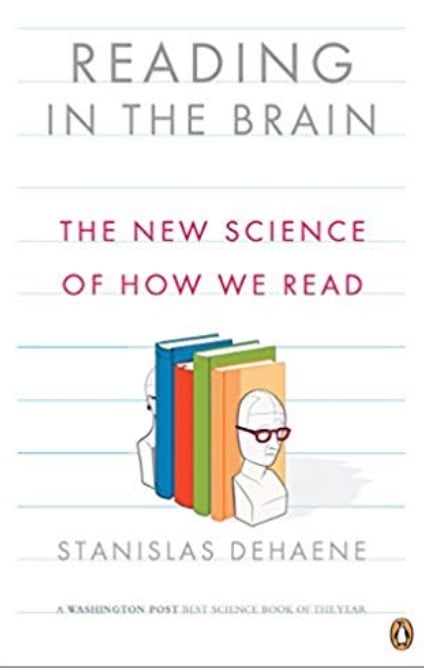
Dr. Stanislaus Dehaene is a French researcher who has authored Reading and the Brain. He and his research team conducted some interesting investigations into Portuguese and Brazilian adults who they classified into 3 groups: unschooled adults (referred to as...
Precis Writing … or when less is more
“English A was ‘a disaster and French was like medieval torture. To sit down with a blank piece of paper and write was the most traumatic thing that had ever faced me in life. I had ideas in my head, but I could not get the stuff down. It was a crushing time.” – Charles Schwab “It will be particularly helpful if they give themselves practice in precis writing, paraphrasing, and note-taking. If one has to write a precis one is forced not only to think out carefully what are the key ideas in a particular passage but also to express them concisely, accurately, and clearly. Paraphrasing makes similar demands and also forces one to consider the style of the original and to be critical […]
MATH: When Words Get In the Way [Premium]
For dyslexic students, the language of math can confuse and obscure. Teachers, tutors, and parents should be aware that language could be interfering with math performance and not mathematics itself. From Dyslexia and Mathematics: Here is an example of a dyslexic student’s sharing of how she becomes confused by what a teacher is saying. The capital letters indicate words that required her to stop and think. Teacher: “We are going to TAKE 25 FROM 61. WRITE DOWN 61 first (I sometimes wrote the first figure I heard before the second one). WRITE DOWN 25 UNDERNEATH it. Put the 2 UNDER the 6 and the 5 UNDER the 1. Draw a line UNDERNEATH. Start at the bottom on the RIGHT. Take 5 AWAY FROM 1. […]
Dyslexia: The Twenty-Something Years [PREMIUM]
“These are the years when it will be easiest to start the lives we want. And no matter what we do, the twenties are an inflection point- the great reorganization – a time when the experiences we have disproportionately influence the adult lives we will lead.” – Meg Jay, author of The Defining Decade “Life for emerging adults is vastly different today than it was for their counterparts even a generation ago. Young people are waiting longer to marry, to have children, and to choose a career direction. As a result, they enjoy more freedom, opportunities, and personal growth than ever before. But the transition to adulthood is also more complex, disjointed, and confusing. ” – Christian Smith, lead author of Lost in Transition Many ‘experts’ have […]