What Reading Speed Has to Do With Leadership: Nothing
Many leaders succeed because of their dyslexia, not in spite of it. President Trump stirred up a hornet’s nest when he suggested that Governor...
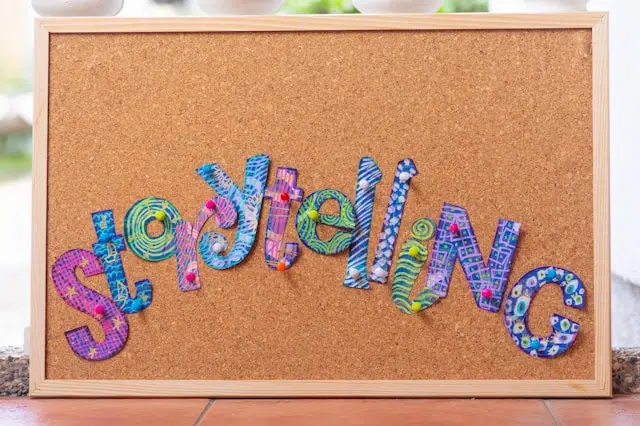

Storytelling as a Dyslexic Strength
Storytelling is not simply a language skill. It is a form of reasoning. Recognizing these strengths helps shift how we think about writing instruction and creative expression.

Rethinking Auditory-Only Phonemic Awareness Training for Reading in the Early Grades Does Not Work
A new study reported on in Education Week found that a widely-used phonemic awareness program (the oral-only Heggerty curriculum) did not improve gains in word reading or oral reading fluency, although it did significantly improve phonemic awareness skills.

Free Back To School Reading Apps
Some of the most common free apps that dyslexic students use for school.

Beyond Behavior: Attention, Working Memory, or Something Else?
The problem with trying to diagnose with behavioral checklists is that behavior can result from many different sources. If you have a 3rd grader...

Math Difficulties Common with Dyslexia
Although the pace of research into dyslexia beyond reading proceeds very slowly, there is some welcome recent research into some of the...
![Executive Function: DE-STRESS [PREMIUM]](https://www.dyslexicadvantage.org/wp-content/uploads/2017/10/Screen-Shot-2019-08-30-at-9.05.28-PM.jpg.webp)
Executive Function: DE-STRESS [PREMIUM]
Dyslexic children who are struggling in school will be under tremendous stress and have varying levels of anxiety and depression. Stress is well known to affect executive functions and children experiencing stress can look as if they have ADHD. – Destress the Learning Environment. Are expectations well matched to the student’s current ability? Is the workload appropriate? Are accommodations needed? – Is your student being heard and understood? Is your student able to express herself and her feelings? Putting thoughts and feelings into words can have a positive distancing and organizing effect for people under stress. Can your child problem-solve setbacks and disappointments? If not, she may need some help scaffolding her challenges and coming up with a plan. Is there a positive working relationship […]
![The Curious History of Mirror Writing [PREMIUM]](https://www.dyslexicadvantage.org/wp-content/uploads/2017/10/Screen-Shot-2019-08-30-at-8.56.30-PM.jpg.webp)
The Curious History of Mirror Writing [PREMIUM]
“As a researcher, working over two decades with hundreds of children and adults with dyslexia, I’m convinced that Leonard Da Vinci was dyslexic.” – Dr Maryann Wolf, author Proust and the Squid Mirror writing occurs commonly in dyslexic and non-dyslexic children between the ages of 3 and 7 years, however a subset of children will have persistent difficulties with letter reversals – and these children (or adults) will be more likely to have significant dyslexia or other LD. It at least one study, mirror writing was thought to occur in only ~ 10% of dyslexics, but its been estimated to be 30% of lefties. Even if mirror writing is only a significant problem in a minority of dyslexics – this rate is 16-fold higher than […]

Zoe Saldana’s Busy Life
Actress-dancer Zoe Saldana is Gamora in Guardians of the Galaxy 1 and 2, and Avengers Infinity War. She is also mom of 3 boys. It's no accident that Zoe has found her groove in so many science fiction movies: "If I could have anything in life, I'd want tons of great...

Meet Yvette Blaess
I recently had a chance to chat with Yvette Blaess, a lovely young woman who is a model and actress and recent finalist in the Miss World America Pageant. She has also been an advocate for dyslexia and ADD and her personal story is one of gutsiness, perserverance, and...
![Gifted with Dysgraphia [PREMIUM]](https://www.dyslexicadvantage.org/wp-content/uploads/2017/10/Screen-Shot-2019-09-01-at-7.46.37-AM.jpg.webp)
Gifted with Dysgraphia [PREMIUM]
For many, the most frustrating aspect of dyslexia is writing. Writing gets better over time, but it may remain effortful and some will find non-verbal outlets for expression such as drawing, film, building physical objects or managing teams more expressive. Because dyslexic thinkers often have strong associational minds and personal memories, writing difficulties are more likely to be due to difficulty getting information down on paper rather than not having something to say. Common obstacles to writing can be many – narrowing ideas, putting selected ideas into order, putting emotions, complex feeling or perceptions, and experiences into words, then harnessing the physical writing steps and visual memory of words (spelling) to get them down on paper. Students with dysgraphia can be helped by first dramatically reducing […]
![How to Teach Dyslexic Students Geography [PREMIUM]](https://www.dyslexicadvantage.org/wp-content/uploads/2017/10/Screen-Shot-2019-08-31-at-5.21.43-PM.jpg.webp)
How to Teach Dyslexic Students Geography [PREMIUM]
Many people may not know that a dyslexic scientist (Dr. Wally Broeker) led the first research team characterizing the Great Ocean Conveyor Belt – a massive cycling that takes place in the world’s oceans that circulates the sun’s heat around the globe and also has profound effects on marine animal migration and climate. Although the subject of Geography should be a natural fit for many dyslexic students with its high demands on MIND strengths (material, interconnected, narrative, and dynamic reasoning), it can also be taught in rote fashion (memorize map names and features) that can lead many students to struggle. In at least one study, dyslexic students being taught geography learned significantly better than their non-dyslexic counterparts if they were taught using multimedia (text, graphics, and sound). Multimedia was […]

Designing for Dyslexia
Despite the fact that dyslexics are over-represented in Art & Design, the field of User Design is surprisingly late to designing for dyslexia specifically in mind. It may be that some design is as good as it is because there are already dyslexics in design teams...

California Dyslexia Guidelines
We are posting the California Dyslexia Guideline here as a convenience to our members who would like to use ReciteMe to listen to the document. FYI: the document uses 'disability' framework of dyslexia and reflects the particular orientation of the authors. Excerpt:...
Music and Dyslexia [PREMIUM]
For our last book, it was when we were getting ready to wrap up our interview with compact disk inventor James Russell, when the question “But when are you going to ask me about music?” came up. Music, we learned was a huge part of Jim Russell’s life (and still is) and interest in inventing that eventually lead to his electronic work (Jim was an audiophile who helped set up a complete commercial radio station before he graduated high school). Since that time, we often had folks mention how important music was to them either recreationally or professionally and we recognized the talents in children as well. One need not look far back into music history to find suggestions that some of the most famous […]

This Secondary School Developed a Comprehensive Plan to Help All DYSLEXIC Students
Here's one remarkable school decided to go 'all in' to help a dyslexic high school student who seemed to be slipping away. Matthew was a rising 10th grader at a non-selective high school. The majority of students at the school were described as being of low...
Creator of IKEA, Ingvar Kamprad – Dyslexic Entrepreneurs
Ingvar Kamprad grew up in poverty on a small farm in Sweden. His grandfather had killed himself after realizing he could no longer afford his mortgage. His grandmother was able to save the family farm. Because Ingvar struggled in school because of his dyslexia and he...

Dyslexia at Work: Say This, Not That
Academic studies of dyslexia in the workplace have all arrived at the same conclusion: the vast majority of adults with dyslexia choose not to disclose or ask for accommodations in the workplace. Of those who do disclose, they often disclose to some but not all of...

Douglas Abrams’ Quest to Change the World
Why is this guy smiling? This is author and publisher Douglas Abrams who has an instant New York Times Bestseller on his hands - The Book of Joy - but that's not all. He's also founded Idea Architects, a company helping "visionaries create a wiser, healthier, and more...

How to Activate Read Aloud on Your Mac (Text-to-Speech) – Links Also for Windows and Android
The following instructions are for MacOS Sierra (10.12.16). You can activate Read Aloud (or Text to Speech) on your Mac so that it reads documents (word, pdf, etc.) or websites when you select certain keys. Apple Icon > System Preferences > Accessibility > Speech > Speak Selected Text When the Key is Pressed You can also change the key that activates Read Aloud. I set mine to Control-Shift-R, but you could also do something easier like Control-R. I found some variability re: whether it worked on different apps. On an earlier version of this version of Read Aloud, for instance, it could read books in my Kindle app. Now that doesn’t seem to work. The Kindle app for Mac has it’s own Text to Speech […]
![NASP Publishes Advice About Dyslexia Screening [Premium]](https://www.dyslexicadvantage.org/wp-content/uploads/2017/09/Screen-Shot-2019-09-01-at-7.43.51-AM.jpg.webp)
NASP Publishes Advice About Dyslexia Screening [Premium]
NASP or the National Association of School Psychologists recently published an article entitled: “Four Dyslexia Screening Myths That Cause More Harm Than Good in Preventing Reading Failure and What You Can Do Instead.” As many of you who are involved in dyslexia advocacy know, NASP holds a great deal of influence over school psychologists. At least in the past NASP probably contributed to reluctance of school psychologists to “say dyslexia” in schools (see 2007 NASP Position Statement here). Some highlights: “At a time when schools are administering more screening to detect risk for reading failure than at any time in the history of education, it is interesting that legislative mandates are prescribing more reading screening in the name of better identification and treatment of dyslexia. Given that most schools already […]
![Dyslexic Master Montessori Teacher ALISON AWES [Premium]](https://www.dyslexicadvantage.org/wp-content/uploads/2017/09/Screen-Shot-2019-08-31-at-4.00.40-PM.jpg.webp)
Dyslexic Master Montessori Teacher ALISON AWES [Premium]
I recently had a chance to talk with Master Montessori Teacher Alison Awes who is based at the Montessori Training Center of Minnesota. Alison is dyslexic herself and she has written about how Montessori instruction can support dyslexic students. Alison is also trained in Orton-Gillingham Level1. Like the Orton-Gillingham method, the Montessori approach was created by a physician working with special education students. I knew about Montessori because both our children attended Montessori preschools and we liked many aspects of the educational approach, including self-directed learning, multi-age classrooms, and well-designed hands-on materials. I was interested in hearing about Alison’s experiences because she attended a Montessori school herself until the age of 12 and then transitioned to a traditional middle school. She only discovered that she […]

How to Read Aloud on Your iPhone
Here are instructions for turning Read Aloud on your iPhone. Settings>General>Accessibility>Speech>Speak Selection (you can adjust speed with the slider at the bottom of this page; turtle for slower and rabbit for faster) Once you have completed the steps...
![America’s Greatest Designers, CHUCK HARRISON [PREMIUM]](https://www.dyslexicadvantage.org/wp-content/uploads/2017/09/Screen-Shot-2019-09-01-at-9.00.20-PM.jpg.webp)
America’s Greatest Designers, CHUCK HARRISON [PREMIUM]
Chuck Harrison‘s designs are so ubiquitous that it’s said that every household in America has something designed by him. Growing up in rural Louisiana, Chuck’s first attempts at design involved the building of a “skate box” when he attached wheels to an old two-by-four, creating an early version of a skateboard. Chuck’s father was an industrial arts teachers first at Southern University, then Texas A & M. Chuck knew he loved to create things with his hands, but didn’t know how to translate it into a career until he took an aptitude test at the City College of San Francisco. His dean advised him to go into industrial design, so he applied to all 5 programs in the country. In college, Chuck had the […]

All 50 States Approved Assessment Tools for Schools
Here is a list of state-approved educational assessment tools (from March 2016). You can check whether specific early reading or dyslexia screeners are listed for your state. Because policies change rapidly, check with your local school district for the latest...
![Positive Affirmations [Premium]](https://www.dyslexicadvantage.org/wp-content/uploads/2017/08/Screen-Shot-2019-09-01-at-9.07.26-PM.jpg.webp)
Positive Affirmations [Premium]
A dyslexic woman and successful tech entrepreneur was interviewed and asked what helped her overcome ‘the odds.’ Here’s what she said: “Affirmations…I literally told myself the naysayers were wrong about me. I told myself exactly what I needed to hear, every single day, to move my life forward.” Here are some of the affirmations on her list – what are yours? 1. “The biggest and most complex obstacle I will ever have to overcome is my mind. If I can overcome that, I can overcome anything.” 2. “I cannot control exactly what happens in life, but I can control how I respond to it all. In my response is my greatest power.” 3. “I have to accept whatever comes my way, and the only important […]
Free and premium posts. To subscribe to Premium: CLICK HERE
WATCH NOW
OSPI STEM Course – STEM for Diverse Learners
Dyslexia and Gifted: Course for Psychologists

Dyslexia for Teachers Course