It’s often told to parents that a “Five Finger Rule” can help you choose whether a book is at the right reading level for a student. The rule states that if a student misses five or more words, it may be too hard, no words and it might be too easy, and three words and it’s ‘just right’. The problem for dyslexic students is that the “Five Finger Rule” may prevent them accessing print information at their intellectual level and if reading aloud is the guide for the rule, then it’s possible they may never be granted access to higher level books even if they are university professors! In fact, pioneering work by Rosalie Fink (see research paper below for Premium members), showed that accomplished […]
[Premium] Q & A: Can People with Dyslexia Learn Speed Reading ?
This question comes up frequently. Can older dyslexic students and adults learn ‘speed reading’ and if so, how? The short answer is YES, but it’s only usually a subset of people who can do this. Young children who are still struggling with decoding are not good candidates for speed reading, but some upper elementary and older folks may be able to do it – although when they do they will likely be skimming and not reading all the words. Recently a member of our community volunteered to share her son’s experiences with speed reading. Rather than doing software or an app, she took the low-tech approach with a workbook and exercises that had her timing her son as he read books of their own […]
[Premium] What to Do If a Reading Curriculum Doesn’t Work
It happens to everybody. You research a curriculum thoroughly or it gets through several levels of a review and then you put it into action and… it just doesn’t connect. What do you do? There are several common reasons why a curriculum doesn’t connect with a particular student – and so some trial and error and modification need to take place. The most common reasons that certain curricula fail for a particular student include: 1. Going Too Fast Because there can be difficulty registering information accurately (sounds, letters, words), a student may need to slow the pace down considerably if the lessons aren’t sinking in. It may seem counterintuitive if you feel a student is slipping farther behind, but reducing work and simplifying […]
Critical Review of the Use of Strattera on Healthy Children with Dyslexia
In a controversial paper, Dr. Sally Shaywitz and colleagues at the Yale Center for Dyslexia and Creativity and the Eli Lilly Pharmaceutical Company have authored a paper that examines the effect of the norephinephrine uptake inhibitor Atomoxetine (Strattera) on...
STRONGER Interconnected Retelling of Stories by Dyslexic Children
In a recent study, researchers found that children with dyslexia (2nd-5th graders) had a better ability to discuss links between a text read compared to fellow students who were at the same decoding level. This might be early evidence of the 'big picture' strengths...
Understanding Processing Speed and Dyslexia [Premium]
When families come together to discuss test scores, no group of scores surprises them as much as “Processing Speed.” Processing Speed scores on psychometric exams might mean Coding and Symbol Search scores on the WISC intelligence exams or Visual Matching and Paired Cancellation on the Woodcock Johnson. Processing Speed scores on these subtests are typically lower for dyslexic students, but on other tasks like Decision Making and in real life, these students may be quite quick and even quicker than their peers at various tasks such as insight-based problem solving or situational awareness (helpful for athletics, for instance). Understanding the true significance of Processing Speed Difference in Dyslexia, then is important not only for recognizing when accommodations may be appropriate school, but also for identifying […]
Reading Fluency: What is Timed Guided Repeated Reading and Why Should Students Do It? [Premium]
In a recent report in the Journal of Learning Disabilities, Lee and Yoon reported that repeated reading had significant beneficial effects on the reading fluency of students with a reading disability. Listening to the passage first increased the benefit. Excerpt: “Reading the passage at least four times increased reading fluency more than two to three times…repetition is a critical variable, and automaticity was based on retrieval (memory) rather than adjustment of reading procedures (e.g. word decoding strategies… The listening passage preview with the proper prosody that was modeled by the teachers may have enhanced understanding of text and reduced the moderator of negative emotion (e.g. confusion, anxiety, frustration) presumed or students with RD (e.g. “with listening passage preview there is less anxiety.” N.B. Fluency practice […]
Top Back to School Apps for Dyslexia [Premium]
EARLY READERS Endless Reader by Originator – Free to try; $5.99-11.99 bundles. iPhone and iPad Great for visual learners. Animations and characters help with sight word learning. Orton Gillingham Card Deck by Mayerson Academy FREE. iPhone and iPad Multisensory card deck with consonants, single vowels, consonant digraphs, vowel teams, vowel + r, short vowel signals, VCe, and common suffixes. Auditory drill. Record and playback to hear pronunciations. Video see and hear sounds. Great phonics practice. Sight Words by Little Speller – FREE Iphone and Ipad All 220 sight words, no-frills program that allows you to create your own sight word lists – lower case or upper case letters. Can allow hints. Sight Words Reading and Spelling by Edoki $3.49 Android. Includes 320 sight words (Fryes + Dolce). […]
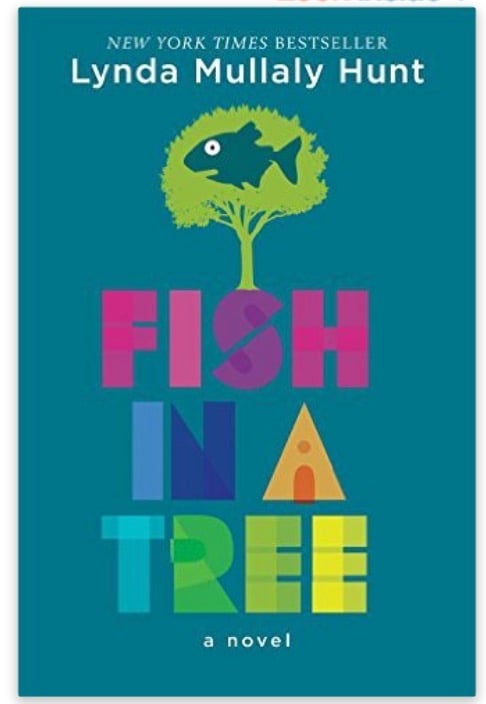
Children’s Books Featuring Positive Characters with Dyslexia
CLOSE TO FAMOUS Newbery Honor winner. When twelve-year-old Foster and her mother land in the tiny town of Culpepper, they don't know what to expect. But folks quickly warm to the woman with the great voice and the girl who can bake like nobody's business. Soon Foster...
Best Early Dyslexia Screeners for Schools – Elementary [Premium]
With new legislation moving schools toward early identification of students with dyslexia, teachers, classrooms, and districts are having to decide on which screener would be best for identifying students “at-risk.” For dyslexic students, presence of a reading gap has been detected as early as the first grade and early intervention is well-recognized to be beneficial. Universal screening in schools is a great idea – parents, teachers, and students should just be aware of the limits that a brief screening tool can have. Most early screeners will not include cognitive or intelligence tests (e.g. working memory, reasoning, ‘giftedness’) nor will they assess non-reading academic tasks such as math, writing, or spelling. They are a start, however, and will definitely be valuable for helping kids get the […]
Dyslexia in the General Classroom – YOU DECIDE : 2nd Grader and Reading [Premium]
YOU are a 2nd-grade teacher in a busy public school classroom. You just learned that Teddy, a student in your class has been tested and found to be dyslexic. Teddy already gets pull-out instruction with multisensory learning to help him read. What can you do to help Teddy make more progress in reading? ************ 1. Alliteration, Rhyming, and Singing – All students can benefit by alliteration and rhyming. New readers will find the books easier to read and reinforcing in terms of the patterns of sounds and printed word families, but good readers can also use alliteration and rhyming as a prompt for poetry and humorous writing. Here is a nice graphic organizer for alliteration: (click here for more). This teacher created alliteration spinners to […]
Latest Research: Advances in our Understanding of Dyslexia, ADHD, and Giftedness [Premium]
It’s long been known that Dyslexia and ADD / ADHD have high rates of overlaps or “co-morbidities”. Dyslexia and ADHD co-occur 30-50% of the time (Germano, 2010) and only 40% of children with dyslexia and 20% of children with ADD/ADHD have it in isolation (Wilcutt and Pennington, 2000). Science has progressed on many fronts over the past 5 years, and both attention and dyslexia are now known to be much more complex than originally suspected. It has long been known that dyslexia is associated with attention and working memory differences, and that reading, writing, and spelling difficulties are higher among children identified as having ADHD. Both Dyslexia and ADD / ADHD are associated with slower processing speeds and both seem to be connected with the […]