Dyslexia as an Evolutionary Advantage

Dyslexia is not a neurological disorder or even an impairment, but rather a concession for having cognitive strengths in exploration, big-picture thinking, creativity, and problem-solving that have contributed to human survival amid changing environments. This insight comes from a new study published in Frontiers in Psychology that finds an association between the learning difference and “an explorative bias.” — Additude Magazine, on the recent paper by Taylor and Westergaard   Cambridge scholars Helen Taylor and Martin David Vestergaard are shaking up the world with their article, Developmental Dyslexia: Disorder or Specialization in Exploration? In just a week, the article already had more views that 98% of all Frontiers articles. I’ve begun to a do a deep dive in our Premium magazines, but one of the reasons […]

Bookmark

Please login to bookmark
Close
To access this post, you must be a Premium subscriber. log in

Bookmark
Please login to bookmark Close
read more

Is There a Natural Way to Write for Dyslexics?

  Writing is so difficult for people with dyslexia, it’s a reasonable question to ask whether certain types of writing might come more naturally than others.   AUTOBIOGRAPHICAL AND PERSONA WRITING As highlighted in Philip Schultz’s example and in his book Comforts of the Abyss, writing with a strong narrative voice, whether it’s your own voice and experiences or someone else’s, is a style of writing that comes naturally to many dyslexic people. It might be because of strong personal and emotional memories and personal responses to learning about the lives of others; it may be that the feelings and imaginings are difficult to get down on paper, but once they are there, the words may become alive to any reader fortunate to read them. […]

Bookmark

Please login to bookmark
Close
To access this post, you must be a Premium subscriber. log in

Bookmark
Please login to bookmark Close
read more

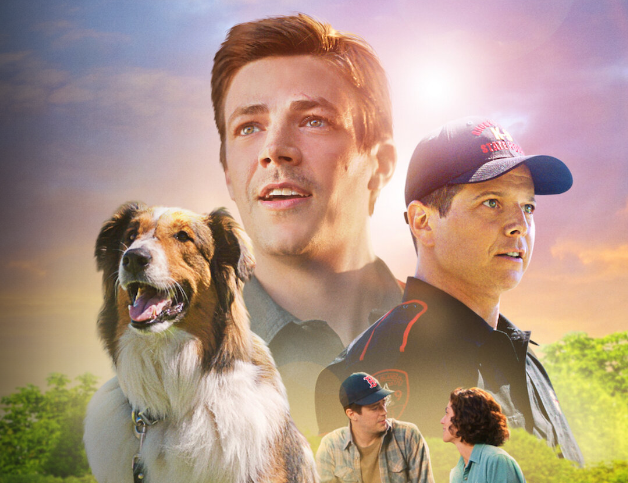
Rescued by Ruby: Netflix Movie Based on a True Story

A nice family-friendly movie based on a true story is “Rescued by Ruby”. It’s a story of a high-spirited and difficult-to-train animal shelter dog who met up with a high-spirited and difficult-to-train state policeman (Daniel O’Neil). The two connected on multiple levels to make an against-the-odds rescue of a young boy who was lost for 36 hours after he took a bad fall and was knocked unconscious. Daniel, the policeman, is dyslexic with ADHD and what comes through in the movie is how important it is to have different learners of all types in difficult real world scenarios. By all accounts, Ruby, an Australian shepherd and border collie mix, was intelligent and also difficult to train using standard approaches. She was placed and returned the […]

Bookmark

Please login to bookmark
Close
To access this post, you must be a Premium subscriber. log in

Bookmark
Please login to bookmark Close
read more

Manuel Garcia-Rulfo in Netflix’s Lincoln Lawyer

“We were shooting and I said: ‘I can not do this’. I was going to quit.” — Manuel Garcia-Rulfo   Manuel Garcia-Rulfo had big shoes to fill – following on Matthew McConaughey’s Mickey Haller in Netflix’s remake of The Lincoln Lawyer. English is a second language for him AND he’s dyslexic. But if you were to watch him in the role today – he’s an absolute natural. He brings distinctive differences to the role and he does marvelously. Brock and I have both been enjoying his series and also love that he’s talking about his dyslexia in interviews. García-Rulfo’s dyslexia increased his nervousness. To learn his lines, he resorted to a method taught to him by his grandmother, who was an artist.

“I […]

Bookmark

Please login to bookmark
Close
To access this post, you must be a Premium subscriber. log in

Bookmark
Please login to bookmark Close
read more

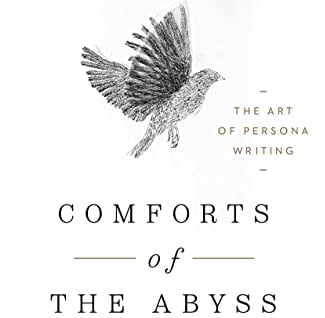
Comforts of the Abyss: New Book from Philip Schultz

“Schultz, founder and director of The Writers Studio, chronicles the challenges he faced as a poet, fiction writer, and teacher that led him to see the aesthetic and psychological value of creating a writing persona. He has long confronted a pervasive inner critic that he calls “the s*bird,” whose “sole agenda is to negate and revoke…—the author discovered that a persona allowed him to distance himself from his material, such as his erratic, self\ destructive father, and his own feelings of shame and fear of failure.” – Kirkus Reviews   Philip Schultz has a new book out called Comforts of the Abyss: The Art of Persona Writing where he shares his battle with dark voices in his head and how he transcends it using borrowed […]

Bookmark

Please login to bookmark
Close
To access this post, you must be a Premium subscriber. log in

Bookmark
Please login to bookmark Close
read more

What Should We Do This Summer?

Summer is usually a great time for dyslexic students – out of the daily grind of school. Hopefully the pandemic truly is easing and more activities are returning to normal.   TAKE A BREAK Students have been working hard and under stress these past months, so make sure they have a chance to really have some time for rest and recovery. How long that break might be depends on how tired or stressed they may be as the school year comes to a close. Having unscheduled time can do some good things – encourage some students to finally pick up a book of their choosing and begin to read, start a new hobby or return to one, or deepen relationships with family and friends. [gspeech […]

Bookmark

Please login to bookmark
Close
To access this post, you must be a Premium subscriber. log in

Bookmark
Please login to bookmark Close
read more

PTSD and Dyslexia

“This study identified that emotional trauma took place in all participants, and this resulted in many having Post-Traumatic Stress Disorder manifestations as a result of returning to school for their own children. Participants still noted anger and resentment as adults towards their childhood teachers…” — Neil Alexander-Passe   In Neil’s study of PTSD or post-traumatic stress disorder in dyslexic adults in the United Kingdom, he found that all experienced emotional trauma in their time in the public school system and over half (64%) experienced PTSD or school avoidance symptoms when re-entering schools as parents, resulting in anxiety with many stating that they felt powerless as a child. PTSD symptoms occurred in the same frequency whether or not adults had achieved advanced degrees.

From […]

Bookmark

Please login to bookmark
Close
To access this post, you must be a Premium subscriber. log in

Bookmark
Please login to bookmark Close
read more

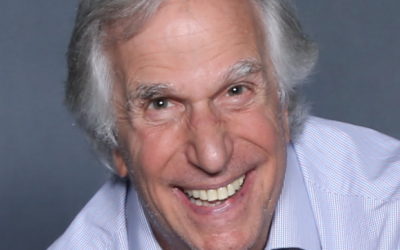
Henry Winkler: Find the Very Best for You

“There is an emotional component to the learning challenged,” says Winkler, whose parents called him “dumb dog” for his failures. “You don’t have a sense of self because you’re not keeping up with everybody… you feel terrible about yourself.” — Henry Winkler   Henry Winkler seems to be everywhere. He seems to be having the time of his life and giving generously of his life lessons and hopes for the future. He’s currently in the 3rd season of HBO’s Barry, in an Emmy Award-winning role of a drama teacher, but he also finds every opportunity to share his life lessons about dyslexia and finding the very best for yourself.

In a lovely interview in the New York Times, Henry shared how he fell […]

Bookmark

Please login to bookmark
Close
To access this post, you must be a Premium subscriber. log in

Bookmark
Please login to bookmark Close
read more

Novelist Natasha Solomons

“Books are my refuge, but I had to overcome dyslexia to write the stories I was bursting to tell.” — Natasha Solomons   Natasha is a lifelong storyteller, but it took a lot of persistence and resilience to get those stories out. As a child, she listened to stories incessantly and her grandfather (also dyslexic) had the foresight to pass on his antique writing desk to her when she was just 10 years “to help her with ambition of becoming a writer.” It would be nearly 20 years later, but Natasha would write a novel at that writing desk that would earn a six-figure advance. Currently she is the author of 8 novels. She recently wrote a poignant article for The Guardian. An excerpt: “…stories […]

Bookmark

Please login to bookmark
Close
To access this post, you must be a Premium subscriber. log in

Bookmark
Please login to bookmark Close
read more

Creativity and Dyslexia

“Individuals with dyslexia significantly outperformed controls in creativity scores in adult samples…” – Majeed et al., 2021   In the past year, there have been two more studies to add to the creativity research literature on dyslexia. The first, a meta-analysis of 14 studies found clear patterns of stronger creativity among dyslexic adult subjects compared to non-dyslexics, but non-significant differences among children or adolescents. The studies included a variety of creativity tasks and measures. Unfortunately, that paper offers little speculation about why that difference might exist, but with recent theories about the role of executive function and attention systems in creativity, it may be that the stronger performances on creativity tasks are only seen on a group basis after executive function abilities have matured. [gspeech […]

Bookmark

Please login to bookmark
Close
To access this post, you must be a Premium subscriber. log in

Bookmark
Please login to bookmark Close
read more

Complementary Cognition

” …our current education and work environments are often not designed to make the most of dyslexia associated thinking, we hope this research provides a starting point for further exploration of the economic, cultural and social benefits the whole of society can gain from the unique abilities of people with dyslexia.” – Nick Posford, CEO, British Dyslexia Association about Dr. Helen Taylor’s theory of complementary cognition.   Since dyslexia may be present in as many as 17% of the general population, many have questioned why such a high incidence exists. One provocative answer to this question comes from Dr. Helen Taylor, the first author on a paper about Complementary Cognition, a theory that proposes that brain-based differences that exist among groups of individuals like dyslexic […]

Bookmark

Please login to bookmark
Close
To access this post, you must be a Premium subscriber. log in

Bookmark
Please login to bookmark Close
read more

Should I Homeschool?

With a large part of the world at least partially homeschooling this past year and students falling behind, some parents are asking whether they should homeschool their kids for the rest of the school year or perhaps for the 2022-23. Homeschooling during the pandemic really isn’t like how homeschooling was before the pandemic – because many museums and community groups are closed or have closed their classes, homeschooling groups may not be meeting in-person, or if in-person, smaller, with social distancing in place. Still, homeschooling can be a powerful option for students if financially viable. Homeschooling can allow students to have more individualized remediation and cultivate their strengths and talents.   ADVANTAGES OF HOMESCHOOLING FOR DYSLEXIC STUDENTS – Customized education – build on strengths and […]

Bookmark

Please login to bookmark
Close
To access this post, you must be a Premium subscriber. log in

Bookmark
Please login to bookmark Close
read more

Speak

To listen, select text and click sound button

WATCH NOW

OSPI STEM Course – STEM for Diverse Learners

Dyslexia and Gifted: Course for Psychologists

Dyslexia for Teachers Course

SPONSORS

    Discover Your Dyslexic MIND Strengths
                                    Free


Amazon Affiliate Notice

Dyslexic Advantage is an Amazon Affiliate. If you click on a link that takes you to the Amazon store, Dyslexic Advantage may earn money on qualifying purchases. Clicking HERE to enter Amazon and making a purchase may support Dyslexic Advantage. Thank you!