Here's our 2021 snapshot of Passed Dyslexia Laws in the US. This is a rapidly changing time for dyslexia legislation, so please update us with corrections, changes, or newly passed laws. Huge thanks to the Dyslexic Advantage community, Decoding Dyslexia, and other...
What is Dyscalculia? – Fast Facts [Premium]
“There is nothing in the IDEA that would prohibit the use of the terms dyslexia, dyscalculia, and dysgraphia in IDEA evaluation, eligibility determinations, or IEP documents.” – Michael Yudin, Department of Education “Dyscalculia is not assessed in our schools.” – school professional Fast Facts about Dyscalculia What Is Dyscalculia? Dyscalculia is usually defined as a difficulty with calculations or arithmetic skills that is not explained by low intelligence or inadequate schooling. How Common? 3-10% of people, 40% of dyslexics What Ages? Dyscalculia is lifelong, although many helpful strategies can improve math achievement. When adults with dyscalculia have calculator accommodations, they can perform at high levels in even mathematics-intense disciplines. From We Are Teachers How Do You Assess Dyscalculia? Typically dyscalculia is assessed by calculating the […]
SELF-ADVOCACY: Common Accommodations and Modifications
KNOW! One of the first steps in advocacy is knowing which accommodations and or modifications you need. ASK! Here's a nice list from the state of CT. There's a reason this article is filed under "Self-Advocacy". Students should be aware that they...
BREAKING NEWS: Supreme Court Decision: the IDEA and Educational Benefit of FAPE
The U.S. Department of Education has just released guidelines in light of the recent unanimous US Supreme Court Decision Endrew F. vs. Douglas County School District. That decision interpreted the scope of FAPE (free appropriate public education) to mean that a school’s educational program must provide “more than de minimus” educational benefit. “De minimus” is a latin term meaning trivial or minimal. According to the court, “every child should have the chance to meet challenging objectives.” The new guidelines from the government can be found here: https://www2.ed.gov/policy/speced/guid/idea/memosdcltrs/qa-endrewcase-12-07-2017.pdf
We will also post the document in pdf below so it can be read using Reciteme Text to Speech (click the red button upper left of this browser for text to speech). These guidelines are particularly important […]Dyslexic Master Montessori Teacher ALISON AWES [Premium]
I recently had a chance to talk with Master Montessori Teacher Alison Awes who is based at the Montessori Training Center of Minnesota. Alison is dyslexic herself and she has written about how Montessori instruction can support dyslexic students. Alison is also trained in Orton-Gillingham Level1. Like the Orton-Gillingham method, the Montessori approach was created by a physician working with special education students. I knew about Montessori because both our children attended Montessori preschools and we liked many aspects of the educational approach, including self-directed learning, multi-age classrooms, and well-designed hands-on materials. I was interested in hearing about Alison’s experiences because she attended a Montessori school herself until the age of 12 and then transitioned to a traditional middle school. She only discovered that she […]
Surviving IEP Season [Premium]
IEP season usually runs from late March through early June, and it’s a time when parents and teachers meet with the IEP team to assess the past year’s progress and also plan for changes that should take place for the upcoming year. Be aware, too, that we have a new Supreme Court decision that is holding school districts accountable. Here is an important excerpt from the Endrew F. vs. Douglas County School District decision: “The IEP must aim to enable the child to make progress. After all, the essential function of an IEP is to set out a plan for pursuing academic and functional advancement… When all is said and done, a student offered an educational program providing ‘merely more than de minimis’ [trivial or […]
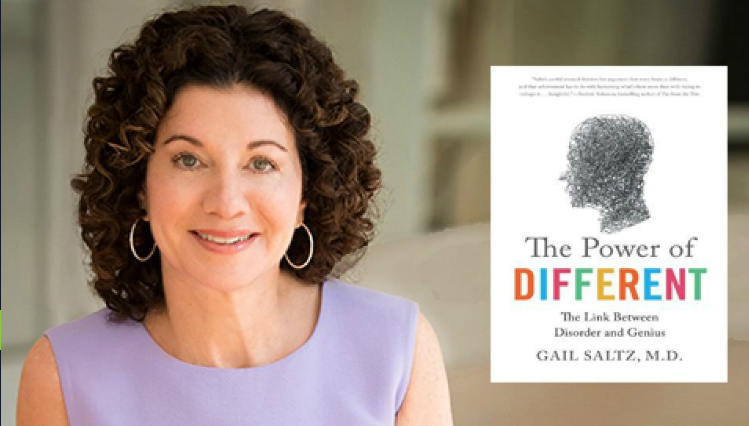
The Power of Different – Exclusive Interview
Dr. Gail Saltz has a hit book on her hands, and it's called The Power of Different. In addition to being a professor of psychiatry at Columbia University, she grew up with a brother who'd win a Nobel Prize. Gail was kind enough to talk to her about what she learned...
GREAT Supreme Court Decision – Schools Must Provide More Support for Students with Disabilities
A GREAT Supreme Court Unanimous (8-0) was handed down that states that public schools must provide more than ‘de minimus’ or the bare minimum to benefit students with disabilities. The fact that some school systems (in this case, Douglas County) were fighting the case all the way to the Supreme Court tells you that there is a need to ensure that students are receiving an education that provides “appropriately ambitious progress.” The decision is very relevant to students with dyslexia because by definition, their intelligence is in the average or above average range. The case that was decided today was Endrew vs. Douglas County which involved a student with autism and attention deficit disorders whose parents removed him from public school in the fifth grade. He made […]
Let Them Listen – Audiobooks and Dyslexia [Premium]
Let Them Listen! “The objective of the present research study was to understand what benefits the use of audiobooks (both school-books and books of various genres, recorded on digital media) could bring to preadolescents and adolescents with developmental dyslexia. Two groups, each consisting of 20 adolescents, were compared. The experimental group used the audiobooks, while the control group continued to use normal books. After 5 months of experimental training, the experimental group showed a significant improvement in reading accuracy, with reduced unease and emotional–behavioural disorders, as well as an improvement in school performance and a greater motivation and involvement in school activities.” – Milani et al., Dyslexia (journal) It’s surprising how often we continue to hear that dyslexic students are denied the use of audiobooks […]
WHEN A UNIVERSITY IS DYSLEXIA-UNFRIENDLY [Premium]
Despite recent advances in dyslexia-friendly policies and statements in K-12 and higher education, reports of dyslexia-unfriendly and discriminatory practices are more common than anyone would like to mention. At the university level, rarely is there any education for faculty and staff about the needs of dyslexic and LD students on campus, so it should not be surprising that many professors will not understand why accommodations are necessary for dyslexic students. They may actively discourage students from obtaining such accommodations although it is against federal law. As we have recently reported, US Department of Justice regulations requires that private colleges give “Considerable weight to the documentation of past accommodations, modifications, or auxiliary aids or services received in similar situations” and not require additional burdensome re-testing. […]
Dyslexia and Medical School – AMA Journal of Ethics [Premium]
In an important article published in the AMA Journal of Ethics, physicians call for mandatory dyslexia training for medical school faculty. The article presents the case of a 1st year dyslexic medical student who excelled in college and in clinical research, but who is conflicted about whether to disclose his dyslexia to faculty and fellow classmates because of his concerns that it would negatively impact his “education, performance, and reputation.” The writers comment: “Given the scientific progress in understanding the epidemiology, cognitive basis, and neurobiology of dyslexia, it is surprising that ignorance of the condition persists; such ignorance continues to result in faculty misperceptions of dyslexia. For example, the very common and physiologically based symptom of slow reading in dyslexia can be misinterpreted as slow […]
Surviving Parent Teacher Conferences [Premium]
Parent-Teaching Conferences can be stressful for both parents and teachers. Keep your eye on the big picture, think strategically, and work toward a positive year for your student in the classroom. Often the amount of time you have with the teacher is quite short because of the total number of students involved. As a result, plan on showing up to see how the beginning of the year is progressing and focus on finding solutions if your students is lagging behind or having difficulties. If you’ve purchase Dyslexia, Dysgraphia, or Dyscalculia Teacher cards, now is a good time to use them. Quick Tips for Parent Teacher Conferences If Your Student is Dyslexic: Make a Positive First Impression – This may be the first time your meeting this teacher and she […]