He’s not just Denzel’s son. John David Washington is the action hero of Christopher Nolan’s Tenet and former NFL running back, and one of Time Magazine’s NEXT 100 leaders who will shape the world’s future. And he’s also dyslexic. John David has talked about his dyslexia, usually mentioning things in passing – like how writing in different colors helps because he’s dyslexic – but he hasn’t discussed in-depth how he overcame the challenges of dyslexia and demands for things like sight-reading or learning scripts. He has said, though, that his mother, Paulette Washington helps him with every aspect of his career, including pre-reading scripts and helping him practice his lines. Interestingly, John David initially avoided acting because he didn’t want to be hired […]
How Not To Give Up On Learning A Second Language [Premium]
Learning second languages are difficult for many dyslexic students; foreign language waivers or substitutions are common, but in spite of this, many can learn other languages and even multiple languages if the goal is conversation. Writing and spelling second and third language can be more difficult, but also possible for many people. Students may be more successful if they able to study over a longer time and if they have learned more about the structure of language in their native tongue. In the video below, listen to 4 Hour Work Week guru Tim Ferriss (yes, he’s dyslexic) talk about how he learned to be able to converse in many foreign languages. The type of learning described, won’t necessarily make you a master of […]
Dyslexic Strengths: Nonverbal Super Powers [Premium]
“Did you see how their finance person rolled her eyes when the marketing guy was talking?” she’d observe. “They’re just not on the same page.” Or she might explain why the no’s they heard on various proposals could mean different things…” Michael Wheeler, from The Art of Negotiation about Erin Egan At one of our Conferences on Dyslexia and Innovation, Erin Egan, at that time, one of Dyslexic Advantage’s Board members, spoke about her experiences with dyslexia. If you only heard about her struggles, you’d miss that she was a leading negotiator for such powerhouse companies as Microsoft and Airbus. From Michael Wheeler again: “It’s as if Erin has social sonar, a way of seeing the interpersonal cross-currents below the surface and the forces […]
Inspiration: Dyslexia At Oxford
This is an extraordinary collection of 21 interviews of people at Oxford. We should never underestimate the potential of people with dyslexia. The talents,...
Challenges of Pandemic Learning For Dyslexic Students
As education slowly drifts to a new normal, and parents take stock of where they are and what their priorities are in education, it is best to be aware of what to be on the lookout for because dyslexic students learn so differently. AUDITORY PROCESSING HURDLES Because...
The Unappreciated Benefits of Dyslexia
This article can be read aloud or translated into over 70 languages by using the red ReciteMe button at top left. To close Reciteme, click the "X" at top right. This Q & A was originally published in Wired Magazine. Normally dyslexia is considered a handicap: a...
Q & A: Can I be a Doctor if I am Dyslexic? [Premium]
Answer: Yes. Absolutely. There have been many famous physicians who were dyslexic, and many today that you might not know who are dyslexic because many don’t identify in the workplace and many more weren’t formally identified. The typical profile of a dyslexic physician is to have had early troubles in elementary school, then a jump in abilities in middle to high school, and then further jump up in college and medical school. There are probably several reasons why medicine can be a popular occupation for adult (often gifted) dyslexics. First, it is a complex domain to master that nevertheless also requires an ability to grasp the big picture, make decisions, and execute a plan. Medicine is based on science, which is a strong suit and […]
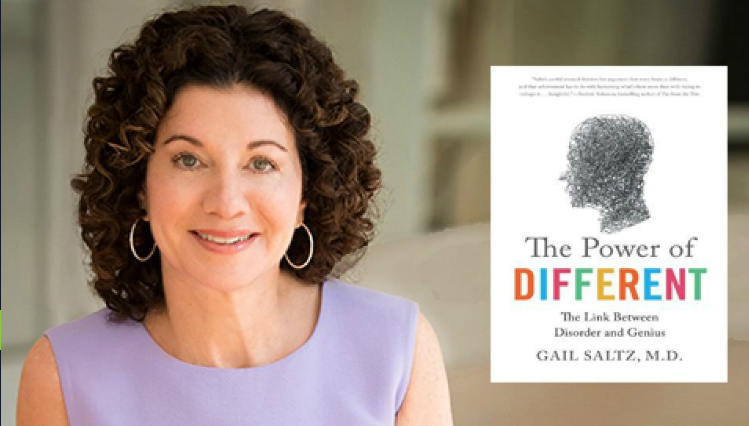
The Power of Different – Exclusive Interview
Dr. Gail Saltz has a hit book on her hands, and it's called The Power of Different. In addition to being a professor of psychiatry at Columbia University, she grew up with a brother who'd win a Nobel Prize. Gail was kind enough to talk to her about what she learned...
Dyslexia and Medical School – AMA Journal of Ethics [Premium]
In an important article published in the AMA Journal of Ethics, physicians call for mandatory dyslexia training for medical school faculty. The article presents the case of a 1st year dyslexic medical student who excelled in college and in clinical research, but who is conflicted about whether to disclose his dyslexia to faculty and fellow classmates because of his concerns that it would negatively impact his “education, performance, and reputation.” The writers comment: “Given the scientific progress in understanding the epidemiology, cognitive basis, and neurobiology of dyslexia, it is surprising that ignorance of the condition persists; such ignorance continues to result in faculty misperceptions of dyslexia. For example, the very common and physiologically based symptom of slow reading in dyslexia can be misinterpreted as slow […]
How Herd Aversion Helps Adult Dyslexics [Premium]
“I have herd aversion to the point it’s ridiculous.” – Vince Flynn In our earliest interviews with adult dyslexics in research for our book, a recurring theme of “herd aversion” emerged. Herd aversion or tendency to avoid group think – seems to be a common feature among some of the most innovative and pioneering men and women that we’ve had the pleasure of knowing. Some may point to early childhood experiences of having to “go against the grain” or figure things out on their own, but regardless, as adults, it takes a lot of gutsiness because there can be a lot of messages from the world telling you that they don’t get you or that you’re flat out wrong. Fortunately, there are lots of disciplines […]