Higher Math for Scientists: Don’t Give Up [Premium]

“…To be a successful scientist, you need to do what you like to do. If you don’t like mathematics, don’t give up. That doesn’t forestall you’re being a scientist at all.” — E.O. Wilson   One of the first science professors I had as a freshman at Harvard was E.O. Wilson, a pioneer of Evolutionary Biology, and scientific giant. I would only learn years later that he was also dyslexic, struggled with math, and was blind in one eye due to a childhood injury. He passed away in December at the age of 92, and left a legacy of insights on the natural sciences and the education of young scientists. One bit of advice that drew him into controversy was his strong insistence that “being […]

Bookmark

Please login to bookmark
Close
To access this post, you must be a Premium subscriber. log in

Bookmark
Please login to bookmark Close
read more

Literature for Dyslexics [Premium]

“What can students learn from literature they cannot learn elsewhere? Why should they bother?” — Gary Morson   At the same time that Brock and I have been reviewing the research literature for our update for Dyslexic Advantage, I also came across an article by Russian Literature professor Gary Morson on Why College Kids are Avoiding the Study of Literature. As it turns out, some of the problems and solutions he identifies has direct implications for dyslexic readers.   THE CHALLENGES The challenges facing dyslexic readers and complex literature are many – there is so much of it, for instance, the sheer quantity may be impossible for younger readers even if they are able to listen-read through audiobooks; great literature may also have complex grammar […]

Bookmark

Please login to bookmark
Close
To access this post, you must be a Premium subscriber. log in

Bookmark
Please login to bookmark Close
read more

Connecting the Dots with John Chambers of CISCO [Premium]

“A lot of leaders would say they’re curious. I can tell you from personal experience that most leaders are not. They don’t ask a lot of questions, rarely challenge conventional wisdom, stick with what they know, and often turn to sources that reinforce their existing point of view… my curiosity about things I don’t understand has been a critical factor in my success as a leader.” – John Chambers   I recently came across a book review of Chambers’ book by Emma Wallace, a fellow dyslexic who works in a very different industry, fashion. Despite these differences, Chambers’ description of strengths resonated.   “Not only has dyslexia meant that for John (and myself) it forced him to learn important skills early on: persistence, finding your […]

Bookmark

Please login to bookmark
Close
To access this post, you must be a Premium subscriber. log in

Bookmark
Please login to bookmark Close
read more

The Social-Emotional Side of Dyslexia [Premium]

“A lot of the time I take the parts of learning that are still hard for me as rejection — as someone telling me I can’t. I see points taken off for misspelled words on in-class English essays, and I start to see my future crumbling. I see the colleges that my dyslexia could prohibit me from going to. I see the kids with better scores, who don’t need tutors, or extra time, and I feel jealous. I feel worthless.” – Anna Kopelmann   The social emotional journey for dyslexic people can be complex and change over time depending on one’s life contexts, support, and environment. As few as 1 in 4 dyslexic students may be formally identified in public school systems, leaving the majority […]

Bookmark

Please login to bookmark
Close
To access this post, you must be a Premium subscriber. log in

Bookmark
Please login to bookmark Close
read more

Getting a Sense for Numbers [Premium]

For many, math is a somewhat mysterious subject. From an early age, some students may stand out from others in their mathematical ability whereas others don’t and some may seem to have bewildering difficulty with even basic aspects of numbers and math quantity. The last decade has seen significant advances in our understanding of individual learning differences when it comes to math. If you are a teacher, tutor, or parent working with a student with math challenges, understanding the basic extent of the difficulty will help guide you about knowing how to help.   POOR NUMBER SENSE Poor number sense is a problem noticed at the very start when children begin working with numbers and quantities. A student may memorize how to count (“1,2,3,4…”), but […]

Bookmark

Please login to bookmark
Close
To access this post, you must be a Premium subscriber. log in

Bookmark
Please login to bookmark Close
read more

Writing: How to Start [Premium]

WRITING FOR THOSE WHO HAVE TROUBLE STARTING Dyslexic writers who have difficulty beginning to write often suffer from knowing too much and not too little. There will be challenges of spelling and putting ideas into words, but more often there are larger structural issues like how do I narrow what I know so that I can write what is being asked of me and where do I start with what I want to say? For students who may sit with a blank piece of paper or blinking cursor for hours, having a template for responses, developing a keyword approach like the semantic map in the previous article or mind-mapping big ideas may be a way to get the writing process started.   PRE-WRITING TEMPLATES Being […]

Bookmark

Please login to bookmark
Close
To access this post, you must be a Premium subscriber. log in

Bookmark
Please login to bookmark Close
read more

Rapid Automatized Naming (RAN) and Its Impact on Dyslexia [Premium]

“Substantial evidence shows that dyslexic readers have problems with rapid naming of visual items. Early research assumed that this was a consequence of phonological processing deficits, but recent findings suggest that non-phonological processes may lie at the root of the association between slow naming speed and poor reading. The hypothesis that rapid naming reflects an independent core deficit in dyslexia is supported by the main findings: (1) some dyslexics are characterized by rapid naming difficulties but intact phonological skills; (2) evidence for an independent association between rapid naming and reading competence in the dyslexic readers, when the effect of phonological skills was controlled; (3) rapid naming and phonological processing measures are not reliably correlated. “ – Araujo et al. 2011   Rapid automatized naming or […]

Bookmark

Please login to bookmark
Close
To access this post, you must be a Premium subscriber. log in

Bookmark
Please login to bookmark Close
read more

Dyslexic Mathematicians: Paradoxes and Insights [Premium]

“The life narratives of these research mathematicians describe a non-direct pathway to becoming a research mathematician. They describe barriers that could have limited their process, such as calculus focused on memorization, or classes such as organic chemistry focused on memorization. All participants noted that they moved forward in mathematics once they reached a place in which they were fascinated by the problems, most often, a visual-spatial set of problems to solve.” – Lambert and Harriss, 2020   I recently had the pleasure of talking to Dr. Rachel Lambert at the University of Santa Barbara. Her paper with dyslexic mathematician Dr. Edmund Harriss begins with the following bold abstract: “Using neurodiversity as our theoretical framework, rather than a deficit or medical model, we analyze the narratives […]

Bookmark

Please login to bookmark
Close
To access this post, you must be a Premium subscriber. log in

Bookmark
Please login to bookmark Close
read more

Speak

To listen, select text and click sound button

WATCH NOW

OSPI STEM Course – STEM for Diverse Learners

Dyslexia and Gifted: Course for Psychologists

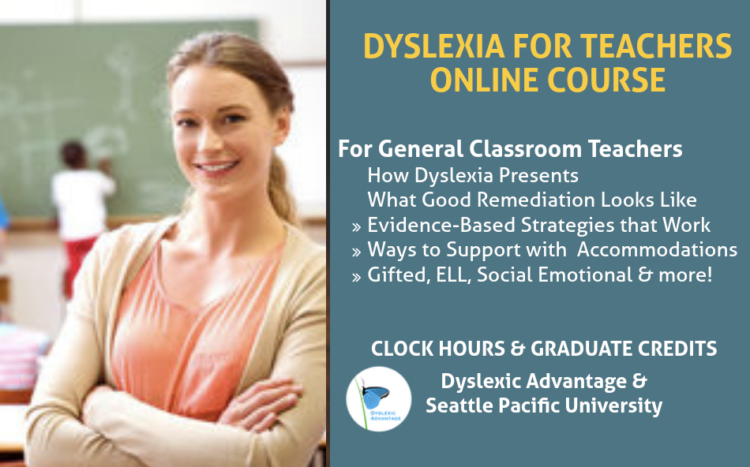
Dyslexia for Teachers Course

SPONSORS

    Discover Your Dyslexic MIND Strengths
                                    Free


Amazon Affiliate Notice

Dyslexic Advantage is an Amazon Affiliate. If you click on a link that takes you to the Amazon store, Dyslexic Advantage may earn money on qualifying purchases. Clicking HERE to enter Amazon and making a purchase may support Dyslexic Advantage. Thank you!