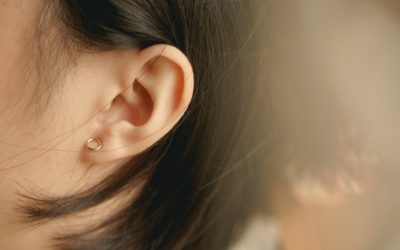
There is a long and diverse research history of dyslexia and documenting the auditory processing difficulties associated with dyslexia that hinder phonological awareness. It’s why dyslexic kids will struggle in school when everyone is required to wear a mask. The sounds are muffled, but also if the teacher is masked, then students cannot look at the teachers mouth – as an additional cue to what sound is being made. In a recent study published by Annals of Dyslexia, researchers made an interesting observation: “those children with dyslexia who are better readers attended more to the mouth while presented with a person’s face in a phonologically demanding condition.” More research needs to be done about this issue, be aware of helps like watching a video of […]
Auditory Processing and Remote and Hybrid Learning
“Children with dyslexia often exhibit increased variability in sensory and cognitive aspects of hearing relative to typically developing peers.” – Hornickel et al., 2012 PNAS There is a long research history establishing auditory processing difficulties among children and adults who are dyslexic. What may be confusing to non-scientific people is that auditory processing is not simply “hearing”. It relates to the complex networks in the brain that interpret what sounds are heard.
Auditory processing difficulties in dyslexic people don’t present with abnormalities on simple screening hearing tests; instead, the difficulties present in tests that examine the effect of listening over background noise, for instance, or processing of rapid sounds. The reason it’s important to be aware of this is that auditory processing […]My Pandemic Hack for Classes
Shelley Wear, a long-time volunteer on our Dyslexic Advantage editorial team shared these pandemic hacks for her classroom. Thanks Shelley! “The struggle is real to make sure students understand what you are saying with a mask on. I purchased a personal amplifier (small box with microphone headset) and it has been a game changer for my classroom. Students are much more attentive and I believe it has really helped. I am also using a multisensory approach to decoding, teaching Visual Phonics. The paras have overheard students talking about how fun it is when kids are in the hallways and think no one is listening. I am relieved, because I have limited access to middle school materials to teach decoding and a large percentage of my […]
I Never Thought I’d Be Homeschooling… [Premium]
We never thought we would be homeschooling when we started almost 2 decades ago. What our family can say today, is that looking back, we’re so grateful for our entire homeschooling journey – even though initially homeschooling chose us rather than the other way around. Today there are so many reasons to homeschool and ways that homeschooling can also be a good fit for dyslexic students, so take heart in the adventure ahead of you and may the coming year be one good surprise after another. WHY HOMESCHOOLING CAN BE A GOOD MATCH FOR MANY STUDENTS Schooling at an Individual Pace The first reason why homeschooling can be a good match for many students is that traditional schooling can be a […]
Dyslexic Talents in STEM: Chemistry [Premium]
“Through most of high school, I hated math and science. It wasn’t until my senior year when I took AP statistics and AP chemistry that I discovered that I enjoyed solving challenging analytical problems. After I graduate in May, I plan to pursue a graduate degree in Electrical Engineering.” – Leah Harper Although chemistry may present dyslexic students with challenges, once the initial difficulty of notation and the periodic chart are mastered, the spatial and analytical aspects of chemistry can become life-long endeavors. In a video (that’s now unavailable on YouTube), Dr. Blake Charlton talked about how he discovered the narrative intelligence associated with dyslexia and how he used it to help him learn the periodic chart. Instead of memorizing columns of elements by […]
Quick or Slow Remediation? [Premium]
The learning challenges of dyslexia can be very mild or quite severe, but the severity of challenges are not the sole determination of whether remediation will be quick or slow. Once we visited an elite private school for dyslexia on the East Coast. Their aim to get students through their program in 2 years, in part, was successful. The school had solid training of its teachers and great resources, but the program was not unlike other structured literacy programs. Why was it that they could get students through so fast with their programs? Part of the answer was the strict criteria they had for student admission. With a long waitlist for spots, they had decided to accept to their program only students who had strong […]
Surviving and Thriving in Hybrid Classrooms
With the rise in vaccinations, many schools have opened with a hybrid schedule which has some pros and cons for dyslexic students. ONLINE ASSIGNMENTS - GROUP PARTICIPATION and AUDIO The reduction in written assignments since of the start of the pandemic has...
Homeschooling or Modified Schooling?
This is an older post from when students were heading back to school after the pandemic. We'll keep it up in case it's helpful for other families considering homeschooling or modified schooling First off, it's best to be aware that there is rarely a perfect...
Real World Learning with Dr. Glenn Sterner
In our interview with CEO Brett Kopf, he told us that the experience of being part of the Bailey Scholar program at Michigan State University was life changing in terms of finding a positive future for himself. He told me that his advisor was a really inspirational...
Going Back: Learning To Live With The New Normal
This is an old post from the early peak post-COVID times. We'll leave this up in case some of the advice is helpful. Whether it's you going back to work, or your children trying a new part-in school, part-remote school routine, many of us will be having to adjust to...
Not Falling Behind in MATH
"The studies vary in how severe they gauge the so-called “COVID slide” to be, but all of them found on average, students would lose more ground in math than in reading. Three studies based on NWEA data predicted students could learn half or up to a full year less math...
SELF-ADVOCACY: Common Accommodations and Modifications
KNOW! One of the first steps in advocacy is knowing which accommodations and or modifications you need. ASK! Here's a nice list from the state of CT. There's a reason this article is filed under "Self-Advocacy". Students should be aware that they...