Recently we discovered a wonderful table in an article by Angela Shaw in Exceptional Parent. Angela began her article by talking about the daily challenges that dyslexic students face because of the potential for repeated failure in the classroom. One way to battle...

GETTING PAST ANGER
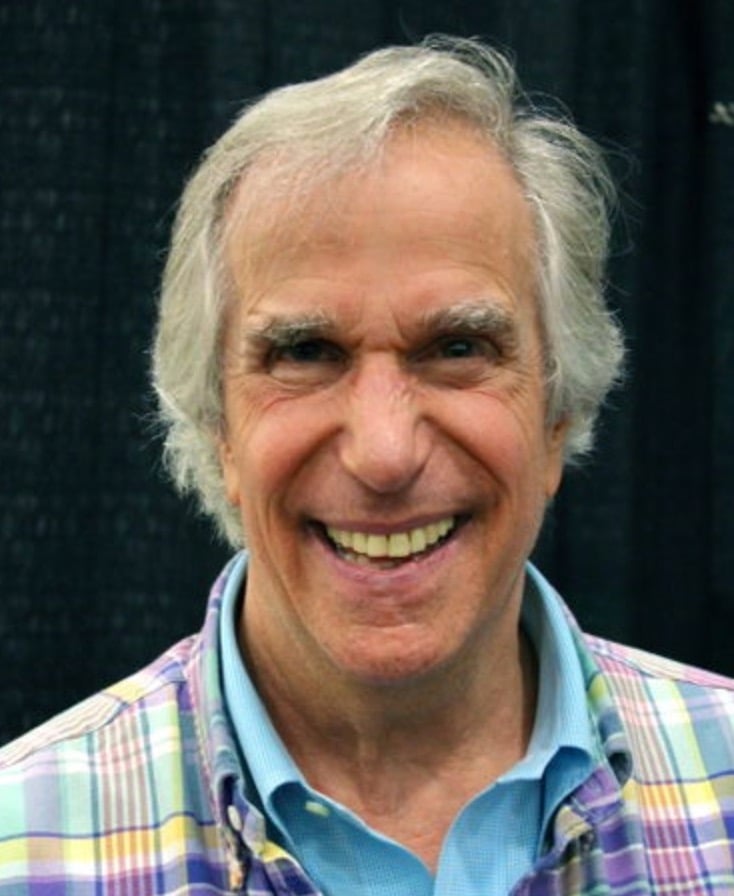
If you meet Henry Winkler today, one of the last words to come to mind would be the word "anger." Yet anger is what Henry battled with for years because of his experiences in school before dyslexia was recognized.... Henry wasn't allowed to graduate with his class at...
How to Help With the Social and Emotional Side of Dyslexia
Dr. Michael Ryan is a Michigan Clinical Psychologist who developed one of the first clinical programs for LD students at Colorado State University and he spoke at our first Dyslexic Advantage conference. From his writing at LDOnline and the IDA: How can parents and...
[PREMIUM] Realistic Confidence
We know that confidence can make a huge difference in course of people’s lives, but the question is how to avoid the extremes of underconfidence, which might lead to avoidance and underachievement, and overconfidence, which can also result in going off the rails. It was Albert Bandura, a founding father of scientific psychology who found that the best predictor of an individual person’s success is whether or not they believe they will succeed. But there’s an important caution here. There’s a difference between believing you will succeed and believing you will succeed easily…or to put it another way, there’s a difference between an unrealistic optimist and a realistic optimist. A realistic optimistic (or what some call a pessimistic optimist) anticipates that the path to success […]
[PREMIUM] Dyspraxia and Independence
Dyspraxia (DCD) has its impact in childhood, but recently researchers have been looking more into the challenges that young adults face in higher education, general life skills, and the workplace. Dr. Amanda Kirby, who we interviewed in the last issue, did her thesis work in the area of 16-25 year olds with dyspraxia. Based on her interviews for the project, over half reported some ongoing difficulties whether it was learning to drive a car, writing by hand, or organizing their household. From our perspective, the information should be seen as helpful information that recognizes extra challenges that a young person with dyspraxia might face as well as the benefits of extra supports as this young person heads into full adulthood and independence. Some Findings re: […]
How to Respond to Negative Self-talk
From Imperfect Families: Empathize: Put yourself in their shoes and try to understand what they may be feeling. “That writing assignment’s pretty challenging, eh?” Rewrite the script: Instead of “Writing is hard. I’m stupid,” your child could say, “I’m working hard on...
Dyslexia: The Twenty-Something Years [PREMIUM]
“These are the years when it will be easiest to start the lives we want. And no matter what we do, the twenties are an inflection point- the great reorganization – a time when the experiences we have disproportionately influence the adult lives we will lead.” – Meg Jay, author of The Defining Decade “Life for emerging adults is vastly different today than it was for their counterparts even a generation ago. Young people are waiting longer to marry, to have children, and to choose a career direction. As a result, they enjoy more freedom, opportunities, and personal growth than ever before. But the transition to adulthood is also more complex, disjointed, and confusing. ” – Christian Smith, lead author of Lost in Transition Many ‘experts’ have […]
What’s the Most Stressful Time for Dyslexic Students?
ANSWER: Grades 3-5 in Elementary School. If we know this, are we doing everything we can to help students emotionally and socially in these grades? There are many pressures that converge on the 3-5th grade (see The 3rd Grade Wall), and developmentally, it is a...
Research: Classroom Culture Matters – Effects on Reading Performance [Premium]
In the latest issue of the Journal of Learning Disabilities, researchers from Harvard and Greece found that classroom culture, and in particular LD students’ perceptions of their classrooms motivational framework had sudden, significant, and unpredictable effects on reading performance and students’ emotional state. From the authors: “The purpose of the present study was to evaluate the proposition that a classroom’s motivation discourse exerts significant influences over students’ achievement in reading.” The two conditions that researchers compared were: #1. Mastery (internal standard) – “In our class trying hard is important” #2. Performance (external standard) – “In our class, getting good grades is the main goal.” Their brief conclusions: “…the results confirmed the research hypotheses concerning the role of mastery and performance goals. The form (mastery) had a […]
Dyslexia = Grit
A Penn Professor's book is currently winging its way around the Internet: Grit - the Power of Passion and Perseverance - with its talented author Angela Duckworth making the rounds around popular media outlets. With interest, I looked clicked on a link to a popular...
Dyslexia – How to Thrive
"Self-esteem is not an internal quality fed by easy success and diminished by failure. It is a positive way of experiencing yourself when you are fully engaged and are using your ability to the utmost in pursuit of something of value." - Dr. Carol Dweck, Stanford...
The Wisdom of Pooh and Dyslexia
“You are braver than you believe, and stronger than you seem, and smarter than you think.” – A.A. Milne Winnie the Pooh’s advice is smarter than we may think when it comes to encouraging young readers. What’s better than reading intervention and working memory training? Reading intervention and working memory + education about intelligence. If students believe they are not intelligent or bad at school, that negative mindset is likely to sabotage even well-planned educational programs. Students who believe that they become more intelligent step-by-step by persistence and hard work, are significantly higher achieving in reading and working memory, but also math and science. Now researchers are discovering that some studies that didn’t discover significant improvements in working memory training may have been due to this […]