Just from the strengths perspective, we might expect that many dyslexic students would excel in science and technology. STEM jobs often require strengths in real world problem solving that depend on powers of observation, analytical ability, pattern recognition, and synthesis, or putting different pieces of information together. The problem is, dyslexic students may get few opportunities to observe and dabble in “real science”, unless they go out looking for it. Recently, I had a chance to catch up with Dr. Doresa Jennings, an amazing homeschooling mom who we all can learn from in terms of how she designed educational plans that build on students strengths. Even if your kids aren’t yet strong in science or technology, Doresa’s advice is worth listening to. Here are three […]
INTERVIEW: Dr. Brock Eide & the Neurolearning Dyslexia App
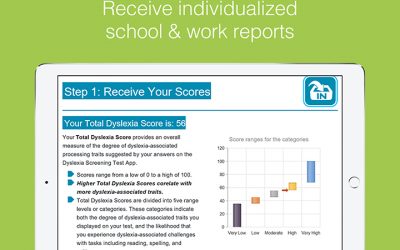
After writing The Dyslexic Advantage and co-founding this non-profit, why did you decide to create this innovative dyslexia screening app? After 20 years working in this field it's become clear that the biggest problem facing dyslexic people is access. That includes...
The Reading Wars: Will Dyslexic Students Be Helped?
"Over the long term in reading, the lowest performing students – those readers who struggle the most – have made no progress from the first NAEP administration almost 30 years ago..." There are discouraging reports from the 2019 NAEP Reading Assessment. NAEP stands...
Too Much Homework for Dyslexic Students [Premium]
Thinking in 3D
"Spatial ability is not a simple matter. It is not just a picture-like memory for objects, places, and people. This kind of memory might be helpful in carrying out spatial tasks, but it is not at the core of what is meant by spatial ability. Spatial mechanical...
STRENGTHS MATTER: Intelligence and Dyslexia [Premium]
Parents and dyslexia advocates should beware – there are vocal proponents arguing against the importance of intelligence and / IQ in determining the educational needs of students with dyslexia. As far as it seems we have come with dyslexia (more states with dyslexia-specific laws, mandatory teacher training), there are areas where the concept of specific learning disability and the definition of dyslexia is coming under attack. SOME “EXPERTS” BELIEVE INTELLIGENCE IS IRRELEVANT FOR EDUCATING DYSLEXIC STUDENTS As surprising as it may seem, Past IDA Vice President Dr. Louisa Moats has argued through questionable selection of data there are “negligible cognitive differences between ‘LD’ and ‘Poor Reader’ ” groups. From her presentation online HERE, she states “Garden variety poor readers” are numerous and very much like […]
Spelling Difficulties as a Source of Dysgraphia
In an interesting study, researchers in France looked at the impact of spelling difficulty on the writing performance of students with dyslexia. From the study: "Dyslexia weakens spelling skills, even when the child presents no motor problems. By varying the degree of...
Auditory and Motion Processing in Dyslexia with a Twist
Although there is now a substantial research literature documenting the presence of auditory and motion processing differences among children and adults with dyslexia, for the first time that we know of, a research group is studying whether these differences can...
HOW THEY DO IT! University Students with Dyslexia [Premium]
Fortunately, there’s been growing interest from educational and scientific researchers for understanding how people can compensate for some of the academic challenges of dyslexia. POSITIVE FACTORS AMONG UNIVERSITY STUDENTS WITH DYSLEXIA A recent study by Drs. Rebecca Wiseheart and Lori Altmann (Int J Lang Comm Dis 2017) had a nice review of compensating factors as well as providing some new research data about oral fluency among college-attending dyslexic students. Background “In recent years, dyslexia has been reconceptualized as the combined sum of risk factors and protective factors. A number of protective factors have been investigated including verbal intelligence, vocabulary knowledge, morphological awareness, executive functions, and social-emotional resilience…Vocabulary knowledge has been implicated as a protective factor that allows some individuals to achieve good reading comprehension, despite […]
Motivation: The Batman Effect [Premium]
Researchers recently found that young children were more likely to persevere with tedious jobs that they were given to do if they pretended that they were Batman while doing it. There may be something to it. The researchers were studying self-regulation and perseverance in 180 kids ages 4 to 6 years old. The researchers compared 3 test situations: 1. First-person (“Am I working hard?”), 2. Third-person (“Is Billy working hard?”), and 3. Fictional Person (“Is Batman working hard?”). The effects were quite significant. This motivational effect was named after Batman because out of all the characters that were suggested to the children (Bob the Builder, Dora the Explorer, Rapunzel from Tangled, and Batman), children who chose Batman showed the greatest perseverance with the task! To […]
[PREMIUM] Dyspraxia and Independence
Dyspraxia (DCD) has its impact in childhood, but recently researchers have been looking more into the challenges that young adults face in higher education, general life skills, and the workplace. Dr. Amanda Kirby, who we interviewed in the last issue, did her thesis work in the area of 16-25 year olds with dyspraxia. Based on her interviews for the project, over half reported some ongoing difficulties whether it was learning to drive a car, writing by hand, or organizing their household. From our perspective, the information should be seen as helpful information that recognizes extra challenges that a young person with dyspraxia might face as well as the benefits of extra supports as this young person heads into full adulthood and independence. Some Findings re: […]
[PREMIUM] The Truth About Lefties (Left-handed)
By the gestation age of 10 weeks, doctors can see that 85% of human fetuses prefer their right hand over their left. This preference (along with motor asymmetry) usually persists later in life The idea that dyslexics were often left or mixed-handed was first raised by Samuel Orton in 1925. Subsequent studies have suggested that left-handedness is indeed more common in dyslexics compared to controls, although a great deal of conflicting data exist, and a majority of dyslexics are right-dominant. Recently, researchers at Oxford performed genetic analysis on families with at least two sibilings who show symptoms of dyslexia. They found that the PCSK6 gene is associated with both dyslexia and mixed- or left-handedness. The PCSK6 gene is interesting because it interacts with another protein […]