Dyslexic Super Learners [Premium]

“This isn’t how I think either; this is how I have trained myself to think, because it works.” – Kevin Horsley, World Memory Champion and author of Unlimited Memory   It seems surprisingly common that dyslexics are found among the world’s super-learners. It might be that all share a passion for understanding their memory strengths after suffering what may have been years in the school system, not realizing how to use their gifts. It also might be that dyslexics as a group have strengths in metacognition, especially when studied in selected groups like those found in universities. When Kirby and colleagues studied dyslexic and non dyslexic students in college, his study group of dyslexic students were more likely to use metacognition (i.e. thinking about their thinking), […]

Bookmark

Please login to bookmark
Close
To access this post, you must be a Premium subscriber. log in

Bookmark
Please login to bookmark Close
read more
Actor Stephen Graham [Premium]

Actor Stephen Graham [Premium]

Actor Stephen Graham has been described as one of the most talented actors the United Kingdom has ever seen. Yet, he almost didn’t get a chance at his breakthrough role in Snatch when the director Guy Ritchie, asked whether he had come to read for the part. Stephen had just come along to support his friend who was trying to get the job, but when Guy found out that he was also an actor, he encouraged him to give it a try. Stephen told him that because he was dyslexic, he couldn’t do a cold read. I don’t know whether he knew that Guy Ritchie is also dyslexic – but fortunately for Stephen, Guy asked him to improvise the scene instead and he completely smashed […]

Bookmark

Please login to bookmark
Close
To access this post, you must be a Premium subscriber. log in

Bookmark
Please login to bookmark Close
read more

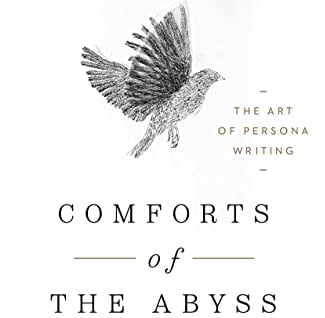
Comforts of the Abyss: New Book from Philip Schultz

“Schultz, founder and director of The Writers Studio, chronicles the challenges he faced as a poet, fiction writer, and teacher that led him to see the aesthetic and psychological value of creating a writing persona. He has long confronted a pervasive inner critic that he calls “the s*bird,” whose “sole agenda is to negate and revoke…—the author discovered that a persona allowed him to distance himself from his material, such as his erratic, self\ destructive father, and his own feelings of shame and fear of failure.” – Kirkus Reviews   Philip Schultz has a new book out called Comforts of the Abyss: The Art of Persona Writing where he shares his battle with dark voices in his head and how he transcends it using borrowed […]

Bookmark

Please login to bookmark
Close
To access this post, you must be a Premium subscriber. log in

Bookmark
Please login to bookmark Close
read more

Taming the Monkey Mind [Premium]

The idea of having a “monkey mind”, jumping around from one thought to another, dates back centuries. It’s a term that can be applied to restless poorly controlled thought. We are all susceptible to “monkey mind” when our minds are excited, stressed, worried, or tired, but for some, the monkey mind is a frequent state of mind and learning to control it and harness its powers is an important life task. Many dyslexic strengths – like curiosity, imagination, multi-perspective thinking, can also lead to maladaptive behaviors – like susceptibility to distraction or trouble persisting at particular goals – depending what is demanded at the time. What is becoming increasingly clear as scientist make progress in understanding how creative minds work – is that creativity at […]

Bookmark

Please login to bookmark
Close
To access this post, you must be a Premium subscriber. log in

Bookmark
Please login to bookmark Close
read more

Creativity and Dyslexia

“Individuals with dyslexia significantly outperformed controls in creativity scores in adult samples…” – Majeed et al., 2021   In the past year, there have been two more studies to add to the creativity research literature on dyslexia. The first, a meta-analysis of 14 studies found clear patterns of stronger creativity among dyslexic adult subjects compared to non-dyslexics, but non-significant differences among children or adolescents. The studies included a variety of creativity tasks and measures. Unfortunately, that paper offers little speculation about why that difference might exist, but with recent theories about the role of executive function and attention systems in creativity, it may be that the stronger performances on creativity tasks are only seen on a group basis after executive function abilities have matured. [gspeech […]

Bookmark

Please login to bookmark
Close
To access this post, you must be a Premium subscriber. log in

Bookmark
Please login to bookmark Close
read more

Writing: How to Start [Premium]

WRITING FOR THOSE WHO HAVE TROUBLE STARTING Dyslexic writers who have difficulty beginning to write often suffer from knowing too much and not too little. There will be challenges of spelling and putting ideas into words, but more often there are larger structural issues like how do I narrow what I know so that I can write what is being asked of me and where do I start with what I want to say? For students who may sit with a blank piece of paper or blinking cursor for hours, having a template for responses, developing a keyword approach like the semantic map in the previous article or mind-mapping big ideas may be a way to get the writing process started.   PRE-WRITING TEMPLATES Being […]

Bookmark

Please login to bookmark
Close
To access this post, you must be a Premium subscriber. log in

Bookmark
Please login to bookmark Close
read more

Dyslexic Mathematicians: Paradoxes and Insights [Premium]

“The life narratives of these research mathematicians describe a non-direct pathway to becoming a research mathematician. They describe barriers that could have limited their process, such as calculus focused on memorization, or classes such as organic chemistry focused on memorization. All participants noted that they moved forward in mathematics once they reached a place in which they were fascinated by the problems, most often, a visual-spatial set of problems to solve.” – Lambert and Harriss, 2020   I recently had the pleasure of talking to Dr. Rachel Lambert at the University of Santa Barbara. Her paper with dyslexic mathematician Dr. Edmund Harriss begins with the following bold abstract: “Using neurodiversity as our theoretical framework, rather than a deficit or medical model, we analyze the narratives […]

Bookmark

Please login to bookmark
Close
To access this post, you must be a Premium subscriber. log in

Bookmark
Please login to bookmark Close
read more

Speak

To listen, select text and click sound button

WATCH NOW

OSPI STEM Course – STEM for Diverse Learners

Dyslexia and Gifted: Course for Psychologists

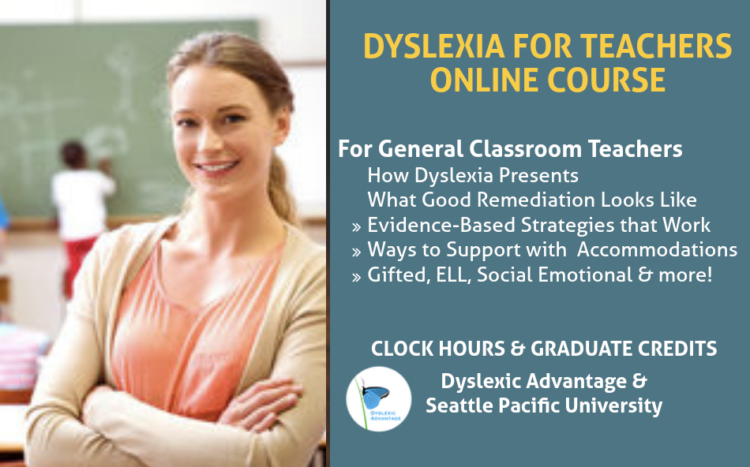
Dyslexia for Teachers Course

SPONSORS

    Discover Your Dyslexic MIND Strengths
                                    Free


Amazon Affiliate Notice

Dyslexic Advantage is an Amazon Affiliate. If you click on a link that takes you to the Amazon store, Dyslexic Advantage may earn money on qualifying purchases. Clicking HERE to enter Amazon and making a purchase may support Dyslexic Advantage. Thank you!