Pausing while Writing [Premium]

There are many reasons why students may pause while writing, but more if students are also dyslexic.   Those who remember their thoughts and experiences as nonverbal sensations will need extra steps to put their knowledge and understanding into words. Dysgraphic students will have difficulty writing and those with small working memories, may overload with all the work required for getting ideas in their head down on the page.   A BIRD’S EYE VIEW OF THE WRITING PROCESS When Brock and I were testing students, our battery for comprehensive testing included the timed writing of the lower case alphabet, sentence and symbol copy (the latter from the Coding subtests of the WISC), sentence combining, spelling test, descriptive writing of a picture, then 10 minute writing […]

Bookmark

Please login to bookmark
Close
To access this post, you must be a Premium subscriber. log in

Bookmark
Please login to bookmark Close
read more

Grit and Resilience [Premium]

“The worst problem any dyslexic has to face is not reading, writing, or even spelling, but a lack of understanding…” — The Reality of Dyslexia   Grit is the ability to persevere in the face of setbacks, challenges, pain, and adversity. Resilience is similar, but different in the sense it describes an ability to “bounce back” from difficulties. Both, as it turns out, are important for the achievement of long-term goals and mental well-being. When students in dyslexia specialty schools were studied over the course of years, researchers found that grit and resilience scores increased over time in these schools – and that correlated with lower levels of anxiety and depression and improved academic performance. Want to assess your grit? Click here —> GRIT SCALE […]

Bookmark

Please login to bookmark
Close
To access this post, you must be a Premium subscriber. log in

Bookmark
Please login to bookmark Close
read more

Taming the Monkey Mind [Premium]

The idea of having a “monkey mind”, jumping around from one thought to another, dates back centuries. It’s a term that can be applied to restless poorly controlled thought. We are all susceptible to “monkey mind” when our minds are excited, stressed, worried, or tired, but for some, the monkey mind is a frequent state of mind and learning to control it and harness its powers is an important life task. Many dyslexic strengths – like curiosity, imagination, multi-perspective thinking, can also lead to maladaptive behaviors – like susceptibility to distraction or trouble persisting at particular goals – depending what is demanded at the time. What is becoming increasingly clear as scientist make progress in understanding how creative minds work – is that creativity at […]

Bookmark

Please login to bookmark
Close
To access this post, you must be a Premium subscriber. log in

Bookmark
Please login to bookmark Close
read more

Free Reading Resources for Teens [Premium]

It can be difficult to find free reading resources for middle and high school readers, but the non-profit SERP (Strategic Education Research Partnership) has a free engaging downloadable curriculum. The printed materials can also be purchased for classrooms.   They launched STARI curriculum for Tier II to address “gaps in fluency, decoding, stamina, and comprehension.” It is definitely not sufficient to be used as a primary curriculum for dyslexic students, but each lesson module includes 3 levels of fluency passages and each lesson includes multimodal resources like pictures and audio interviews in addition to text. Check out all of the STARI resources HERE. Here are examples from a unit on disasters:   One interesting part of this curriculum is the scaffolding of debate. For instance: […]

Bookmark

Please login to bookmark
Close
To access this post, you must be a Premium subscriber. log in

Bookmark
Please login to bookmark Close
read more

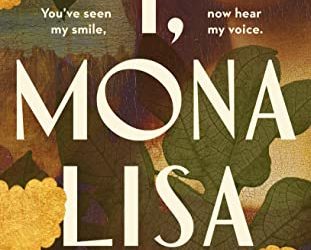
Novelist Natasha Solomons

“Books are my refuge, but I had to overcome dyslexia to write the stories I was bursting to tell.” — Natasha Solomons   Natasha is a lifelong storyteller, but it took a lot of persistence and resilience to get those stories out. As a child, she listened to stories incessantly and her grandfather (also dyslexic) had the foresight to pass on his antique writing desk to her when she was just 10 years “to help her with ambition of becoming a writer.” It would be nearly 20 years later, but Natasha would write a novel at that writing desk that would earn a six-figure advance. Currently she is the author of 8 novels. She recently wrote a poignant article for The Guardian. An excerpt: “…stories […]

Bookmark

Please login to bookmark
Close
To access this post, you must be a Premium subscriber. log in

Bookmark
Please login to bookmark Close
read more

Study Hacking The Paper Driver’s License Test [Premium]

  The Washington state driver’s license paper and pencil test can be a difficult one for dyslexic drivers. Having seen some of the sample questions, there’s a lot more number trivia compared to the California test I passed many years ago. Whether you don’t drink alcohol or smoke marijuana, you have to answer specific questions about how long it takes for the body to recover from a drink or smoking, but also answer detailed questions about how many days you have before reporting the sales of a vehicle to the Department of Licensing (5 days). With many similar questions and answers, the pass rate is 80% (what a nightmare!).   ‘STICKY’ MEMORY CAN INTERFERE WITH ROTE STUDY FOR DRIVER’S TEST How to study for this […]

Bookmark

Please login to bookmark
Close
To access this post, you must be a Premium subscriber. log in

Bookmark
Please login to bookmark Close
read more

Reading and Learning are About Thinking [Premium]

“Then a strange thing happened. The more I started thinking about what we were studying, the easier it was to remember the facts. Facts began to stick in my head — and I didn’t even have to try to make it happen…” — Don Johnston, CEO   After using Don Johnston’s assistive technology with our kids when they were growing up, it was such a pleasure for us to meet Don Johnston himself for the first time a few weeks ago. We hadn’t known that he is dyslexic and before we met, he shared his autobiography (for kids), Building Wings. The book is available in e-book form HERE and otherwise through Amazon. Like many dyslexic adults, Don vividly remembers events from his childhood and school […]

Bookmark

Please login to bookmark
Close
To access this post, you must be a Premium subscriber. log in

Bookmark
Please login to bookmark Close
read more

Non-Reading Ways to Recognize Dyslexia [Premium]

Last month, I was surprised when one of the teachers in our Dyslexia for Teachers course said that a writing sample couldn’t lead anyone to suspect a student had dyslexia because dyslexia was a reading disorder. Of course, that statement is wrong.     KNOWING MORE THAN THEY CAN EASILY SHOW BY TESTS OR WRITING Perhaps the most common way that dyslexic students come to the notice of their teachers is by unevenness in their abilities or what some refer to as a “spiky profile.” They may have strong reasoning abilities and make thoughtful observations and comments during class, but their written work may may be far lower than their knowledge from trouble getting their ideas on the page, the need for extended time, and […]

Bookmark

Please login to bookmark
Close
To access this post, you must be a Premium subscriber. log in

Bookmark
Please login to bookmark Close
read more

Visualizing for a Living [Premium]

“My mind is very visual: I can see anything in pictures, and I always visualize things. I can’t help it. It’s how I’m wired. So whatever you talk about, I’ll see pictures in my head. Very vivid, colorful, lifelike pictures. They aren’t still pictures. I can make them move. Reality, fiction, whatever. I really have to pull it back in to get focused. It was also a problem in the classroom because I’d sit there and imagine where I’d want to be, and what I’d want to do, and what I wanted to become, and I’d think happy thoughts, and I’d just be tuned out the whole time in class.” — CEO Glenn Bailey   When Brock and I were on a radio show years […]

Bookmark

Please login to bookmark
Close
To access this post, you must be a Premium subscriber. log in

Bookmark
Please login to bookmark Close
read more

The Voice Inside Your Head [Premium]

“When I was eight years old, a school psychologist gave me a bit of advice about my brain. He said I may have a form of brain damage, and he wanted to send me to a special class. I was a classic dyslexic: I wasn’t born with a good memory, and I couldn’t concentrate; reading and writing were always a challenge for me. Throughout my school career, I learned by having my mother and friends read the syllabus to me; I forced myself to memorize it and what I didn’t get, which was most of it, I just didn’t get. I had no future because I just couldn’t grasp what was being taught to me. In twelve years of school, I couldn’t read a book […]

Bookmark

Please login to bookmark
Close
To access this post, you must be a Premium subscriber. log in

Bookmark
Please login to bookmark Close
read more

Avoiding the Third Grade Madness [Premium]

If you’re the parent of a third grade child with dyslexia in the public school system, your student may be having an especially difficult time.   Some of the struggle might be understandable as classrooms attempt to move past learning to decode to reading to learn (see post Dyslexia and the Third Grade Wall), but there are additional pressures placed on students due to reading loss from the pandemic in addition to institutional pressures to get students “reading by the third grade.”   RESEARCH ABOUT READING AND THE THIRD GRADE One of the compelling forces behind the pressure for 3rd graders has been a report by the Anne Casey Foundation titled, Early Warning: Why Reading by the End of the Third Grade Matters (learn more […]

Bookmark

Please login to bookmark
Close
To access this post, you must be a Premium subscriber. log in

Bookmark
Please login to bookmark Close
read more

Complementary Cognition

” …our current education and work environments are often not designed to make the most of dyslexia associated thinking, we hope this research provides a starting point for further exploration of the economic, cultural and social benefits the whole of society can gain from the unique abilities of people with dyslexia.” – Nick Posford, CEO, British Dyslexia Association about Dr. Helen Taylor’s theory of complementary cognition.   Since dyslexia may be present in as many as 17% of the general population, many have questioned why such a high incidence exists. One provocative answer to this question comes from Dr. Helen Taylor, the first author on a paper about Complementary Cognition, a theory that proposes that brain-based differences that exist among groups of individuals like dyslexic […]

Bookmark

Please login to bookmark
Close
To access this post, you must be a Premium subscriber. log in

Bookmark
Please login to bookmark Close
read more

Speak

To listen, select text and click sound button

WATCH NOW

OSPI STEM Course – STEM for Diverse Learners

Dyslexia and Gifted: Course for Psychologists

Dyslexia for Teachers Course

SPONSORS

    Discover Your Dyslexic MIND Strengths
                                    Free


Amazon Affiliate Notice

Dyslexic Advantage is an Amazon Affiliate. If you click on a link that takes you to the Amazon store, Dyslexic Advantage may earn money on qualifying purchases. Clicking HERE to enter Amazon and making a purchase may support Dyslexic Advantage. Thank you!