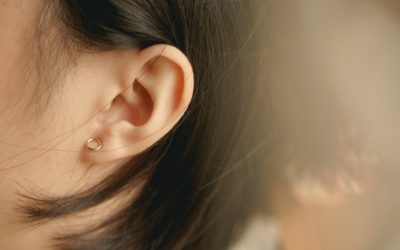
There is a long and diverse research history of dyslexia and documenting the auditory processing difficulties associated with dyslexia that hinder phonological awareness. It’s why dyslexic kids will struggle in school when everyone is required to wear a mask. The sounds are muffled, but also if the teacher is masked, then students cannot look at the teachers mouth – as an additional cue to what sound is being made. In a recent study published by Annals of Dyslexia, researchers made an interesting observation: “those children with dyslexia who are better readers attended more to the mouth while presented with a person’s face in a phonologically demanding condition.” More research needs to be done about this issue, be aware of helps like watching a video of […]
Visualization Pathway: Creative Discovery
The notion of creative visualization dates back at least from the time of ancient Rome when Cicero commented about his “mind’s eye.” Since that time, many of the world’s greatest inventors and scientists, and writers and artists, athletes and entrepreneurs, have attributed their insights to creative imaginings and thought experiments. It seems that many dyslexic children and adults also have this gift and for many it may be one of their most treasured resources. Compact disc inventor James Russell used this talent to turn models of his compact disc invention around in his head, while MIT Professor Cathy Drennan used her powers of imagination to visualize how new molecules could combine with each other in three dimensions. Hollywood filmmakers like Steven Spielberg use visualization to […]
Breaking the Cycle of Shame
“How do you not to feel stupid when everyone else is learning something that you can’t grasp at the same pace? The shame of not being able to read out loud without stuttering or misspelling something on the blackboard in front of the class was almost unbearable. The fear of being called on by the teacher was paralyzing and made me act out and have panic attacks. My math teacher berated me because she thought I was being careless when I accidentally reversed numbers. I spent countless hours with frustrated but well-meaning adults who wanted to help me but just thought I wasn’t trying hard enough. All of these experiences sent me the message that I was not good enough.” – Leana Greene Shame […]
A Career of Compassion: Behavioral Health Nurse Toni Howell
I first came across Toni from an article that I read in Minority Nurse. Toni had been writing about the successes and challenges of dyslexia and the nursing profession. I was impressed by the tenacity Toni showed when on her circuitous path through an accelerated nursing program without accommodations, she switched to a certified nursing assistant program instead, then traditional nursing program where her dyslexia documentation was finally accepted to help her succeed. While growing up, Toni had two women who were powerful role models in her journey to becoming a nurse. The first was a friend of her father’s who always spoke to her when her parents were in the hospital for medical reasons. The second became a close friend when she was in […]
The Many Faces of Actor Paul Bettany
I finally had a chance to catch up on Avengers: Infinity War so I could write an article on amazing Paul Bettany. Paul plays so many different characters so well that I often don’t realize that he was the same actor in so many different roles. After long being heard as J.A.R.V.I.S., Paul Bettany finally has a physical presence in the Avengers as Vision. These are very different roles from his characters in Master and Commander or even Margin Call. From an interview in Digital Spy: “I was dyslexic so wasn’t reading as a child and fell through every educational crack there is to fall through. Books happened later for me. I was your average bullied kid sitting in his room plotting […]
Auditory Processing and Remote and Hybrid Learning
“Children with dyslexia often exhibit increased variability in sensory and cognitive aspects of hearing relative to typically developing peers.” – Hornickel et al., 2012 PNAS There is a long research history establishing auditory processing difficulties among children and adults who are dyslexic. What may be confusing to non-scientific people is that auditory processing is not simply “hearing”. It relates to the complex networks in the brain that interpret what sounds are heard.
Auditory processing difficulties in dyslexic people don’t present with abnormalities on simple screening hearing tests; instead, the difficulties present in tests that examine the effect of listening over background noise, for instance, or processing of rapid sounds. The reason it’s important to be aware of this is that auditory processing […]Dyslexia: Beyond Decoding
If dyslexic students are struggling to decode words, a program of intensive structured literacy will help – but help with phonological awareness may not be sufficient to help them become fluent readers. Why? Because reading fluency, or the ability to read with “speed, accuracy, and proper expression” is also influenced by other factors such as rapid naming. Recently researchers found that: “most adolescents (with dyslexia) were classified as either naming speed only (about a third of the group) or double deficit when defining impairment using performance thresholds to classify groups.
This may suggest that although early phonological deficits are amenable to remediation, identification of language symbols fails to become automatized in most individuals with dyslexia and may require more targeted intervention.” Their […]My Pandemic Hack for Classes
Shelley Wear, a long-time volunteer on our Dyslexic Advantage editorial team shared these pandemic hacks for her classroom. Thanks Shelley! “The struggle is real to make sure students understand what you are saying with a mask on. I purchased a personal amplifier (small box with microphone headset) and it has been a game changer for my classroom. Students are much more attentive and I believe it has really helped. I am also using a multisensory approach to decoding, teaching Visual Phonics. The paras have overheard students talking about how fun it is when kids are in the hallways and think no one is listening. I am relieved, because I have limited access to middle school materials to teach decoding and a large percentage of my […]
David Schoenbrod: Problem Solver and Changemaker
“The fundamental wiring of the brain that causes dyslexia also enhances our ability to see the big picture…” – Attorney, Author, and Professor David Schoenbrod David Schoenbrod is a big picture changemaker. In fact, in his impactful life, he’s been able to solve huge problems that many may have thought to be impossible. Take the issue of lead in gasoline. The Environmental Protection Agency has estimated that some 68 million children had toxic exposures to lead from gasoline, causing brain injury and increased risk of other kinds of organ damage. What David was able to identify, though, is how large systems like the federal government (Congress in particular) and other organizations can drag their collective feet in solving issues that may put health at […]
Dyslexia Advocacy: Say Dyslexia 2.0
From Chalkbeat’s story, “NYC plans to screen nearly 200,000 students in the early grades to uncover struggling readers. Then what?” “In a massive bid to gauge reading skills following COVID-related learning disruptions, New York City’s education department is introducing literacy screening for its nearly 200,000 children in kindergarten through second grade… While the education department’s screeners aren’t designed to identify students at risk of having dyslexia, which is the most common learning disability, they are able to identify learning gaps in skills that are often associated with dyslexia, literacy experts say. But many also note that screening alone will not address systemic issues that contribute to widespread literacy deficits across the city, such as uneven curriculum and inadequate teacher training. The success of the […]
Johnpaul Jones: Native American Architect [Premium]
“Where Native people come from, everything’s not in straight lines.” – Johnpaul Jones Johnpaul Jones is one of the world’s leading architectural architects and landscape designers, and he is also dyslexic. He was the lead design consultant for the National Museum of the American Indian, the Bainbridge Island Japanese American Exclusion Memorial, The Southern Ute Cultural Center and Museum, Vancouver Land Bridge, Mountains to Sound Greenway Plan, Oregon Zoo Educational Center, Longhouse Educational and Cultural Center, and Gorilla Conservation Research Center, among many, many others. He has said that his aesthetic was inspired by his Choctaw – Cherokee mother’s four world perspective: natural animal, spiritual, and human. Johnpaul describes his early life as being a “bad boy” and “dyslexic.” He struggled in school, and […]
Understanding Conceptual vs. Procedural Knowledge in Math [Premium]
With math scores lagging tremendously due to pandemic-related school, many of us may suddenly find ourselves responsible for supervising (if not tutoring) math. If that’s the case, it’s important to keep in mind the big picture of math learning. Of course the issue of conceptual and procedural learning apply to all subjects, not just math, but it especially becomes relevant when problem solving can become complex; symbols and abstractions must be used, and multiple steps for problem solving are necessary. There’s an especially nice description of the differences between conceptual and procedural knowledge in math from Ruthie Sloan’s Teach Math Literacy blog. Many of us learned math only through procedural learning. We didn’t learn “why” we did certain steps like “flip upside-down and multiply,” […]