Harrison Ford: Han Solo, Indiana Jones, Jack Ryan, Late Bloomer

Late blooming is a typical profile for dyslexic young people because their talents and their challenges are all over the place – and things you’re supposed to learn in school (reading, writing, arithmetic) are difficult if not impossible to automate.

Bookmark

Please login to bookmark
Close
To access this post, you must be a Premium subscriber. log in

Bookmark
Please login to bookmark Close
read more

Writing: Narrowing the Open-Ended Prompt

If the writing prompt were narrowed it would be easier. Open-ended prompts can be paralyzing and students may twirl their pencils for a while and then put them down.

Bookmark

Please login to bookmark
Close
To access this post, you must be a Premium subscriber. log in

Bookmark
Please login to bookmark Close
read more

Before Structured Literacy: Auditory Training [Premium]

It’s important to see if there are any visual or auditory processing issues that are making it difficult to show progress.

Bookmark

Please login to bookmark
Close
To access this post, you must be a Premium subscriber. log in

Bookmark
Please login to bookmark Close
read more

How Dyslexia Can Affect Speech [Premium]

Although reading and writing have been the emphasis in dyslexia, dyslexia can affect speaking in many ways. First, because dyslexia can affect auditory processing – children or adults mishear sounds in spoken language and these errors can be heard in mispronunciation mistakes. But mispronunciations can also occur due to phonological difficulties. In addition, the rapid automatized naming (RAN) difficulties described as part of a “double-deficit” in some individuals with dyslexia causes significant trouble with retrieving words, leading to pauses and saying the wrong words and a general irregular pace of speech. The tests for RAN involve having subjects quickly name pictures that they easily recognize and know the names for. RAN difficulties can predict later reading problems, and at any age, it can contribute to […]

Bookmark

Please login to bookmark
Close
To access this post, you must be a Premium subscriber. log in

Bookmark
Please login to bookmark Close
read more

Calculator Use: Accommodation or No? [Premium]

A teacher writes, “I have a new student who transferred from a public charter school. She has an IEP accommodation for a calculator use for anything involving math calculations. But I’m wondering whether providing a calculator is changing standards? Is she learning how to use a calculator rather than learning how to do math? Where do we draw the line?” I’m glad you asked this question. I think more teacher and parents ask themselves this question than you may realize. Dyscalculia is one of the least recognized “specific learning disabilities.” In the past ten years, there’s been a revolution in our understanding of the scientific basis of dyscalculia, but in day-to-day practice, there’s remarkably little in the way of practical guidance for both teachers and […]

Bookmark

Please login to bookmark
Close
To access this post, you must be a Premium subscriber. log in

Bookmark
Please login to bookmark Close
read more

Creativity and Its Connection Dyslexia, ADD / ADHD, and Low Working Memory [Premium]

Creative companies and groups seem to have higher than average representation of people with dyslexia, ADD/ADHD, and low working memory. Dyslexia is associated with increased divergent and exploratory thinking, but what does ADD/ ADHD or low working memory have to do with creativity? A tech person might ask – is it a bug or a feature? We think it’s a feature, just like dyslexia.If dyslexia, ADD/ADHD and low working memory were all bad, you wouldn’t see an over-representation in creative industries. Attention and working memory have been suggested to be two sides of a neural coin. While attention is like a spotlight directed at certain parts of the outside world, working memory is like a spotlight directed at internal thoughts, information, or instructions. HIGH FUNCTIONING […]

Bookmark

Please login to bookmark
Close
To access this post, you must be a Premium subscriber. log in

Bookmark
Please login to bookmark Close
read more

What to Do This Summer?

What should you do this summer? The answer depends a lot on you and your students. Summertime is a great time for families because it usually means getting out and about and getting together with friends and families. For students who may have been spending so much of...

read more

Ready, Set… Go! From High School to College [Premium]

Whether you’re a student who is just starting high school or preparing to transition to college, there are three important skills to cultivate: SELF-KNOWLEDGE First, there is self-knowledge. – What do you know about how you learn best? – What interests you the most? It may not be the class where you’re doing the best. Performance may be related to factors like the capabilities of the teacher or how knowledge is tested. – Looking back on your time in school, have there been any things that stand out? Classes or activities outside of class that you loved? – Are there any role models in your life? What do you like about what they do and how they live their lives? – What are your strengths […]

Bookmark

Please login to bookmark
Close
To access this post, you must be a Premium subscriber. log in

Bookmark
Please login to bookmark Close
read more

Speak

To listen, select text and click sound button

WATCH NOW

OSPI STEM Course – STEM for Diverse Learners

Dyslexia and Gifted: Course for Psychologists

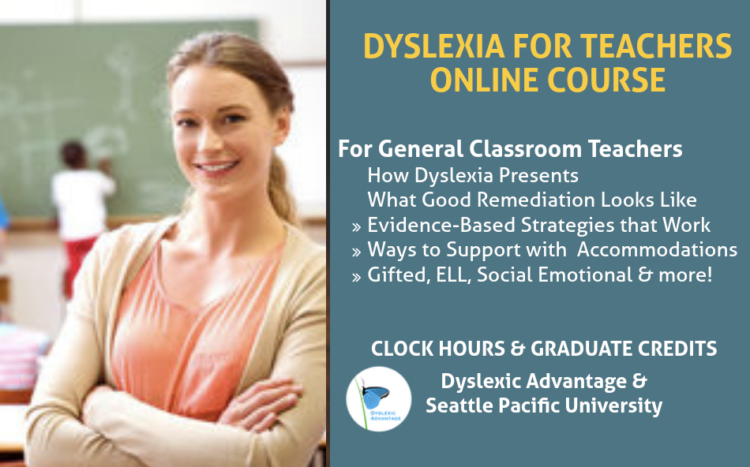
Dyslexia for Teachers Course

SPONSORS

    Discover Your Dyslexic MIND Strengths
                                    Free


Amazon Affiliate Notice

Dyslexic Advantage is an Amazon Affiliate. If you click on a link that takes you to the Amazon store, Dyslexic Advantage may earn money on qualifying purchases. Clicking HERE to enter Amazon and making a purchase may support Dyslexic Advantage. Thank you!