Early Screeners

  Early screeners are beginning to appear more often in the early grades of elementary school because dyslexia advocates are winning legislative battles across the country. WHAT DO LITERACY SCREENERS DO? The benefit of early universal screening is that the...

read more

Multimedia Learning Best for Dyslexics But How to Introduce Audio? [Premium]

“To optimize learning, it is more efficient to provide children with dyslexia with extra audio.” In a recent multimedia learning test of 11 year olds and typically-reading peers, dyslexic students were found to learn most efficiently if they were provided with text + audio or audio only, rather than text-only. How often is this happening over the course of every school day? To smoothly integrate audio in classroom learning and boost a child’s efficiency of learning preparation it’s necessary and audio should already be a friend. Summer is a great time to introduce audiobooks if your kids haven’t tried them before. 1. START WITH A FAMILIAR BOOK – Start with a familiar book or book series to smooth the entry of audiobooks. It’ll be much […]

Bookmark

Please login to bookmark
Close
To access this post, you must be a Premium subscriber. log in

Bookmark
Please login to bookmark Close
read more

[PREMIUM] Resources for Auditory Processing and ELLS

Pronunciation errors are often a clue that the sounds for certain words aren’t being processed accurately. Middle sounds and certain blends may be especially challenging to hear. Students who don’t hear the sounds correctly are less likely to be accurately filing different sounds associated with words, leading to inaccurate reading aloud and problematic spelling. Many students who successfully get past the basic decoding stage, flounder in this middle stage, never quite making it to fluent reading or accurate spelling. Dyslexic adults who say that their spellcheck can’t find their misspellings often have auditory processing challenges that haven’t been recognized. English Language Learners have a harder time learning sounds that don’t occur or are different in their own language (language interference). Certain curricula such as Lindamood […]

Bookmark

Please login to bookmark
Close
To access this post, you must be a Premium subscriber. log in

Bookmark
Please login to bookmark Close
read more

Sight Words / Tricky Words [Premium]

Sight words are words that must be memorized by sight, rather than being sounded out phonetically. Sight words are important to learn because once children are able to read the most common 100 sight words, they can read up to 50% of most children’s literature. Mastery of the top 300 words, gives students access to 75% of what is printed in most children’s literature. It’s especially important for dyslexic students to learn their sight words with multisensory strategies because sight words account for many of the most commonly misspelled words in writing. You may hear sight words referred to by many names, such as Dolch words, Fry words, high frequency, or even Orton-Gillingham red words. The most important thing to know is that these words […]

Bookmark

Please login to bookmark
Close
To access this post, you must be a Premium subscriber. log in

Bookmark
Please login to bookmark Close
read more

A Home Run Hit with Humorous Poetry [Premium]

Education Prof Benita Bruster was invited to work with five 4th grade boys identified as struggling readers. When she asked them to suggest a favorite poet, the response was not unexpected “Poetry is dumb”, “Girls like poetry”, etc. When she asked about a favorite musician, she got a rousing response – but then she countered with, “I hate to break it to you, but you all like poetry…lyrics are just poems set to music.” Drawing on some cutting edge academic research (see Turn Your Boys to Readers on page 14), Benita predicted that boys would enjoy poems that were “silly, bizarre, gross, or absurd”. She chose her start with the poem, A Wild Turkey Comments on His Portrait. “Rather than passing out copies of the […]

Bookmark

Please login to bookmark
Close
To access this post, you must be a Premium subscriber. log in

Bookmark
Please login to bookmark Close
read more

Could it be GRAMMAR? [Premium]

Hidden grammar difficulties can be common reason why older students with dyslexia hit a plateau with reading, writing, and even testing. The problem is so subtle at times that many difficulties may be missed for years if not for their entire academic careers. One of the reasons that the problem is difficult to detect is that even many standardized tests that are commonly used for assessing the possibility of dyslexia either don’t test for it or they don’t pinpoint the problems that cause the student to struggle. In the early grades, students who have “overcome dyslexia” by the mastery of decoding, may find they hit a plateau as sentences become longer and more complex. In the middle and high school years, unrecognized grammar problems may […]

Bookmark

Please login to bookmark
Close
To access this post, you must be a Premium subscriber. log in

Bookmark
Please login to bookmark Close
read more

The Remediated Student – WHAT TO EXPECT [PREMIUM]

For the overwhelming majority of dyslexics, early intervention helps with the decoding step of reading. Usually 2-3 months of intervention is enough to see a measurable  difference, and at least in our experience, 1-3 years to bring most children from failing their grade to being able to keep up in diverse subjects at grade-level with appropriate accommodations and sometimes modifications in place. What Should a Teacher Expect with a Remediated Student? Remediated students can vary a great deal depending on whether they are gifted, dysgraphic, dyspraxic, dyscalculic, have attention or working memory difficulties, or English as a Second Language. In general, though, students who have successfully been remediated are able to decode text on grade-level, but may still have slow and inaccurate reading, difficulty reading aloud, […]

Bookmark

Please login to bookmark
Close
To access this post, you must be a Premium subscriber. log in

Bookmark
Please login to bookmark Close
read more

Additional Resources from Premium Issue 26 [Premium]

  Additional Premium Resources  February 2018 Issue 26. You must be logged into your account to access: False Memories, Verbatim vs. Gist Recall, Persistence and Transcience of Memory, and Visual Perceptual and Handwriting Skills of Student with Dyspraxia (DCD). False memory for orthographically vs semantically similar words in adolescents with dyslexia.     Verbatim and Gist Recall of Sentences by Dyslexia and Non-Dyslexic Adults The Persistence and Transience of Memory Visual perceptual and Handwriting Skills in Children with Developmental Coordination Disorder       Bookmark Please login to bookmark ClosePlease login to access.

Bookmark

Please login to bookmark
Close
To access this post, you must be a Premium subscriber. log in

Bookmark
Please login to bookmark Close
read more

Top Dyslexia Apps – Microsoft OneNote with Learning Tools

Today Microsoft released a great addition to its free organization – productivity app OneNote – and the two nicest things about it…it’s Free and it was created with students and adults with dyslexia in mind. As a result, Dyslexic Advantage is proud to announce that Microsoft’s OneNote Learning Tools is our first Top Dyslexia App to be announced. OneNote Learning Tools Highlights: – OneNote is a free organizer-productivity notebook app from Microsoft that works across all platforms (Windows, Mac, Android, Kindle) allowing you to save information through web clip saving, dictation, photos, typing – Reading Fluency and Comprehension are helped by tools that can optimize fonts for greater readability (reduce visual crowding), break long words into syllables, and have more specific language functions such as identifying parts of speech […]

Bookmark

Please login to bookmark
Close
To access this post, you must be a Premium subscriber. log in

Bookmark
Please login to bookmark Close
read more

Speak

To listen, select text and click sound button

WATCH NOW

OSPI STEM Course – STEM for Diverse Learners

Dyslexia and Gifted: Course for Psychologists

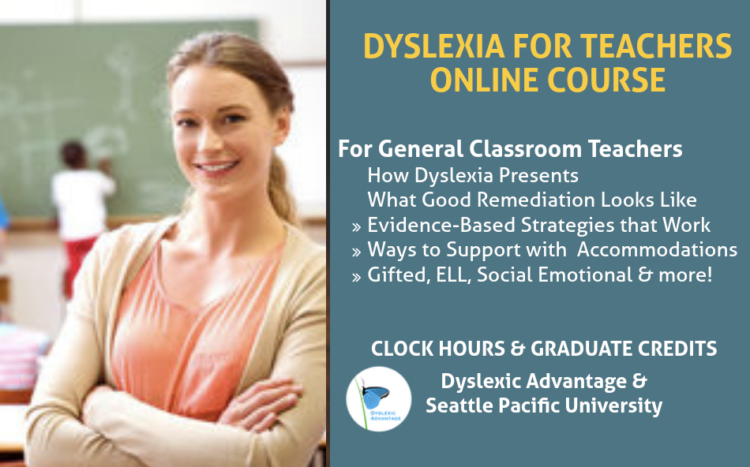
Dyslexia for Teachers Course

SPONSORS

    Discover Your Dyslexic MIND Strengths
                                    Free


Amazon Affiliate Notice

Dyslexic Advantage is an Amazon Affiliate. If you click on a link that takes you to the Amazon store, Dyslexic Advantage may earn money on qualifying purchases. Clicking HERE to enter Amazon and making a purchase may support Dyslexic Advantage. Thank you!