How Dyslexic MIND Strengths Integrate with Multiple Intelligences [Premium]

In our book, The Dyslexic Advantage, we spoke about the 4 MIND strengths common in adult dyslexics: M for Material Reasoning, I for Interdisciplinary Reasoning, N for Narrative Reasoning, and D from Dynamic Reasoning. These skill clusters and talent sets had parallels in brain systems and processes as well as careers, domains of expertise, and areas of innovation. Multiple Intelligences is a concept that was introduced by Howard Gardner of Harvard to identify specific modalities that went beyond a single intelligence or general ability. The seven he initially characterized were: musical-rhythmic, visual-spatial, verbal-linguistic, logical mathematical, bodily, kinesthetic, interpersonal, and intrapersonal. The ones he considered adding later were naturalistic (able to classify natural forms, ecological ‘receptiveness’), existential or spiritual, and teaching -pedagogical in telligence. Somewhat related […]

Bookmark

Please login to bookmark
Close
To access this post, you must be a Premium subscriber. log in

Bookmark
Please login to bookmark Close
read more

Dyslexic Visionary Architect Lord Richard Rogers [Premium]

“Richard Rogers’ late entry into the 4th Year was not successful. He has a genuine interest in and a feeling for architecture but surely lacks the intellectual equipment to translate these feelings into sound building. His designs will continue to suffer while his drawing is so bad, his method of work so chaotic and his critical judgement so inarticulate”. “…there is no disputing that he is one of the most influential architects of all time…”   Richard Rogers was definitely a late bloomer. “I was an appalling student all of my life. In fact, I always like to say, I enjoyed much more the last third of my life, than I have in my first third…” Rogers is best known for his work on the […]

Bookmark

Please login to bookmark
Close
To access this post, you must be a Premium subscriber. log in

Bookmark
Please login to bookmark Close
read more

Discoverer of the Titanic – Dyslexic Ocean Explorer Robert Ballard [Premium]

“When I was a child, I wrote a letter to an oceanographic institution in California called Scripps (Scripps Institution of Oceanography UC San Diego). It was a Dear Santa Claus letter. “Dear Scripps, I want to be an oceanographer.” I’m sure I misspelled it, because I’m dyslexic. They gave me a scholarship.” – Robert Ballard When I was seventeen, 56 years ago, I went on my first expedition. We got caught in a storm, hit by a rogue wave, and I thought that was so cool. I was too young to be afraid. I just fell in love with adventure with a purpose, where you go out there and overcome the obstacles that you’re always faced with, and then you find this secret, whether it’s a shipwreck […]

Bookmark

Please login to bookmark
Close
To access this post, you must be a Premium subscriber. log in

Bookmark
Please login to bookmark Close
read more

Shakespeare and Dyslexia – Making Words Physical [Premium]

Today is National Shakespeare Day, and dyslexia and Shakespeare have been on our minds. We recently mentioned that Lloyd Everitt (yes, he’s dyslexic) is the youngest actor to play Othello at Shakespeare’s own Globe Theater. But we’ve also been thinking about Shakespeare recently because, on our trip down to California, we had the pleasure of stopping by the Oregon Shakespeare Company’s Rebecca Carey, the head of Voice and Text. Rebecca has  an accomplished career that includes acting herself as well as teaching and consultant roles with the Royal Academy of Dramatic Art, Oxford School of Drama, Broadway, and American Repertory Theatre. Rebecca is also co-author (with her husband, David Carey) of The Shakespeare Workbook and Video, a brilliant practical course for actors that includes such topics […]

Bookmark

Please login to bookmark
Close
To access this post, you must be a Premium subscriber. log in

Bookmark
Please login to bookmark Close
read more

Higher Creativity of Dyslexic Children and Adolescents – New Research [Premium]

 “…dyslexic children around the age of 10 years old were found to be particularly creative in our study…” – Kapoula et al. University Paris PLOS One 2016: 11(3). From creativity researchers in Europe, some striking new information about how well dyslexic students and adolescents performed on the Torrance Test of Creativity Thinking compared to non-dyslexic peers. Particularly large differences were noted in the areas of originality and elaboration. Figure 1 shows A, the test prompt, B, the drawing from an art student, C, a drawing from a non-dyslexic student, and D, a drawing from a dyslexic student. “When comparing the most creative group of students (i.e., from ENSAD) and the most creative group of dyslexic children and teenagers (i.e., from BRUXELLES) (Fig 2F, Table 9), the only […]

Bookmark

Please login to bookmark
Close
To access this post, you must be a Premium subscriber. log in

Bookmark
Please login to bookmark Close
read more

Why Are So Many Dyslexic Student Good at Science? [Premium]

Nobel Prize winners, MacArthur Geniuses, Engineers of the Century, SiliconValley pioneers, and more. Why are so many dyslexic people exceptional at science and tech? Here are 5 Reasons (there are many more…): Bookmark Please login to bookmark ClosePlease login to access.

Bookmark

Please login to bookmark
Close
To access this post, you must be a Premium subscriber. log in

Bookmark
Please login to bookmark Close
read more

Speak

To listen, select text and click sound button

WATCH NOW

OSPI STEM Course – STEM for Diverse Learners

Dyslexia and Gifted: Course for Psychologists

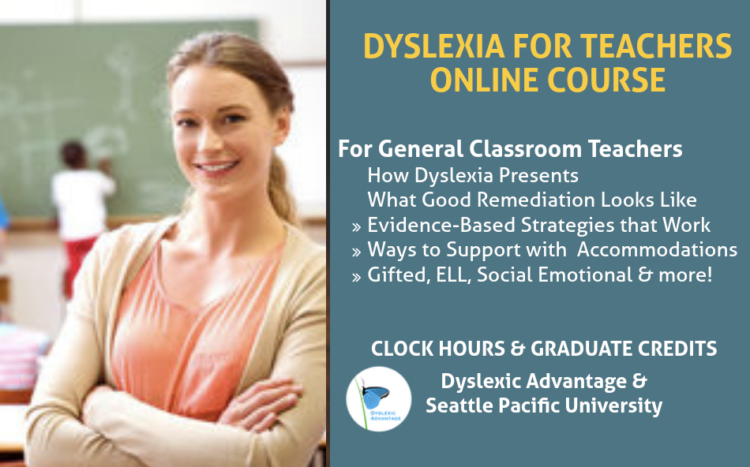
Dyslexia for Teachers Course

SPONSORS

    Discover Your Dyslexic MIND Strengths
                                    Free


Amazon Affiliate Notice

Dyslexic Advantage is an Amazon Affiliate. If you click on a link that takes you to the Amazon store, Dyslexic Advantage may earn money on qualifying purchases. Clicking HERE to enter Amazon and making a purchase may support Dyslexic Advantage. Thank you!