“…dyslexic children around the age of 10 years old were found to be particularly creative in our study…” – Kapoula et al. University Paris PLOS One 2016: 11(3). From creativity researchers in Europe, some striking new information about how well dyslexic students and adolescents performed on the Torrance Test of Creativity Thinking compared to non-dyslexic peers. Particularly large differences were noted in the areas of originality and elaboration. Figure 1 shows A, the test prompt, B, the drawing from an art student, C, a drawing from a non-dyslexic student, and D, a drawing from a dyslexic student. “When comparing the most creative group of students (i.e., from ENSAD) and the most creative group of dyslexic children and teenagers (i.e., from BRUXELLES) (Fig 2F, Table 9), the only […]
WATCH NOW
OSPI STEM Course – STEM for Diverse Learners
Dyslexia and Gifted: Course for Psychologists

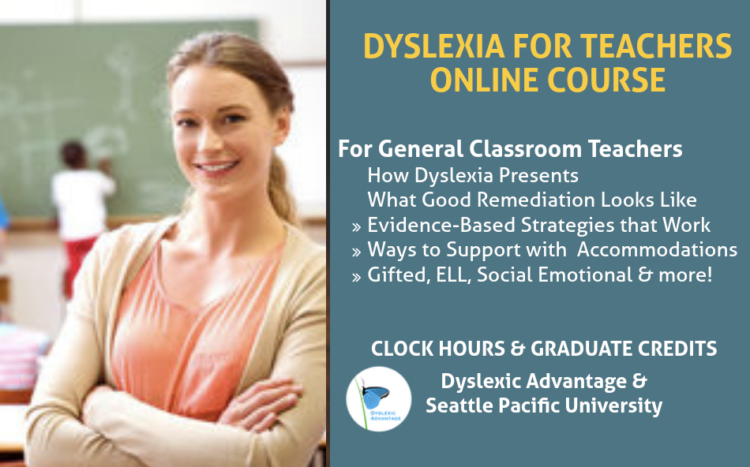
Dyslexia for Teachers Course