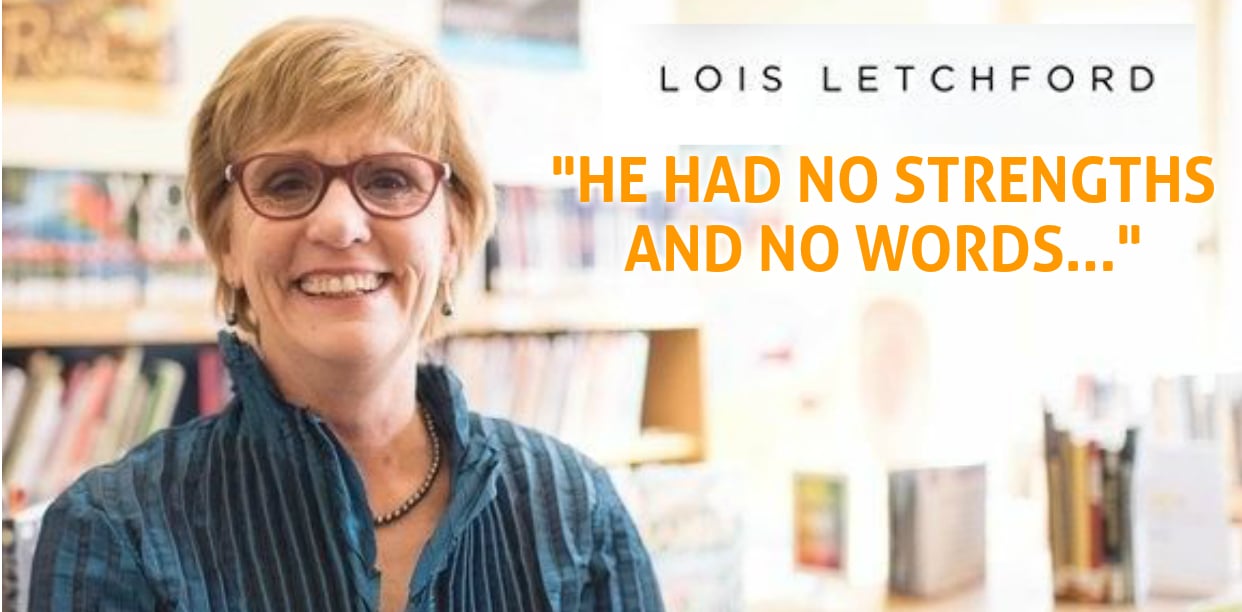
At the age of 6, the outlook for Nicholas seemed grim. After undergoing hours of testing, Nicholas' parents were given a grave pronouncement from a professional as to why he had been struggling in school. Nicholas, they were told, was a child of "low IQ" who had "no...
[PREMIUM] What is Dyslexia? – Fast Facts for Teachers
THE MOST COMMON LEARNING DIFFERENCE Dyslexia is the most common learning difference, seen in up to 15-20% of the population. Dyslexia tends to run in families, but it can vary a great deal from family member to family member. IT’S NOT JUST READING Reading challenges are a central feature of dyslexia, but dyslexia-related brain differences have been detected in children before they are reading age and with appropriate intervention, reading improves significantly. There are learning strengths also associated with dyslexia that are helpful to know for educational reasons as well as future careers. FAST FACTS FOR TEACHERS #1. Dyslexic students are smart. Dyslexic students have average or higher than average intelligence. Are they receiving adequate challenge and opportunity in their daily work? Could you be […]
Dyslexia and Firefighting [PREMIUM]
In some fire stations where members are outspoken about their dyslexia, an over-representation of dyslexia has been noted. Why is this? Firefighting is a intensely active profession where strengths of situational awareness, dynamic spatial problem solving, and teamwork all come together. Firefighting especially demands M-strengths (material reasoning), I-strengths (interconnected reasoning), and D-strengths (dynamic reasoning). In the United Kingdom, one Fire District conducted a Dyslexia Awareness program that included testing, workplace coaching, and assistive technology. They’ve identified over 70 individuals in their program so far. Dyslexic firefighters often don’t have much difficulty with the actual job of firefighting. Instead, they have trouble with timed test taking required for promotion or the paperwork and paper-based data analysis required for reporting. Here in the US, Frank Ricci is […]
Multimedia Learning Best for Dyslexics But How to Introduce Audio? [Premium]
“To optimize learning, it is more efficient to provide children with dyslexia with extra audio.” In a recent multimedia learning test of 11 year olds and typically-reading peers, dyslexic students were found to learn most efficiently if they were provided with text + audio or audio only, rather than text-only. How often is this happening over the course of every school day? To smoothly integrate audio in classroom learning and boost a child’s efficiency of learning preparation it’s necessary and audio should already be a friend. Summer is a great time to introduce audiobooks if your kids haven’t tried them before. 1. START WITH A FAMILIAR BOOK – Start with a familiar book or book series to smooth the entry of audiobooks. It’ll be much […]
SELF-ADVOCACY: Common Accommodations and Modifications
KNOW! One of the first steps in advocacy is knowing which accommodations and or modifications you need. ASK! Here's a nice list from the state of CT. There's a reason this article is filed under "Self-Advocacy". Students should be aware that they...
Could it be GRAMMAR? [Premium]
Hidden grammar difficulties can be common reason why older students with dyslexia hit a plateau with reading, writing, and even testing. The problem is so subtle at times that many difficulties may be missed for years if not for their entire academic careers. One of the reasons that the problem is difficult to detect is that even many standardized tests that are commonly used for assessing the possibility of dyslexia either don’t test for it or they don’t pinpoint the problems that cause the student to struggle. In the early grades, students who have “overcome dyslexia” by the mastery of decoding, may find they hit a plateau as sentences become longer and more complex. In the middle and high school years, unrecognized grammar problems may […]
[PREMIUM] Dyslexia and Job Interviews
Here are some quick tips to consider if you’re on the job hunting trail. Job interviews can be pretty stressful, so prepare (actually, over-prepare) to help the process go as smoothly as possible. 1. Research the Company or Business – Do your homework: use official channels (the company’s website) as well as unofficial channels (former employees, LinkedIn, Glassdoor) to learn as much as possible about the company you want to work for. Does the company seem to value neurodiversity? Do you know of any dyslexic employees or executives there? 2. Prepare for the Interview – If you are new to the workforce and interviewing process, use Google or another search platform to check out sample questions and answers. If your interviewer asks complicated or multi-part […]
JACE NORMAN, aka Henry Danger, Talks Dyslexia
Jace Norman is an entrepreneur and star of Nickolodeon's Henry Danger who has added his name to the list of celebrities who embrace their dyslexic advantage and are taking their message to the world. Jace recently won the Kids' Choice Awards for Favorite Male TV Star...
Mind Mapping for Dyslexic Teens
"For many years, I have been homeschooling with my (stealth) dyslexic son, who is now 17. Because of his profile and interests, very few standard approaches have worked, including things like Orton-Gillingham, and speech to text. We have had to make a lot up, and be...
DYSLEXIC WRITER: Lisa Wood Shapiro
"I'M GOING TO tell you a secret. It's something almost no one in my professional life knows. I'm dyslexic." Lisa Wood Shapiro is a prolific writer and Emmy Award-winning filmmaker who opened her article in Wired with her dyslexia 'confession'! "Given that knowledge,...
COMICS AND DYSLEXIA: A Curious Connection…
"The first book I ever read was a comic book..." "Comics were my lifeline..." "The way I got through college, was comics..." What is it about comics? So many kids and adults over the years have told us how important comics are to their reading. In fact, they...
How Do Math-Talented Dyslexics Do Calculations? [PREMIUM]
Despite the suggestion that dyslexic students who are strong in math use a different approach for doing basic mathematical operations, it’s surprising how little formal research has been done to figure out how math-gifted dyslexic individuals do what they do. At Georgetown University, neuroscience researchers were surprised to find Bookmark Please login to bookmark ClosePlease login to access.