
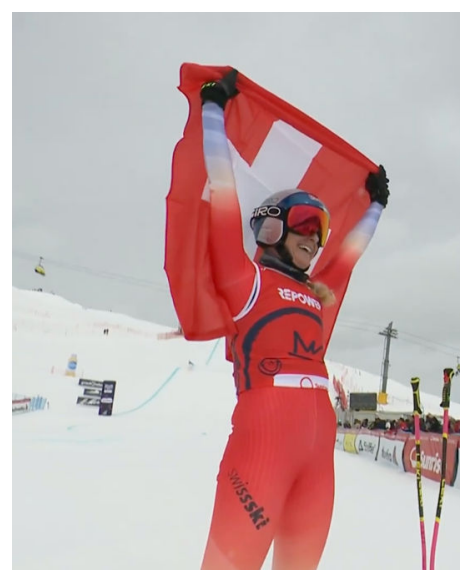
Olympic medalist Fanny Smith has long talked about being dyslexic helped her thrive in her career.
My dyslexia made me a fighter. Whatever life throws at you, never let it stop you! – Fanny Smith
Fanny first began skiing at the age of 2. While she naturally took to skiing (first competing at age 12, then becoming a professional at age 16), she remembered “the worst punishment for me was when I had to read aloud in class. You have the extra stress that you are supposed to read quickly…I would see the beginning of a word and say, ‘Ah, it must be that’, then sometimes I would invent the end of it.”
Bullies would tease her and teachers lost patience, but today Fanny credits her dyslexia with helping her become “the woman I am today.”
At the beginning of the 2011 World Cup season, Fanny had a serious knee injury, breaking her medial and lateral collateral ligaments and two menisci in the front of her knee. Her doctor told her that skiing may be over for her, but she fought back and won the World Cup in 2013.
She continued to race at the international level and, last year, won the World Cup again after 12 years, at the age of 32. She is one of the most successful ski cross athletes in history.
Ski cross and freestyle skiing are extremely demanding sports because the courses are innovative and feature new combinations. Skiers must think strategically about their lines, techniques, strategy, but also creatively respond to what the course presents to them. Ski cross is part of freestyle skiing, but multiple skiers head down a course that includes natural and artificial features like jumps and high banked turns. Ski cross became an official Olympic sport in 2010.
The first time I tried a course it was like a light went on. This is what I was made for. – Fanny Smith