This category can only be viewed by members. To view this category, sign up by purchasing Premium, Premium Institutional 1 Year or STEM for Every Student - Dyslexia and More.

A Whodunit Mystery by Anthropologist Roxanne Varzi

UC Irvine Professor Roxanne Varzi is a creative anthropologist, filmmaker, and mystery author. She shared her dyslexia journey in a previous interview HERE. In my interview below, I learned that Roxanne was drawn to the field of cultural anthropology by its multidisciplinary nature. In order to explore ideas and different perspectives, Roxanne uses ethnographic texts, film, fiction, and plays. In this way she is able to break out of the research paper academic tradition and engage with a wider segment of society. In her mystery book, the main protagonist is a whipsmart anthropology graduate student who is also dyslexic with ADHD. She pieces together a murder mystery in the Rockies in a story that also includes the brilliant dyslexic paleontologist Jack Horner! Clicking on the […]

Bookmark

Please login to bookmark
Close
To access this post, you must be a Premium subscriber. log in

Bookmark
Please login to bookmark Close
read more

Tommy Smothers of the Smothers Brothers

  Brilliant comedian Tommy Smothers of Smothers Brothers fame passed away at the age of 86. Condolences to his family and loved ones. “My comedy came out of my dyslexia…I search for words. I don’t stutter but there’s a timing that I discovered that was comedic timing, which is the process of getting to the next sentence or the next idea or the next concept. It’s kind of disjointed and not very articulate but it was a character that could say things.” — Tommy Smothers   Tommy and his brother on the Judy Garland show.   Tommy’s comedy sketch about being “inarticulate.”       Bookmark Please login to bookmark ClosePlease login to access.

Bookmark

Please login to bookmark
Close
To access this post, you must be a Premium subscriber. log in

Bookmark
Please login to bookmark Close
read more

Dyslexia Wars: Attack on Dyslexia Definition

  A brief note about about an article in Hechringer Report (also published in Scientific America). It is attacking the “unexpected” difficulty in reading (in the presence of average or above-average IQ) that has been a part of the dyslexia definition since its first clinical description in the late 1800’s as well as documented through scientific research since that time. I am opting not to share the link, because controversial articles such as these can attract “clicks” and that are credited in a positive way to the author and site, though contributing actual harm to students through misleading selective presentation of data use of emotionally-charged words. The title of the article is: “How a disgraced method of diagnosing learning disabilities persists in our nation’s schools.” […]

Bookmark

Please login to bookmark
Close
To access this post, you must be a Premium subscriber. log in

Bookmark
Please login to bookmark Close
read more

Getting Your Students Started in Creative Writing

  With all the work of school and physical challenges getting information down on paper, many students with dyslexia don’t get a chance to write creatively – but the Karina Eide Young Writers Awards might get some students off the sidelines. The deadline for the awards is Valentine’s Day or February 14th. Submissions must be creative and not a book report or factual description of an event. Stories or poems should be 7-700 words only and only 1 work should be submitted. Works can be dictated to parent, teacher, or friend. Spelling does not count in judging. YourDictionary has some easy tips for students who want to write a poem here. Looking at examples of poems or stories is always a good idea. What did […]

Bookmark

Please login to bookmark
Close
To access this post, you must be a Premium subscriber. log in

Bookmark
Please login to bookmark Close
read more

Dyslexic Advantage at Stow Library in MA

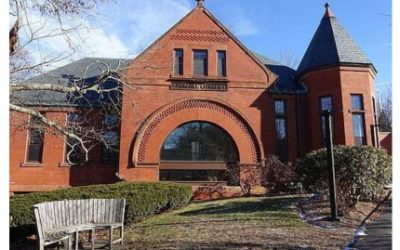
Last week, Brock and I gave a presentation on the Strengths of Dyslexia at the Randall Library in Stow, Massachusetts via Zoom. Tina McAndrew, director of the Randall Library, got the idea to apply for a grant from the American Libraries Association after speaking to Scott Cummings, a library patron who was amazed by the audio and other resources available after he contacted her. One of the first audiobooks he listened to with the Libby App was our book, The Dyslexic Advantage. Imagine how positive dyslexia awareness could be transformed if every library had a strengths-focused dyslexia event! Although libraries in many ways are an ideal place to spread dyslexia awareness (they have many free educational and community resources, many have free tutoring programs), many […]

Bookmark

Please login to bookmark
Close
To access this post, you must be a Premium subscriber. log in

Bookmark
Please login to bookmark Close
read more

Dyslexic Toymakers and Gamemakers : Howard Wexler

  Many dyslexic kids and adults are great at games – all sorts of games. Not surprisingly, some decide to make games themselves and then some choose careers in some aspect of the game industry. There may be an ability to see game play from multiple perspectives including different points of view, while those who win these games are often good at strategy, role play, and pattern recognition. Among game creators, strengths in humor, and divergent and playful thinking are very well-suited to inventing new games. Some years ago, legendary toy inventor Howard Wexler gave our community a webinar about his life inventing toys. As a kid, he played with Tinkertoys and enjoyed taking things apart. His toys and games were very different from each […]

Bookmark

Please login to bookmark
Close
To access this post, you must be a Premium subscriber. log in

Bookmark
Please login to bookmark Close
read more

Completing My Degree with AI and ChatGPT

    Recently, I spoke with dyslexic entrepreneur Stan Gloss, who returned to higher education to finish a degree in Educational Leadership. Stan’s full interview will be featured in an upcoming issue in our Premium magazine. What Stan shares is his workflow for conducting research and writing his dissertation for his degree. Because of the text-based burdens of researching and writing a dissertation, many dyslexic students may find themselves halted in “ABD” or All But the Dissertation limbo. Stan found an answer to this and won his university’s approval to use these technologies in his graduate work.       Bookmark Please login to bookmark ClosePlease login to access.

Bookmark

Please login to bookmark
Close
To access this post, you must be a Premium subscriber. log in

Bookmark
Please login to bookmark Close
read more

Statistician with Dyscalculia – A Chat with Dylan Lynn [Premium]

  How can a statistician have dyscalculia? Welcome to the wonderful world of mathematics – the field is as wide as it is deep. One of the keys to Dylan’s love of statistics, and later data analysis is that she loved math to tell stories. She loved the puzzle-solving aspect of statistics and how information could be made accessible through analysis to drive decision-making and policy. Although Dylan had indeed struggled with many lower level aspects of math – like timed math fact retrieval, math symbols, and fractions, she flourished as a data analyst in tech companies, drawing trends across disciplines and communicating what she learns from patterns that she recognizes to drive informed decisions.     Such a career has many aspects of MIND […]

Bookmark

Please login to bookmark
Close
To access this post, you must be a Premium subscriber. log in

Bookmark
Please login to bookmark Close
read more

Dyslexic Storytellers [Premium]

Although many of the physical and mechanical aspects of writing are difficult, many of the greatest writers of all time are dyslexic. Why does storytelling come naturally to so many? Dyslexic people have powerful emotional, personal, multisensory memories. As a result, it’s easy to recall the sights, sounds, smells, and feelings of the past and once the hurdles of getting information down on a page are overcome, stories can come to life for others. Not everyone has these gifts – in fact, a lot of people don’t. A common dyslexic strength is “episodic simulation”. The word “episodic” refers to what scientists refer to as episodic memory, memories for episodes or experiences that have a specific place and time.     Our surveys of dyslexic and […]

Bookmark

Please login to bookmark
Close
To access this post, you must be a Premium subscriber. log in

Bookmark
Please login to bookmark Close
read more

Visiting the Seattle Art Museum

  Recently I had such a nice visit to the Seattle Art Museum. It reminded me of how well dyslexic strengths can be cultivated in the multisensory experiences that are museums. This past summer we had had a visit by Yuko Tsuji, a dyslexia advocate in Japan who spearheaded an effort to get Dyslexic Advantage translated into Japanese. The photo includes our son Krister, who is an artist and author illustrator of graphic novels. I had seen that there was a visiting exhibit featuring Hokusai’s wood block prints at the museum.  

MUSEUM VISITS ARE MULTISENSORY STORY EXPERIENCES Today’s modern museums are rich multisensory experiences, with pictures and 3-dimensional works of every size and shape, and stories conveyed in pencil and paint, sculpture, […]

Bookmark

Please login to bookmark
Close
To access this post, you must be a Premium subscriber. log in

Bookmark
Please login to bookmark Close
read more

Severe Dyslexia Reading [Premium]

Q: My daughter is severely dyslexic and is having trouble making progress reading. She is homeschooled. How can I help? A: Ideally, the best person to provide specific information about your student’s dyslexia is the professional who performed a comprehensive assessment. The following information is not specific to your daughter, but more general information in the hopes some of it may be helpful to you. Many severely dyslexic children have trouble perceiving or remembering sounds, sound-letter associations, or the letters that comprise the different spellings of words. If a student has significant working memory limitations, she or he may also have to learn in little bits which may add to the time words are mastered. RE-LEARNING AGAIN AND AGAIN If the problem is that a […]

Bookmark

Please login to bookmark
Close
To access this post, you must be a Premium subscriber. log in

Bookmark
Please login to bookmark Close
read more

Um.. Trouble Finding the Right Words [Premium]

A young filmmaker, Lauren, interviewed for our movie shared that she had trouble putting her ideas into words. After the camera had shut off, I told her that many people over the years shared exactly the same thing. Lauren shared that when she reads a book, she gets vivid images of characters, events, and places. When she plans out a movie, she can visualize everything. We know that not everyone has that ability – and her visualization strengths are ideal for what she does today – make films. But there is considerable evidence that what might make you strong at generating pictures and other sensory images, may be balanced by weaker or at least more effortful generation of words.     When we surveyed dyslexic […]

Bookmark

Please login to bookmark
Close
To access this post, you must be a Premium subscriber. log in

Bookmark
Please login to bookmark Close
read more

Speak

To listen, select text and click sound button

WATCH NOW

OSPI STEM Course – STEM for Diverse Learners

Dyslexia and Gifted: Course for Psychologists

Dyslexia for Teachers Course

SPONSORS

    Discover Your Dyslexic MIND Strengths
                                    Free


Amazon Affiliate Notice

Dyslexic Advantage is an Amazon Affiliate. If you click on a link that takes you to the Amazon store, Dyslexic Advantage may earn money on qualifying purchases. Clicking HERE to enter Amazon and making a purchase may support Dyslexic Advantage. Thank you!