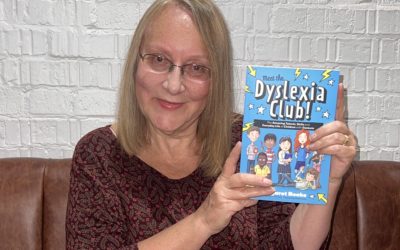
By Margaret Rooke For the past ten years, I’ve been listening to children, teens, and others with dyslexia. It’s been a fascinating journey, teaching me what can help them do well and what leaves them struggling. It’s shown me how we can all be that adult supporting a young person with dyslexia – it can cost nothing, and it can change lives. I’ve written books to allow children and teenagers to tell others what they know and to help them feel less alone. My latest is for young children: Meet the Dyslexia Club! The Amazing Talents, Skills and Everyday Life of Children with Dyslexia. For this I’ve created young characters who talk about their lives, with many of their words coming from real children […]
Dyslexic Doctors [Premium]
Fourth Grade Slump: Trouble Reading Long Words [Premium]
“The words have more syllables, and many children have difficulty reading multisyllable words. There are children who can decode fairly well at a one-syllable level but do not know how to read words accurately and fluently when they must read through longer words. Since most decoding instruction stops by second grade at the latest, children are not being directly taught how to read multisyllable words just at the point when these words begin to become prevalent. Furthermore, fluency is expected by the intermediate grades and not knowing how to read multisyllable words negatively affects a child’s ability to read smoothly.”- Faith Borkowsky After the initial joy and relief of being able to decode words, many dyslexic students find that specific reading instruction at school disappears. […]
Harrison Ford: Han Solo, Indiana Jones, Jack Ryan, Late Bloomer
Writing: Narrowing the Open-Ended Prompt
Before Structured Literacy: Auditory Training [Premium]
Games for Dyslexia Remediation [Premium]
Because many dyslexic students need more repetitions to master certain language tasks, adding little games to learning not only makes the time pass more quickly, it also makes learning time more memorable. Repurposing Games First of all, don’t feel as if you need to buy lots of new materials in order to gamify your learning time. I recently visited a friend, Dr. Nicole Swedberg, who has been a dyslexia tutor for many years and she let me take a picture of her game cabinet. Anything can be used as a reward. For board games, roll and read a sentence is a simple way to make the time pass quickly. If you’ve ever played Jenga the wood block tower game, giving a student a Jenga piece […]
The Problem of Place Value [Premium]
Understanding place value is critical for math, but dyslexic students may struggle due to errors in sequencing, directionality, and substitution. This blog post explores common challenges dyslexic learners face with place value, strategies like using base ten blocks and graph paper to help, and why reviewing place value remains essential even for older students.
How Dyslexia Can Affect Speech [Premium]
Although reading and writing have been the emphasis in dyslexia, dyslexia can affect speaking in many ways. First, because dyslexia can affect auditory processing – children or adults mishear sounds in spoken language and these errors can be heard in mispronunciation mistakes. But mispronunciations can also occur due to phonological difficulties. In addition, the rapid automatized naming (RAN) difficulties described as part of a “double-deficit” in some individuals with dyslexia causes significant trouble with retrieving words, leading to pauses and saying the wrong words and a general irregular pace of speech. The tests for RAN involve having subjects quickly name pictures that they easily recognize and know the names for. RAN difficulties can predict later reading problems, and at any age, it can contribute to […]
Calculator Use: Accommodation or No? [Premium]
A teacher writes, “I have a new student who transferred from a public charter school. She has an IEP accommodation for a calculator use for anything involving math calculations. But I’m wondering whether providing a calculator is changing standards? Is she learning how to use a calculator rather than learning how to do math? Where do we draw the line?” I’m glad you asked this question. I think more teacher and parents ask themselves this question than you may realize. Dyscalculia is one of the least recognized “specific learning disabilities.” In the past ten years, there’s been a revolution in our understanding of the scientific basis of dyscalculia, but in day-to-day practice, there’s remarkably little in the way of practical guidance for both teachers and […]
Get Ready for Middle School [Premium]
If your student had the benefit of positive supportive elementary school years, you may be wary of what the transition to middle school will mean. There will be challenges and opportunities as your student makes this transition – being aware of them will hopefully minimize speed bumps that come their way. ONE TEACHER vs MANY First of all, a big change in middle school is having many teachers instead of one. Some students will keep a homeroom teacher (this may be the resource room teacher if your student is on an IEP) in order to have a recognizable home base and a person who knows your student well and can talk to others if some issue like quantity of homework or need for accommodations for […]
Creativity and Its Connection Dyslexia, ADD / ADHD, and Low Working Memory [Premium]
Creative companies and groups seem to have higher than average representation of people with dyslexia, ADD/ADHD, and low working memory. Dyslexia is associated with increased divergent and exploratory thinking, but what does ADD/ ADHD or low working memory have to do with creativity? A tech person might ask – is it a bug or a feature? We think it’s a feature, just like dyslexia.If dyslexia, ADD/ADHD and low working memory were all bad, you wouldn’t see an over-representation in creative industries. Attention and working memory have been suggested to be two sides of a neural coin. While attention is like a spotlight directed at certain parts of the outside world, working memory is like a spotlight directed at internal thoughts, information, or instructions. HIGH FUNCTIONING […]