Many leaders succeed because of their dyslexia, not in spite of it. President Trump stirred up a hornet’s nest when he suggested that Governor Gavin Newsom should be disqualified from consideration for the presidency because he has identified himself as dyslexic....

How to Help A Teen Discover Their Strengths [Premium]
We’ve Misunderstood Dyslexia for a Century: Here’s What We’re Missing
For more than a hundred years, the world has treated dyslexia as simply a reading disorder. That definition has helped millions of children get essential support, but it has also blinded us to something much larger. Dyslexia isn’t only about reading. It’s about how people think. The neurologist Samuel T. Orton, who first described dyslexia in the early 20th century, never saw it as a single deficit. He noted that many of his patients—brilliant, curious individuals who struggled in a specific way with written words—also showed exceptional abilities in spatial reasoning, pattern recognition, and creative problem-solving. Orton viewed dyslexia as a distinctive cognitive profile, not a defect. Over the century that followed, research narrowed. In the 1980s, the “phonological deficit” model […]
The Dyslexic Advantage Documentary Explores How the Dyslexic Minds Drive Creativity and Innovation
Face-to-face Film Producer: Brian Grayzer
I heard Brian Grayzer's name mentioned on lists of Hollywood producers who are dyslexic, but only recently learned more about the backstory and motivations for making the films that he does. First, Brian's dyslexia: "I was getting all F’s, maybe an occasional D, but I...
MIND Strengths for Tutors: Material Reasoning [Premium]
Not the Standard Track: Extracurriculars and Work Experience [Premium]
The Gift of Seeing People and Events from Multiple Perspectives [Premium]
There is a talent cluster that we’ve seen among dyslexics in diverse backgrounds, and it’s a gift of being able to see people and events from multiple perspectives. Within the MIND strengths framework, this could be in I for Interconnected Thinking, N for Narrative Thinking, or D for Dynamic Thinking. It is a gift to be able to visualize or or imagine a simulation of how people and events can be seen from different perspectives, and it allows empathy for people and situations that others might miss, or a connection of events that others see separately, and predictions that provide positive opportunities for bettering one’s situation or the world, or staving off problems. You might notice children who seem unusually empathetic or observant about the […]
Is There Anything I Shouldn’t Do? [Premium]
We’re often asked to give suggestions of activities or jobs that might be bad matches for people who are dyslexic, but the best answer is almost always, “It depends.” Dyslexic people tend to excel in creative activities that may include some or all of the MIND strengths (Material Reasoning, Interconnected Reasoning, Narrative Reasoning, Dynamic Reasoning). Difficult activities for dyslexics tend to include secretarial work because of its demands on proofreading and transcription, and rote repetitive jobs that require that tasks be done the same way every time. However, there are few absolute prohibitions when it comes to different activities or fields. In many fields or careers, challenges may arise, but in most cases these can be overcome with workarounds, technology, partnering with someone else, or […]
Discovering Strengths [Premium]
How do I develop my strengths? How do I develop my strengths in my kids? We get asked these two questions a lot. It does seem that if you ask people how they found their careers or life’s passions there are twists and turns and there seem to be serendipitous events that make a person take one path vs. the other. But it probably is a good idea to have more conscious thought involved with careers or it may be more likely that you (or your child) could end up in an unsatisfying and poorly fitting career. HOW DO MIND STRENGTHS FIT INTO THIS PICTURE? Dyslexic MIND strengths were the result of surveying this community and comparing them to non-dyslexics. It doesn’t mean […]
The Mind Map in Your Brain [Premium]
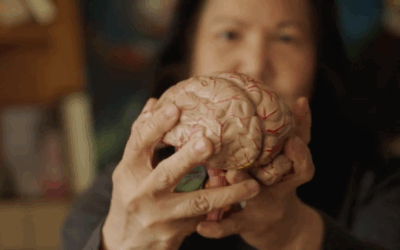
Among professionals who work with dyslexic students, there have long been recommendations to mind map ideas. In recent basic neuroscience research, there’s been a growing understanding why. Neuroscientists have long studied how knowledge seems to work in the brain with schemas -or patterns that can form a flexible reference base that helps us understand new or existing knowledge or make decisions for how to act. But these schemas have largely been studied in a context of verbal memory – with only more recent insights into “the other schemas.” As it turns out there are a lot of other schemas and processes involving schema-making. They are non-verbal and spatial – and that is where the implications for dyslexic people may come into play. If you are […]
What’s the Point of the Dyslexic Mind? with Dr Brock Eide [Premium]
This webinar was rescheduled from a planned presentation at Cambridge University. Although dyslexia has traditionally been defined in negative and narrow terms, these definitions are poorly matched to the breadth of research on dyslexic children and adults. Here the Eides present their case that dyslexia should not be defined solely as a defect or deficiency, but rather as a cognitive specialization – that prioritizes episodic cognition. Bookmark Please login to bookmark ClosePlease login to access.
![Is There Anything I Shouldn’t Do? [Premium]](https://www.dyslexicadvantage.org/wp-content/uploads/2024/02/is-there-anything-not-do-400x250.png)