This category can only be viewed by members. To view this category, sign up by purchasing Premium, Premium Institutional 1 Year or STEM for Every Student - Dyslexia and More.

Sight Words / Tricky Words [Premium]

Sight words are words that must be memorized by sight, rather than being sounded out phonetically. Sight words are important to learn because once children are able to read the most common 100 sight words, they can read up to 50% of most children’s literature. Mastery of the top 300 words, gives students access to 75% of what is printed in most children’s literature. It’s especially important for dyslexic students to learn their sight words with multisensory strategies because sight words account for many of the most commonly misspelled words in writing. You may hear sight words referred to by many names, such as Dolch words, Fry words, high frequency, or even Orton-Gillingham red words. The most important thing to know is that these words […]

Bookmark

Please login to bookmark
Close
To access this post, you must be a Premium subscriber. log in

Bookmark
Please login to bookmark Close
read more

A Home Run Hit with Humorous Poetry [Premium]

Education Prof Benita Bruster was invited to work with five 4th grade boys identified as struggling readers. When she asked them to suggest a favorite poet, the response was not unexpected “Poetry is dumb”, “Girls like poetry”, etc. When she asked about a favorite musician, she got a rousing response – but then she countered with, “I hate to break it to you, but you all like poetry…lyrics are just poems set to music.” Drawing on some cutting edge academic research (see Turn Your Boys to Readers on page 14), Benita predicted that boys would enjoy poems that were “silly, bizarre, gross, or absurd”. She chose her start with the poem, A Wild Turkey Comments on His Portrait. “Rather than passing out copies of the […]

Bookmark

Please login to bookmark
Close
To access this post, you must be a Premium subscriber. log in

Bookmark
Please login to bookmark Close
read more

Dyslexic Advantage Premium OCT 2018 Working Memory Issue [Premium]

Issue articles: Forgetful geniuses, working memory and reading, hacks for work, science teaching and working memory, working memory, intelligence, and creativity, Math teaching with working memory in mind, and working memory & Bilingual students Bookmark Please login to bookmark ClosePlease login to access.

Bookmark

Please login to bookmark
Close
To access this post, you must be a Premium subscriber. log in

Bookmark
Please login to bookmark Close
read more

Could it be GRAMMAR? [Premium]

Hidden grammar difficulties can be common reason why older students with dyslexia hit a plateau with reading, writing, and even testing. The problem is so subtle at times that many difficulties may be missed for years if not for their entire academic careers. One of the reasons that the problem is difficult to detect is that even many standardized tests that are commonly used for assessing the possibility of dyslexia either don’t test for it or they don’t pinpoint the problems that cause the student to struggle. In the early grades, students who have “overcome dyslexia” by the mastery of decoding, may find they hit a plateau as sentences become longer and more complex. In the middle and high school years, unrecognized grammar problems may […]

Bookmark

Please login to bookmark
Close
To access this post, you must be a Premium subscriber. log in

Bookmark
Please login to bookmark Close
read more

[PREMIUM] Dyslexia and Job Interviews

Here are some quick tips to consider if you’re on the job hunting trail. Job interviews can be pretty stressful, so prepare (actually, over-prepare) to help the process go as smoothly as possible. 1. Research the Company or Business – Do your homework: use official channels (the company’s website) as well as unofficial channels (former employees, LinkedIn, Glassdoor) to learn as much as possible about the company you want to work for. Does the company seem to value neurodiversity? Do you know of any dyslexic employees or executives there? 2. Prepare for the Interview – If you are new to the workforce and interviewing process, use Google or another search platform to check out sample questions and answers. If your interviewer asks complicated or multi-part […]

Bookmark

Please login to bookmark
Close
To access this post, you must be a Premium subscriber. log in

Bookmark
Please login to bookmark Close
read more

Dyslexia-friendly Technology [Premium]

Because technology IS such a game changer for everyone – especially dyslexics of all ages – it’s important to be aware of the pros and cons, possibilities as well as limits, and ways in which apps, assistive technology, and gadgets can make school and workplaces better fits for dyslexics of all ages. USE IT If the biggest hurdle to technology is knowing that it exists, the second biggest has to be customizing the software so that it works well for you, and then allowing enough time for mastery. Access to technology is one of the best ways for dyslexic people to level the playing field at school and in the workplace, and fully express their knowledge and expertise. CAUTIONS The American Academy of Pediatrics has […]

Bookmark

Please login to bookmark
Close
To access this post, you must be a Premium subscriber. log in

Bookmark
Please login to bookmark Close
read more

How Do Math-Talented Dyslexics Do Calculations? [PREMIUM]

Despite the suggestion that dyslexic students who are strong in math use a different approach for doing basic mathematical operations, it’s surprising how little formal research has been done to figure out how math-gifted dyslexic individuals do what they do. At Georgetown University, neuroscience researchers were surprised to find Bookmark Please login to bookmark ClosePlease login to access.

Bookmark

Please login to bookmark
Close
To access this post, you must be a Premium subscriber. log in

Bookmark
Please login to bookmark Close
read more

HOW THEY DO IT! University Students with Dyslexia [Premium]

Fortunately, there’s been growing interest from educational and scientific researchers for understanding how people can compensate for some of the academic challenges of dyslexia. POSITIVE FACTORS AMONG UNIVERSITY STUDENTS WITH DYSLEXIA A recent study by Drs. Rebecca Wiseheart and Lori Altmann (Int J Lang Comm Dis 2017) had a nice review of compensating factors as well as providing some new research data about oral fluency among college-attending dyslexic students. Background “In recent years, dyslexia has been reconceptualized as the combined sum of risk factors and protective factors. A number of protective factors have been investigated including verbal intelligence, vocabulary knowledge, morphological awareness, executive functions, and social-emotional resilience…Vocabulary knowledge has been implicated as a protective factor that allows some individuals to achieve good reading comprehension, despite […]

Bookmark

Please login to bookmark
Close
To access this post, you must be a Premium subscriber. log in

Bookmark
Please login to bookmark Close
read more

Non-Linear: The Path to Life Success [PREMIUM]

From our experience, nonlinear development is more often a rule than an exception when it comes to dyslexic kids growing up. As a result, parents, teachers, tutors, and guidance counselors should avoid making predictions about ‘tracks’ that students should be on (or potential) because it’s likely that they’ll be wrong. In Margaret Rawson’s remarkable Dyslexia Over the Lifespan, a Fifty-Five Year Longitudinal Study (alas, the book is now out-of-print and quite expensive), beloved educator Margaret Rawson described the outcome of the children under her tutelage at the Rose Valley School. Margaret had the distinction of living to 102 years old and she kept in touch with many of her students for decades after graduating. In Margaret Rawson’s remarkable Dyslexia Over the Lifespan, a Fifty-Five Year […]

Bookmark

Please login to bookmark
Close
To access this post, you must be a Premium subscriber. log in

Bookmark
Please login to bookmark Close
read more

DYSLEXIA AT WORK: New Skills

Q: I’m working full-time and also am a mom. My employer recently told me that I need to learn new skills to earn a higher salary. My reading and writing aren’t the best.   A: Sounds like you’re carrying a full load! Without knowing the details of your occupation, a good general resources for the work place is https://askjan.org or the Job Accommodation Network. Their phone number is 1-800-526-7234. Title I of the ADA or Americans for Disabilities Act states that employers with 15 or more employees should consider providing reasonable accommodations for individuals who meet the criteria of having a disability. Here is a link to Ask Jan’s page of job coaches and accommodations. Job coaches can sometimes be paid for by the state’s […]

Bookmark

Please login to bookmark
Close
To access this post, you must be a Premium subscriber. log in

Bookmark
Please login to bookmark Close
read more

MATH: What Errors are Due to Dyslexia? [Premium]

Since Henry Winkler sat for a Geometry exam 8 TIMES before passing, one would hope that more progress has been made in understanding and anticipating what math difficulties arise with math problem solving, but few teachers (and perhaps fewer students!) receive explicit instruction in this area. Some of the math difficulties are due to language, but others are due to calculation errors, reversals, sequence, and direction, place value, as well as errors of verbal labeling and working memory which impact regrouping or carrying numbers. Miles and Miles have pointed out the confusion that results when dyslexic students are introduced to algebra. Math language is different from standard or conversational language. Ambiguous terms and symbols are best taught explicitly. For instance, Miles and Miles recommend explicitly […]

Bookmark

Please login to bookmark
Close
To access this post, you must be a Premium subscriber. log in

Bookmark
Please login to bookmark Close
read more

Motivation: The Batman Effect [Premium]

Researchers recently found that young children were more likely to persevere with tedious jobs that they were given to do if they pretended that they were Batman while doing it. There may be something to it. The researchers were studying self-regulation and perseverance in 180 kids ages 4 to 6 years old. The researchers compared 3 test situations: 1. First-person (“Am I working hard?”), 2. Third-person (“Is Billy working hard?”), and 3. Fictional Person (“Is Batman working hard?”). The effects were quite significant. This motivational effect was named after Batman because out of all the characters that were suggested to the children (Bob the Builder, Dora the Explorer, Rapunzel from Tangled, and Batman), children who chose Batman showed the greatest perseverance with the task! To […]

Bookmark

Please login to bookmark
Close
To access this post, you must be a Premium subscriber. log in

Bookmark
Please login to bookmark Close
read more

Speak

To listen, select text and click sound button

WATCH NOW

OSPI STEM Course – STEM for Diverse Learners

Dyslexia and Gifted: Course for Psychologists

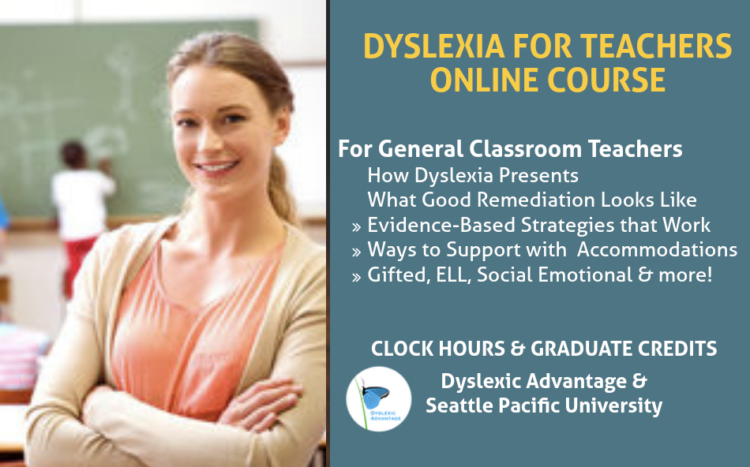
Dyslexia for Teachers Course

SPONSORS

    Discover Your Dyslexic MIND Strengths
                                    Free


Amazon Affiliate Notice

Dyslexic Advantage is an Amazon Affiliate. If you click on a link that takes you to the Amazon store, Dyslexic Advantage may earn money on qualifying purchases. Clicking HERE to enter Amazon and making a purchase may support Dyslexic Advantage. Thank you!