Recently we received a question about severe dysgraphia and moderate dyslexia. The dilemma was how to prioritize limited resources for therapy (if any). There is a high overlap between dyslexia and dysgraphia, but severe handwriting difficulties in the early grades often suggest dyspraxia (a disorder of fine and gross motor coordination) as well. The practical dilemma many parents and students face is that the amount of support that students receive for dyspraxia or dyslexia may be far below what they need; also intervention may take years – and health insurance may not cover any outside therapy whether it’s pediatric occupational therapy, speech therapy, or specialist dyslexia intervention. There is no simple answer. Decisions about priorities depend on the severity of each, but also on the […]
The Karina Eide Young Writers Awards 2023
The Fight with Robots: AI Writing (ChatGPT) Causing Trouble for Dysgraphic Students [Premium]
Currently, the educational world is being rocked about advances in artificial intelligence technology that are upturning ways students are being assessed and demonstrating their knowledge. The AI Writing programs are dazzling and while there can be upsides to having this technology for free at your fingertips, there are definite problems and the challenge for teachers and schools will be to adjust to this new AI-reality without hurting students in the process. To see ChatGPT in action, check out the video below our link to sign up for a free account. To see an example of ChatGPT in action, look at what happens when I ask the program to write a paragraph about how AI can be used for cheating. Not surprisingly, free technology […]
Writing An Essay — How They Do It [Premium]
Over the past decade, it’s been a joy to see how many more dyslexic university students and professors are sharing how they tackle one of the most difficult tasks in education: writing an essay. The mechanics of writing are difficult, for sure, but for many, the volume of ideas and a need to organize and prioritize them is an equally difficult task. Here are two videos from Jemima Hutton, a medical student from Australia. She shares why she prefers mind-mapping to outlining (outlining is too restrictive) and how she enjoys getting her associated ideas down on paper. In the second video, Jemima talks about how she uses software to scaffold her writing. She uses Claro Writing Helper, but now there are other software similar to […]
Can Artificial Intelligence (AI) Help Dyslexics? [Free Registration]
It’s very clear that AI or Artificial Intelligence-informed software can be extremely useful in many ways for dyslexic students as well as adults. If you haven’t tried any of these programs before, you’re in for a surprise. There are also downsides to the technology (see our article, The Fight Against Robots) but AI is already embedded in many programs including Apple’s Siri, Amazon’s Alexa, and Google Assistant, and also programs like Grammarly and WordTune. Many of the best text-to-speech programs are using AI. So it’s here and the applications are immense. STUDENTS A student in New Zealand recently spoke anonymously about their use of AI for written assignments in college. They rationalized that it was like writing with Grammarly, which in the paid version […]
The Benefits of Creative Writing [Premium]
It’s that time again – the Karina Eide Young Writers Awards are open for submission. Encourage a young person you know to submit a little story or poem. We’ll be giving away over $1000 in awards as well as some non-monetary awards. Submissions will be evaluated on storytelling, humor, and voice, and not spelling, grammar, or handwriting. Creative writing and storytelling is often a strength for dyslexic people and taking the time to write or dictate creative stories can build resilience and strengthen one’s awareness of strengths and value. “…writing can provide…a way to solve problems, capture feelings and inner experience, exercise power and freedom, and know one’s own voice.” – Genevieve Chandler, 1999 (A Creative Writing Program to Enhance Self- Esteem and Self-Efficacy in […]
On Writing: A Guest Post
Recently, a bilingual teacher in my Dyslexia for Teachers class shared his experiences being a dyslexic writing in both English and Chinese. With his permission, I am sharing some of his reflections: “Under an educational system that attaches great importance to writing abilities, I have been subjected to countless criticisms and reproaches. I should have given up or avoided writing early on, but for a community college teacher who encouraged me, saying that my articles were imaginative and beautiful. That’s why I was determined to continue to study and write.” — Jason Jason’s post: “I love writing a lot, but it is always tricky for me. I used to have too many ideas and didn’t know how to start. Retrieving words and spelling are always […]
Readers Who Don’t Write
Brock and I were recently talking with our friend, Dr. Nicole Swedberg about how she came to focus in writing for dyslexic students when so many focus almost exclusively on helping students with reading. It was after finishing her advanced degree and training in several top structured literacy programs that she started working with a student who had finished many such programs and was a remediated reader. Although reading was now on grade-level, he couldn’t write! As an older student, too, so much of schooling was funneling into writing, that he was developing secondary problems like anxiety and work avoidance. REMEDIATING THE READING BUT NOT THE WRITING As she soon discovered, this student was the tip of an iceberg. It’s surprisingly common for schools […]
Teaching Punctuation [Premium]
Learning punctuation can be difficult for many reasons – the challenges of reading, auditory and visual processing problems, symbol confusion, and working memory overload; but usually teaching punctuation explicitly and in manageable bits using multisensory and memory associations can help students master the rules and patterns. The symbols involved in punctuation are simpler than the range of marks found in math. When students are still learning, use color coding and allow students to work with a cheat sheet that has examples when they carry out their punctuation exercises. Holly at Teachstarter has a number of cute ideas for teaching punctuation. Giving the markers personalities personalizes the symbols making it easier to remember in what contexts the symbols are used and to distinguish them from each […]
Is There a Natural Way to Write for Dyslexics?
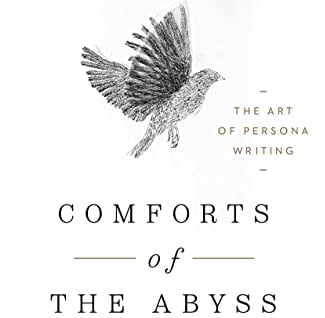
Writing is so difficult for people with dyslexia, it’s a reasonable question to ask whether certain types of writing might come more naturally than others. AUTOBIOGRAPHICAL AND PERSONA WRITING As highlighted in Philip Schultz’s example and in his book Comforts of the Abyss, writing with a strong narrative voice, whether it’s your own voice and experiences or someone else’s, is a style of writing that comes naturally to many dyslexic people. It might be because of strong personal and emotional memories and personal responses to learning about the lives of others; it may be that the feelings and imaginings are difficult to get down on paper, but once they are there, the words may become alive to any reader fortunate to read them. […]
Comforts of the Abyss: New Book from Philip Schultz
“Schultz, founder and director of The Writers Studio, chronicles the challenges he faced as a poet, fiction writer, and teacher that led him to see the aesthetic and psychological value of creating a writing persona. He has long confronted a pervasive inner critic that he calls “the s*bird,” whose “sole agenda is to negate and revoke…—the author discovered that a persona allowed him to distance himself from his material, such as his erratic, self\ destructive father, and his own feelings of shame and fear of failure.” – Kirkus Reviews Philip Schultz has a new book out called Comforts of the Abyss: The Art of Persona Writing where he shares his battle with dark voices in his head and how he transcends it using borrowed […]
Pausing while Writing [Premium]
There are many reasons why students may pause while writing, but more if students are also dyslexic. Those who remember their thoughts and experiences as nonverbal sensations will need extra steps to put their knowledge and understanding into words. Dysgraphic students will have difficulty writing and those with small working memories, may overload with all the work required for getting ideas in their head down on the page. A BIRD’S EYE VIEW OF THE WRITING PROCESS When Brock and I were testing students, our battery for comprehensive testing included the timed writing of the lower case alphabet, sentence and symbol copy (the latter from the Coding subtests of the WISC), sentence combining, spelling test, descriptive writing of a picture, then 10 minute writing […]