
From the paper:
“We found that participants (dyslexic adults) were more likely to wait for information when they were curious. We observed that the relationship between curiosity and likelihood of waiting was stronger in the case of visual stimuli.
In addition, we found that for visual stimuli alone, the relationship between curiosity and likelihood of waiting was stronger in those with dyslexia relative to controls.”
Interestingly, the paper also found that “those with dyslexia were less likely to wait longer intervals for verbal stimuli, suggesting that they placed lower intrinsic value on these items.”
The types of information that were presented to evoke curiosity in the participants were very specific (what is the meaning of the word “atoll” or what country has a particular flag). This information may affect the results, depending on the personal preferences of the people taking the test.
The differences between groups is interesting, and should make us all consider how much curiosity is incorporated into daily life and education.
For those of you who are interested in the subject of curiosity, scientists like to divide this topic into different types. Curiosity about acquiring new knowledge or filling in gaps to learn or understand, is often referred to as “epistemic curiosity”.
Other types of curiosity (non-epistemic curiosity) are curiosity driven to avoid boredom and seek new experience (diversive curiosity) or exploring for discovery’s sake, rather than to seek new knowledge. Exploratory curiosity can also be described as epistemic if its related to what to understand knowledge gaps and intellectual problems.
WHY IS THIS IMPORTANT?
All students desire to learn is stimulated by curiosity. Having a rigid curriculum is especially challenging for dyslexic students, and can reduce their motivation for and engagement with school.
LOW CURIOSITY LEARNING ENVIRONMENTS HINDER STUDENTS
All students desire to learn is stimulated by curiosity, but having a rigid curriculum is especially challenging for dyslexic students. A lack of flexibility in study can reduce their motivation for and engagement with school.
When a person is motivated by wanting to understand the material, and is able to pursue their lines of interest, they should be encouraged to learn as much as they desire about the subject.
A common dilemma for dyslexic students is being told they can’t browse the books beyond their reading level. Instead of forbidding them to check these books out, a better solution is to help them find a way to read the book: assistive technology, reading along with an audiobook, or partner reading.
LOOK FOR A BREAKTHROUGH BOOK
It’s not uncommon that the journey to reading fluency is very uneven. Often, it seems a student may with reading for pleasure until they find a book that triggers a breakthrough. By the end of summer, or another school break, they may suddenly be able to read several grade-levels higher.
These breakthroughs are not only due to finding the perfect interest-based match, but also are due to their abilities with reading vocabulary, a level of phonological awareness, and other language skills. The truth is, there are thousands, if not millions, of students who plateau and make no progress in reading fluency. Finding a subject that interests them – a mystery novel, a fantasy story about dragons, a book of game cheats – will get their curiosity going.
Look hard for those books, and help these students find a way to read them well enough that the main points of the text are understood, even if they aren’t able to read every word aloud.
IS THERE ANY CURIOSITY IN DYSLEXIA CURRICULA?
With the step-by-step curricula of most structured literacy curricula, there may be little time for curiosity or exploratory learning. Sometimes this more predictable and rote side to remediation can be balanced by ‘free time’ learning, where students explore subjects or construct projects that arose out of personal interests.
But some curricula do incorporate word study – and this can pique students curiosity and interest in words. In the research paper studying adult dyslexics.
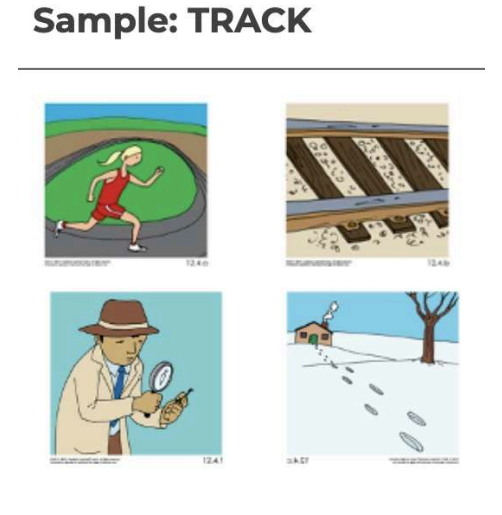
For example, RAVE-O from Voyager Sopris incorporates pictures, multiple word meanings, and creative stories, increasing the likelihood that curiosity might be engaged.
We once had an opportunity to listen to Charles Haynes of Massachusetts General Hospital talk about how he taught writing to students with dyslexia. He gave an example of doing a team writing session starting out with a painting by Winslow Homer (A Fair Wind):
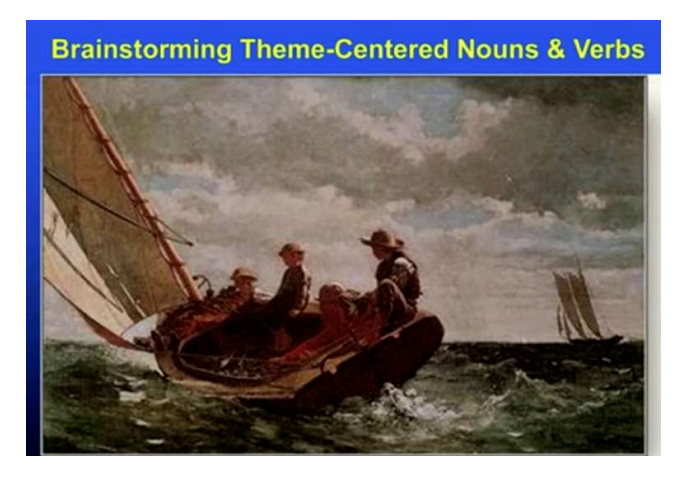
By starting as simply as…”What do you see,” you can stimulate curiosity, and allow words to follow.